

New York imposes among the highest taxes in the country, and that’s especially true for city dwellers, who are hit by additional local taxes.
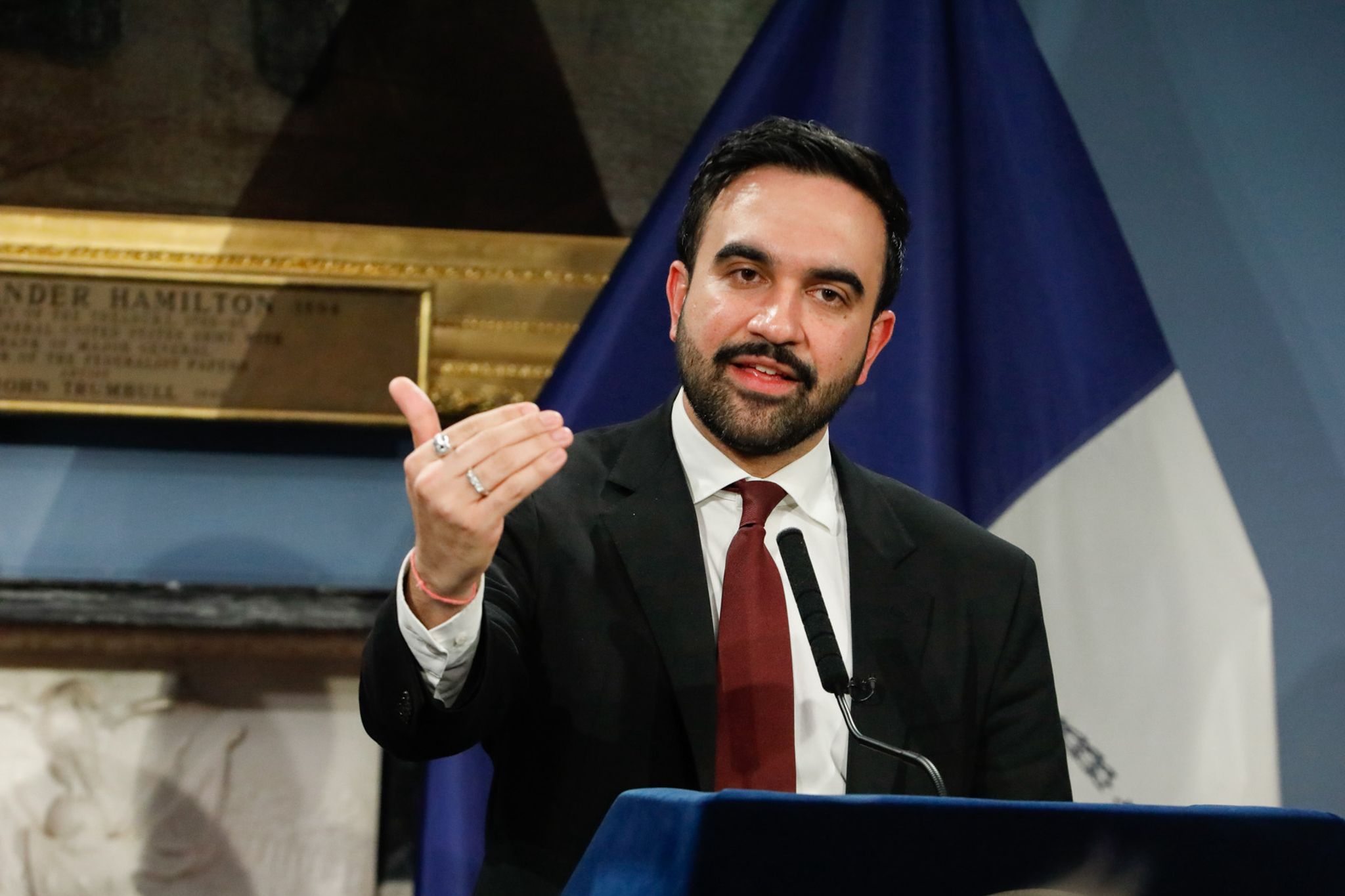
And those taxes may climb further, as Mayor Zohran Mamdani and Gov. Kathy Hochul continue to feud over whether to raise taxes and how.
Mamdani’s preference is to raise income taxes on the wealthiest people — the biggest generator of revenue — and on corporations. But for that to happen, he would need Albany to sign off, and Hochul has long said those tax hikes are off the table, even as she recently gifted the city an additional $1.5 billion in state aid over the next two years.
On Tuesday, Mamdani switched tactics, threatening an across-the-board property tax increase of 9.5% to close a budget gap, the “only tools currently available” to the city, he said. Hochul responded that a property tax increase isn’t necessary.
Mamdani’s preferred route is undoubtedly the more progressive, hitting high-earners and corporate profits, while a blanket property tax hike would elicit more broad political outcry because of the widespread pain it would bring.
But would increases to the state’s already high taxes send the wealthiest residents and biggest businesses to other states? Or would they just be accepted as part of doing business in the financial capital of the global economy?
“No one should believe that suddenly people and businesses will leave in droves tomorrow if taxes are raised,” said Andrew Rein, president of the Citizens Budget Commission, a business-funded, fiscal watchdog that opposes Mamdani’s income tax plan. “But doing so does chop away at our competitive foundation over time.”
Not so, says Nathan Gusdorf, executive director of the Fiscal Policy Institute, a progressive group that supports Mamdani and has been calling for income and corporate tax increases for several years.
“The most powerful regional economies have high tax rates,” he said, pointing to New Jersey, Massachusetts and California. “Based on our research, we seem to be in a zone where you can raise the tax rates and not see any impact on relocation.”
One way to assess the total tax burden is to take the average of state and local taxes and divide that number by per capita income, which is what the Tax Foundation does. By that measure, the average New Yorker pays 15.9% of their income in state and local taxes, long the highest in the nation. (Tax data lags so this number is for 2022, and other numbers in this story are one-to-three years old. )
The key is the state’s income tax, which reaches 10.9% for those making more than $25 million, third highest behind California and Hawaii. But New York City residents making more than $90,000 pay an additional 3.876% on top of the state rate. The combined rate for the highest earners in the city (14.8%) tops the nation, with California second at 13%.
The result is that millionaires paid 41% of all income taxes in New York, according to Tax Facts from the state Department of Finance. The top 200,000 taxpayers paid 50%, and the bottom 50% paid a minuscule 0.2%.
“A lot of the debate focuses on the rate on the wealthy,” said Gusdorf. “The average income tax rate in the state is actually average for the country.”
Because the city’s tax system is less progressive, the top 1% paid about a third of city income tax revenue, according to 2023 data released last week by the Independent Budget Office. The IBO study found that it took an income of $906,677 to be in the top 1% in that year, and the number of millionaires in the city, about 34,000, has remained relatively stable since 2020, despite the high tax rate.
When it comes to fairness, New York State boasts the fourth most progressive tax system in the country, according to the Institute on Taxation and Economic Policy, behind only D.C., Minnesota and Vermont.
The burden imposed on corporations — and the potential flight risk — is more complicated. The top corporate tax rate is 7.75%, which Mamdani wants to raise to the New Jersey level of 11.5%.
A recent study by the Citizens Budget Commission showed that the rate for city business is already 17.44% since they pay city and MTA taxes. Raising New York State’s top rate to match New Jersey would increase the combined rate in New York City to 22.48%, nearly double the Garden State.
But under 2015 reforms, businesses pay those taxes on sales within the state, so relocating a headquarters elsewhere does not lower the amount owed New York, which collected about $20 billion in the last fiscal year.
Academic studies don’t provide a definitive answer to the question on how much taxes influence where people live and work.
A 2024 report from the Tax Foundation, which is generally against high taxes, cited three academic studies that showed “the consensus in the academic literature is that high-income individuals are very sensitive totax increases.”
A 2023 report from the liberal Center on Budget and Policy Priorities, based on other research, is headlined “State Taxes Have Minimal Impact on People’s Interstate Moves.”
In making the case that taxes matter, the CBC points to studies of millionaires. The number of millionaires in New York is growing, but less than elsewhere in the country, so New York’s relative share of millionaires is declining. The same is true in the finance sector, where employment is near a record, but the city’s share of that employment is at an all-time low.

When executives decide where to locate their companies, they are thinking of the tax burden on their employees as well as the company itself, argues Ana Champeny, CBC’s research director.
“All of these taxes flow through and result in lower hiring and prices. That’s why I pay less for groceries in the suburbs where I live than I would in the city and why we are seeing a shift out of people.”
The Fiscal Policy Institute says that low tax states also have weak economies.
“If there were a strong correlation between tax rates and business environments, the Dakotas would have strong economies,” Gusdorf said.
However, he admits that doesn’t apply to Texas and Florida, which are both fast-growing economies, especially in financial services. Texas ranks sixth lowest in the Tax Foundation ranking and Florida is eleventh.
Not surprisingly, the mayor thinks higher taxes won’t mean flight from the city, especially corporate relocations.
“I do not believe that there would be an outward migration,” he told legislators on his recent visit to Albany. “And I think that what we are facing right now is an outward migration because of the absence of an affordability agenda.”
Related
First Appeared on
Source link






Leave feedback about this