

Intel has just launched its highly anticipated Wildcat Lake “Core Series 3” SoCs, designed for everyday PCs & a strong competitor to MacBook Neo.
Intel Wildcat Lake vs Apple MacBook Neo Laptop Battle Is Something To Look Forward To As Chipzilla Brings Panther Lake’s Goodness To Mainstream Users
The Panther Lake “Core Ultra Series 3” lineup took the laptop market by storm, offering unprecedented levels of efficiency, battery times, and graphics performance. While the laptop designs were great, these products were mainly positioned in the high-end category with only a few options within the sub-$1000 segment. Then came Apple’s MacBook Neo, a disruptive $599 laptop with the Apple A18 chip, and while it had just 8 GB of memory, it offered more than enough to meet the needs of everyday users.
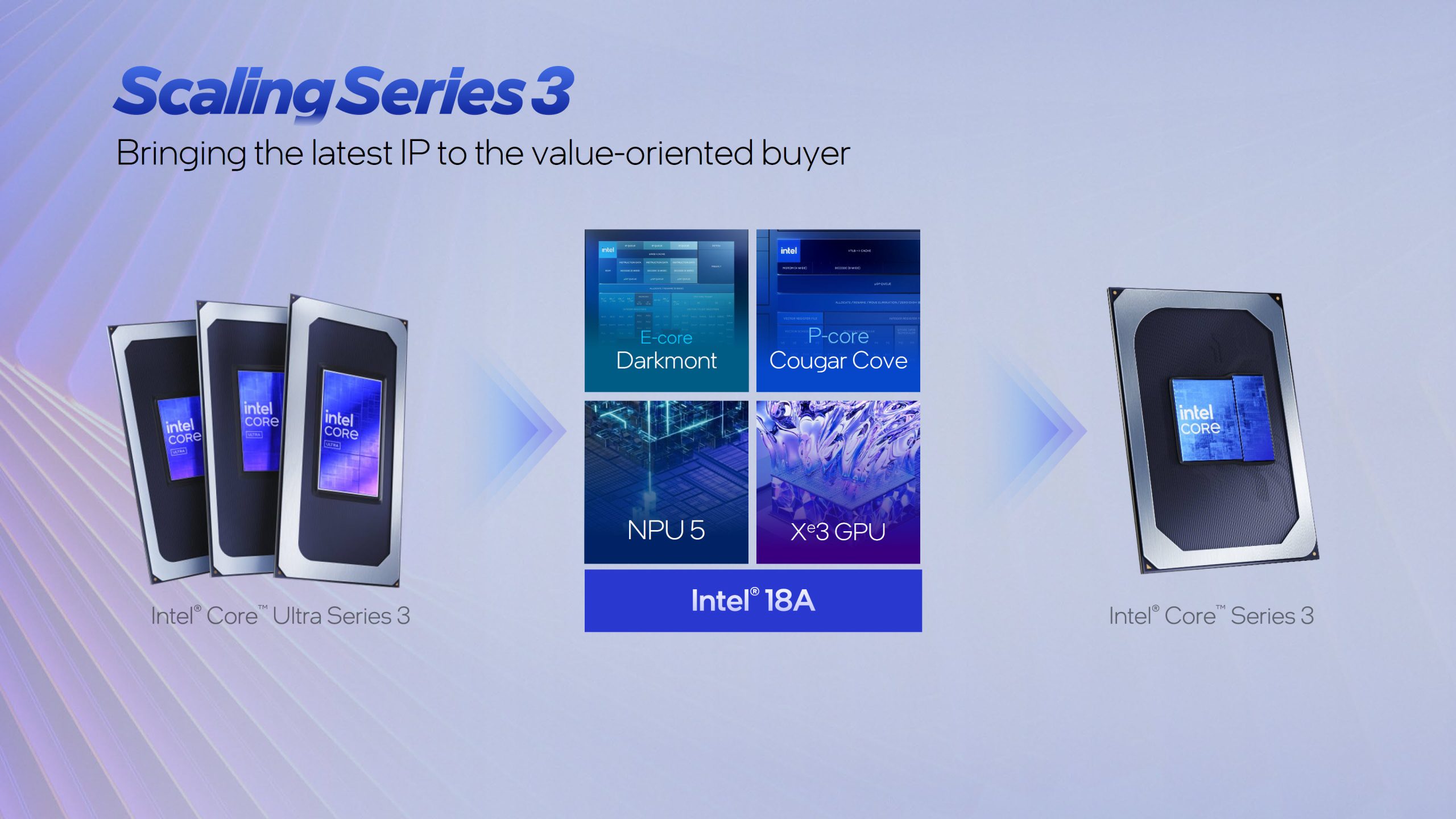
Today, Intel is changing that with a new product, and one that we have been waiting to see for a while. This is Wildcat Lake, a smaller sibling to the Panther Lake SoCs, and featured under the Core Series 3 family. Note the missing Ultra here; well, that’s for Panther Lake, but even in a smaller SoC form factor, Intel’s Wildcat Lake should offer some decent capabilities. This is also Intel’s first Series 3 processor to feature its own 18A process technology.
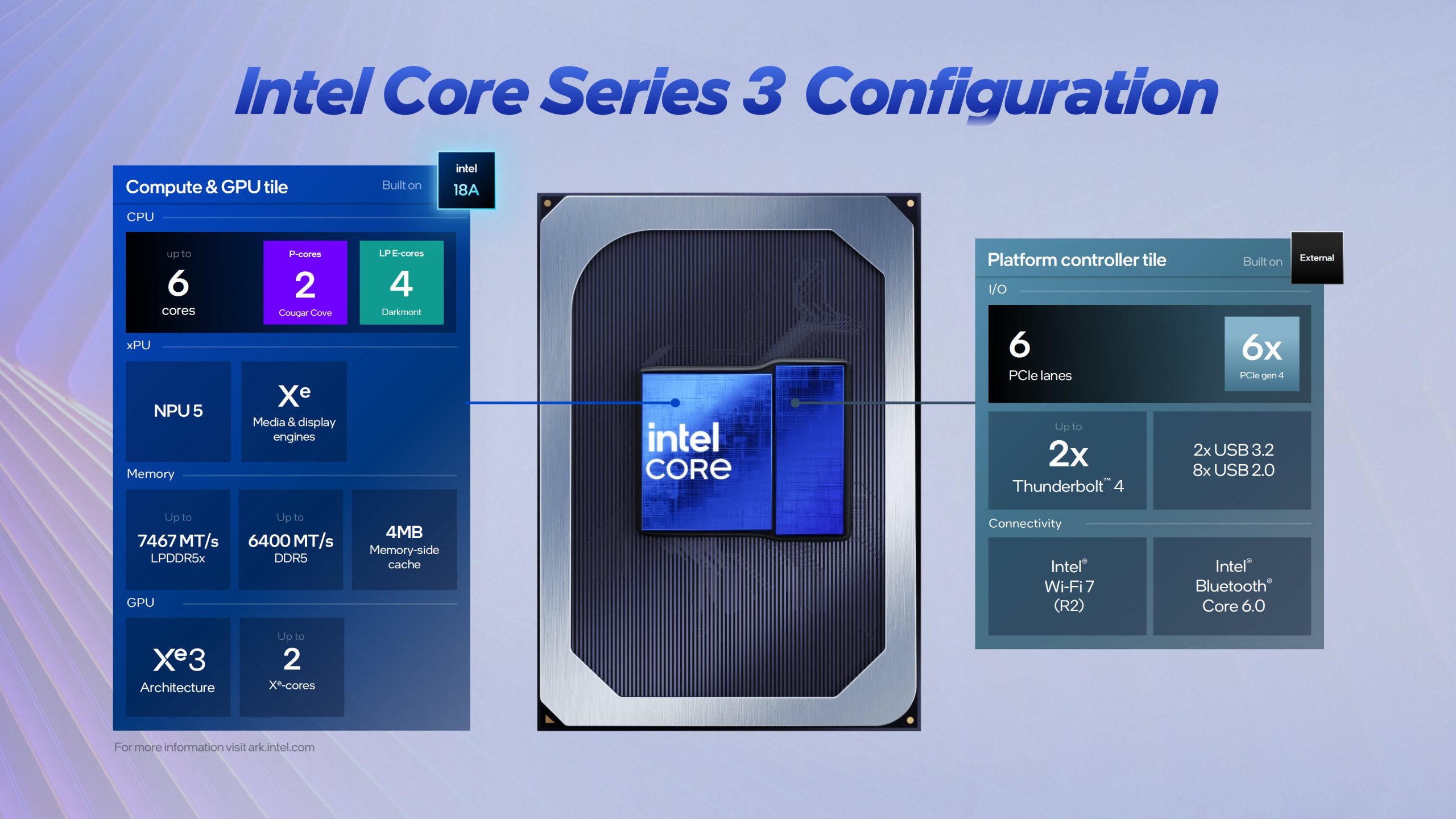
So, talking about Intel Core Series 3 or Wildcat Lake SoCs, they feature the same processor architectures as Panther Lake (Cougar Cove P-Cores / Darkmont E-Cores), the same GPU architecture as Panther Lake (Xe3), and the same NPU as Panther Lake (NPU5). The only thing that’s changed, which is the case with every cost-optimized variant, is the difference in the overall specs and capabilities of each chip.
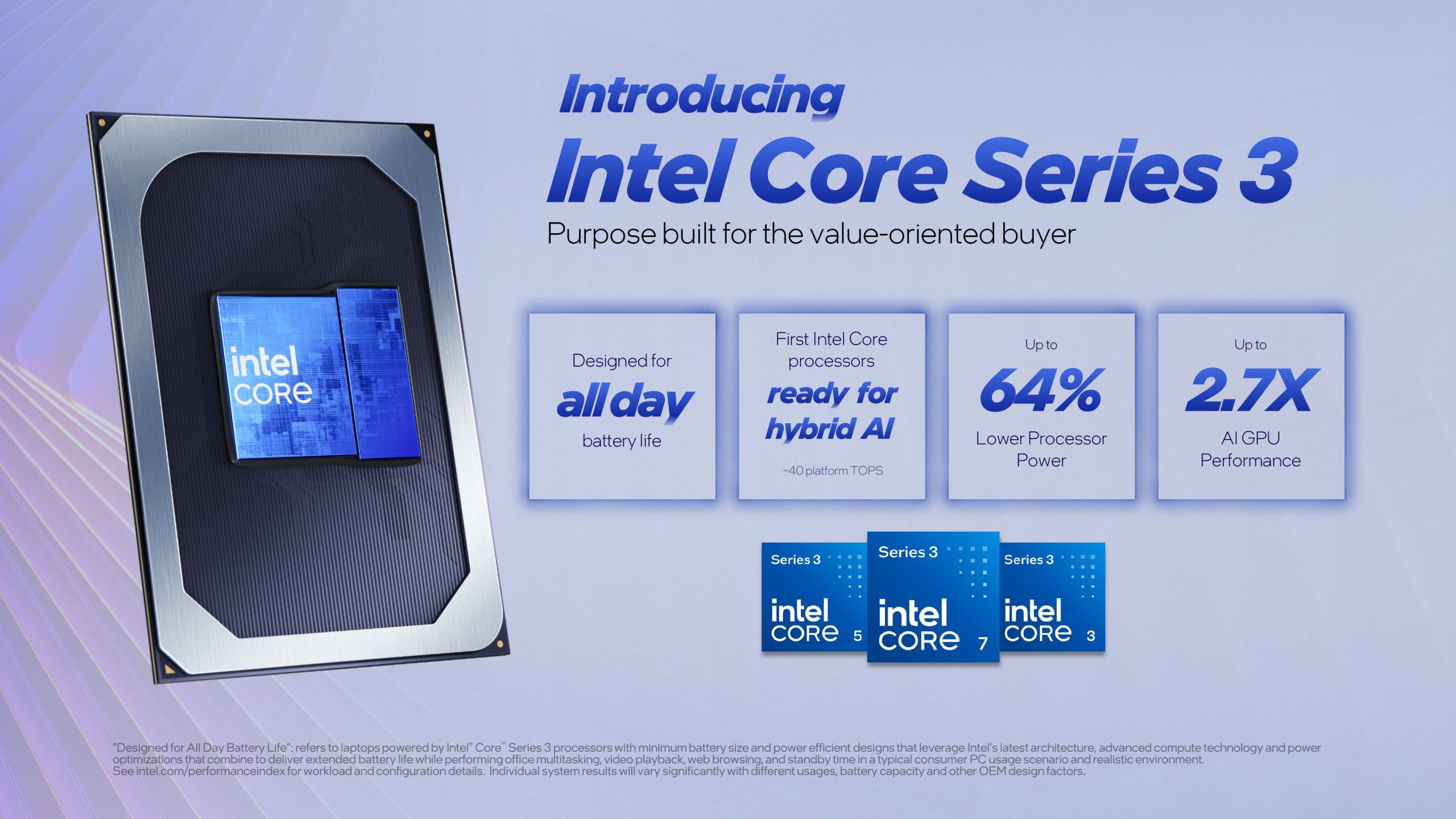
- Intel Core Series 3 is Intel’s first hybrid AI-ready Core Series processor, supporting AI workloads with up to 40 platform TOPS.
- Support for modern connectivity, including up to two integrated Thunderbolt 4 ports, Intel Wi-Fi 7 (R2), and Intel Bluetooth 6.
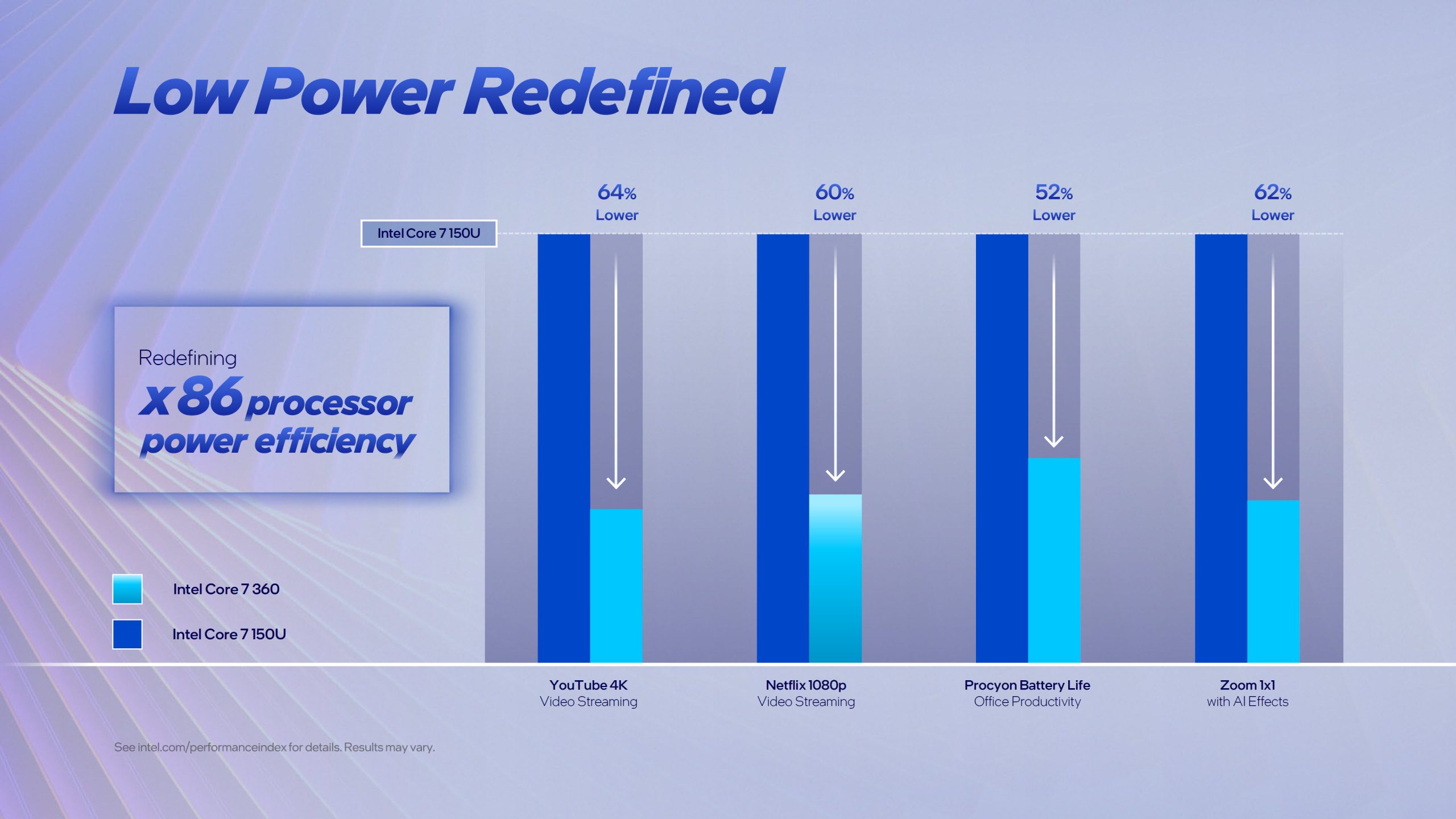
- Intel Core Series 3 is designed for all-day battery life and everyday productivity, with up to 2.1x faster creation and productivity, up to 64% lower processor power, and up to 2.7X AI GPU performance versus previous generation Intel Core 7 150U processors.
So while MacBook Neo is based on a smartphone SoC, Intel takes the Panther Lake config, tweaks it as much as possible, and to an extent that makes sense for everyday users, and builds upon it in Wildcat Lake.
In terms of specifications, Wildcat Lake “Core Series 3” SoCs offer up to 6 CPU cores in a 2 P-Core and 4 E-Core combination. It features 2 Xe3 iGPU cores, quite shabby compared to Panther Lake, which starts at 4 Xe3 cores and scales up to 12 Xe3 cores, and 40 TOPS of AI compute, which meets the Copilot+ certification for the Windows AI PC ecosystem.
With these, Intel claims some big bumps in performance versus its older Core Series 1 chips, such as up to 2.1x faster creation and productivity performance, up to 2.7x faster AI performance, and massively reduced power figures.
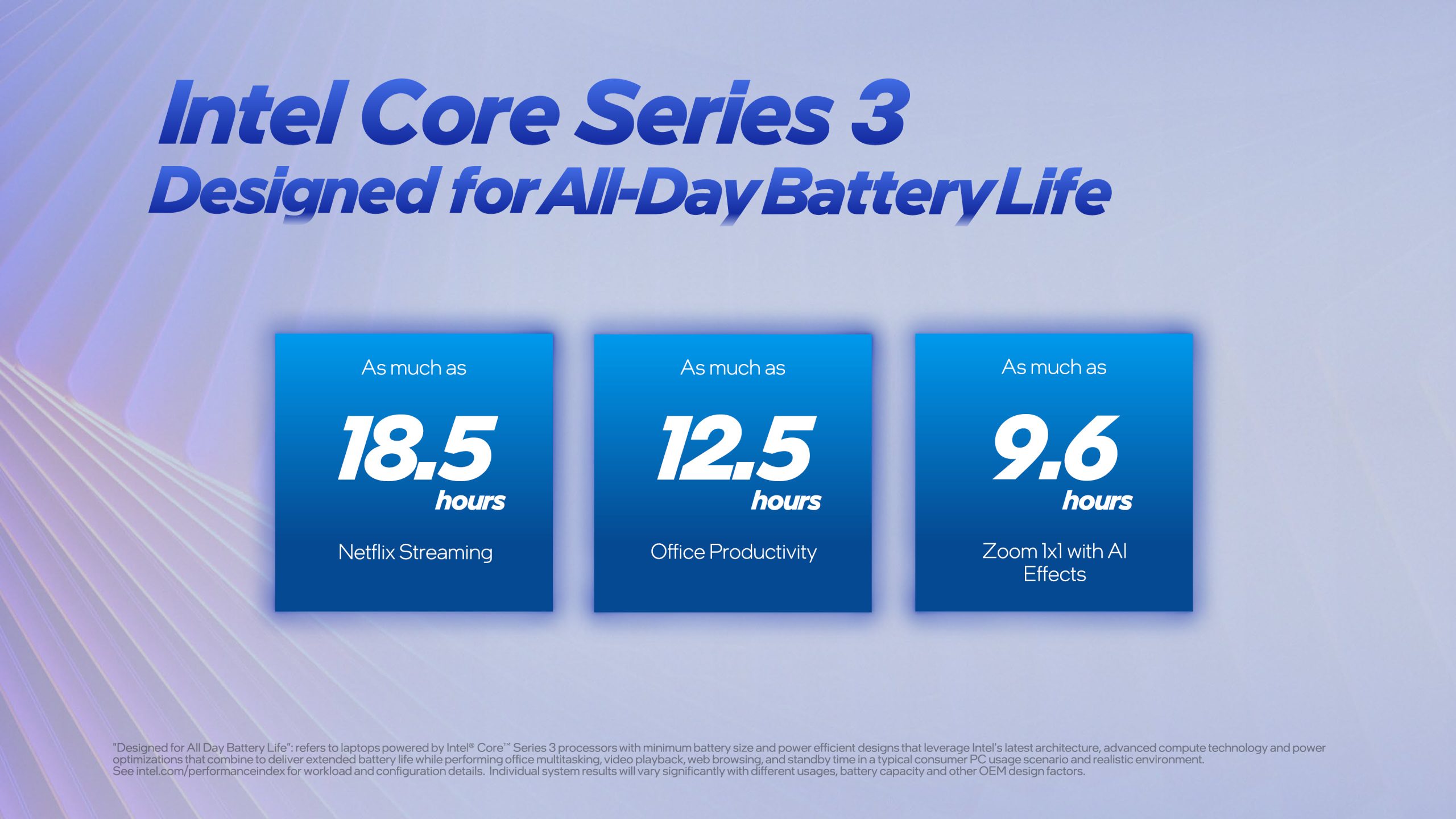
In fact, these power figures are so good that laptops featuring Wildcat Lake SoCs will be able to offer as much as 18.5 hours of Netflix Streaming, 12.5 hours of Office Productivity, and 9.6 hours of battery time in Zoom 1×1 meetings with AI effects enabled.
Wildcat Lake Is Designed With Affordability & Flexibility In Mind
But it’s not just the SoC that is designed to be cost-optimized. Intel made Wildcat Lake with affordability in mind, and to achieve this, they had to look at the platform level.
For this, memory is the biggest deal, and Intel has resorted to a single-channel memory layout while still offering both LPDDR and DDR options. In today’s memory-constrained world, this should be the single biggest thing that Intel has done to give everyday users the best cost-to-memory option in a laptop.
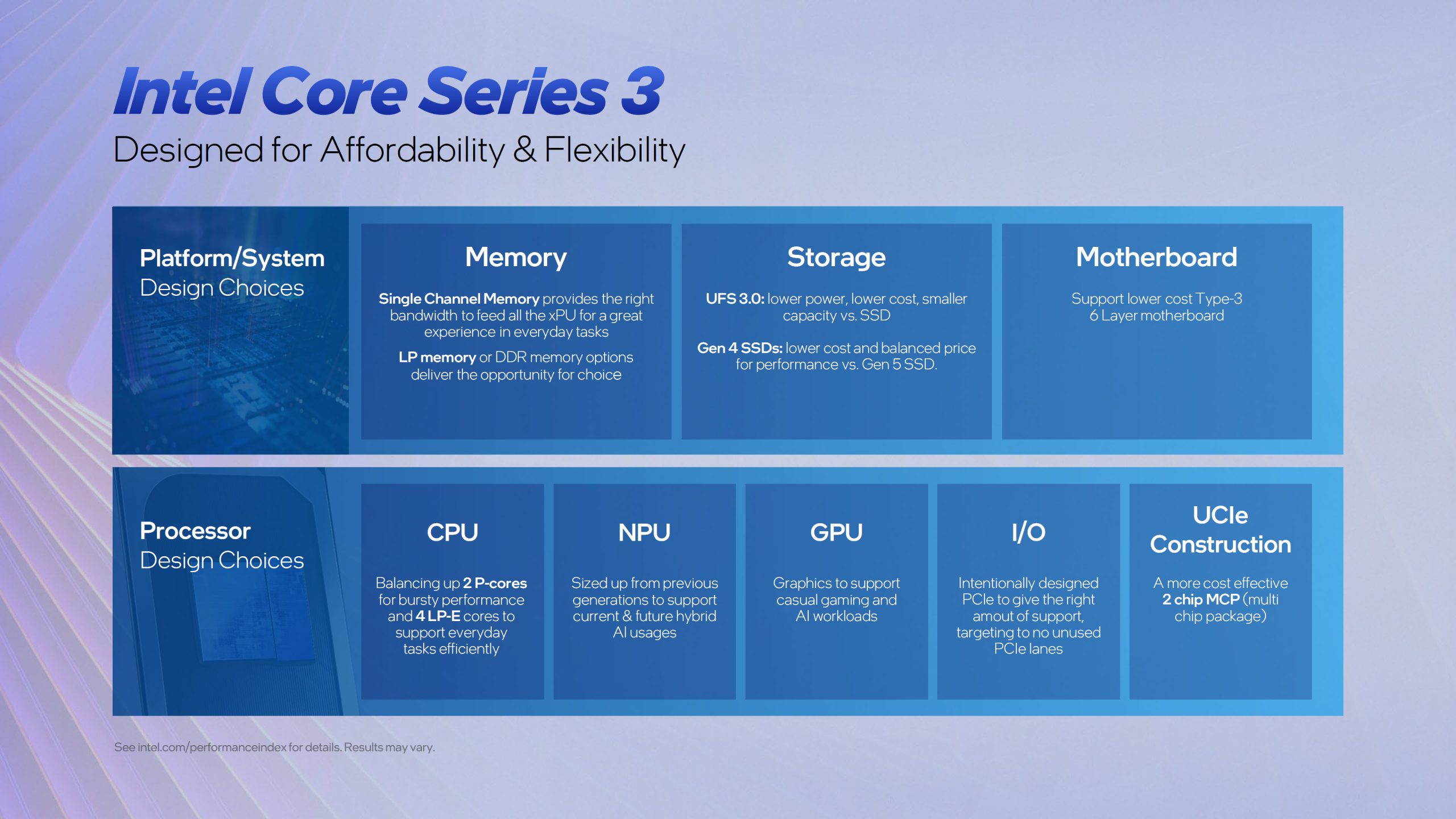
It doesn’t end here; storage has also been configured for cost optimizations. The use of UFS 3.0 SD card standards make for lower power, lower cost, while offering decent space sizes while the reliance on Gen4 SSD makes for a balanced yet high-speed approach vs the more expensive Gen5 options.
Lastly, Intel has worked with its partners for a lower-cost Type-3 6-layer motherboard, which should further tone down the cost levels to ensure that these laptops are within the reach of everyday PC users.
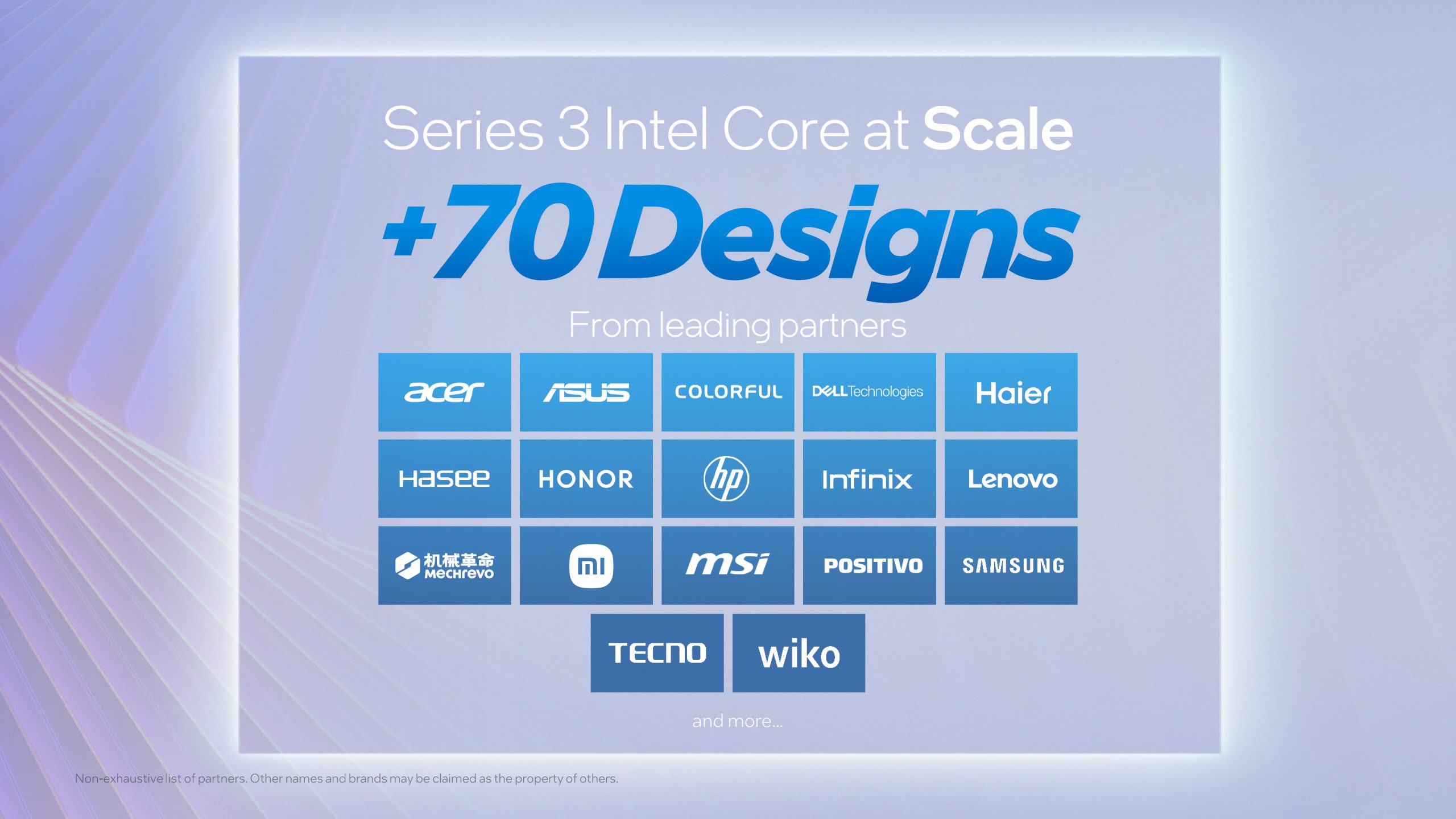
The result is that at launch, Intel will have 70+ designs ready to roll out from its various partners. Intel Core Series 3 “Wildcat Lake” laptops will be available today, and we will soon be able to know what kind of prices we see in the retail segment.


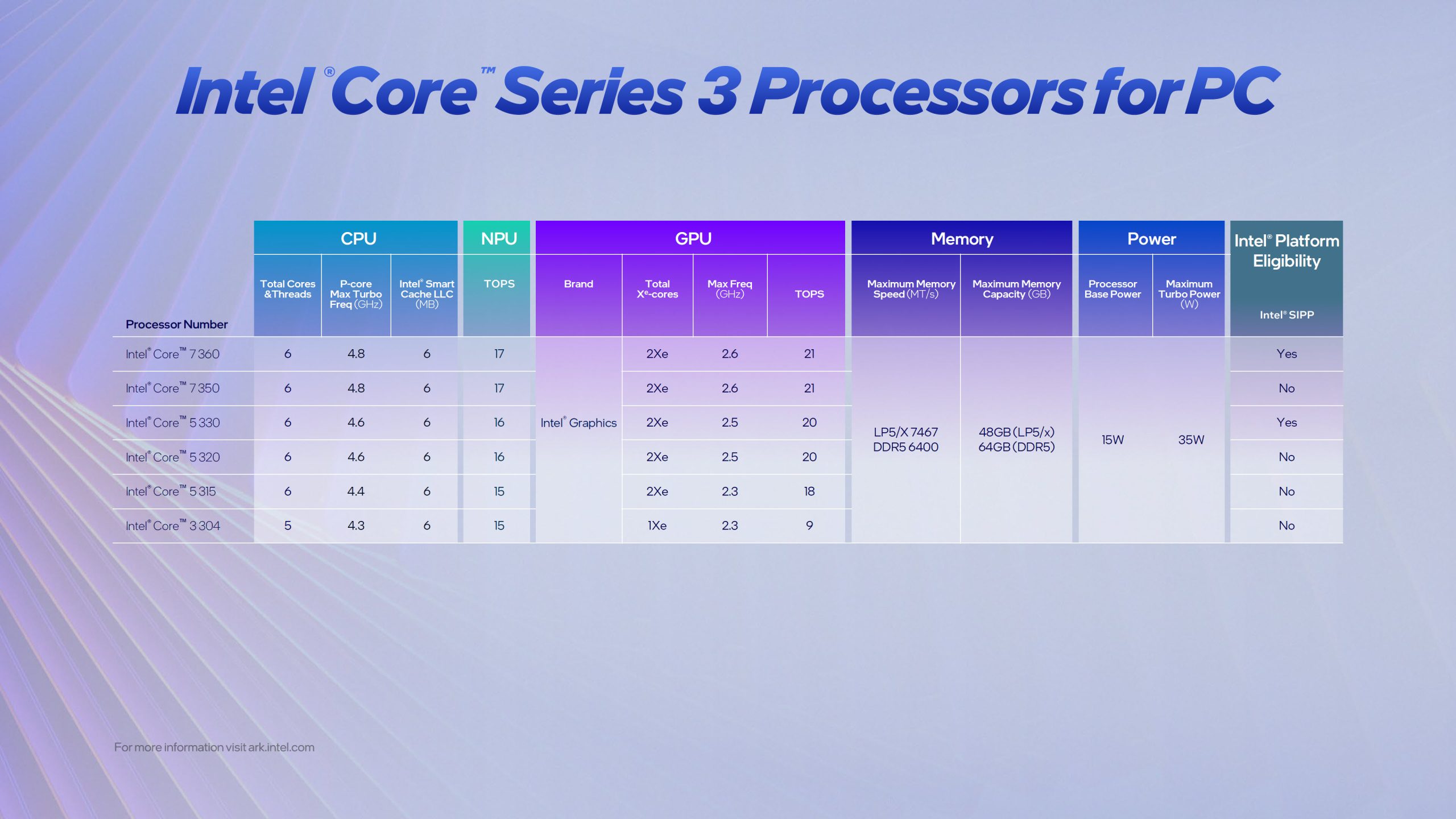
The lineup features a total of six SKUs, with all except one featuring a 5-core layout while the rest retain 6 cores. The 5-core SKU also features a single Xe3 core. All SoCs are rated at 15W base power and a maximum power rating of 35W.

About the author: A Software Engineer by training and a PC enthusiast by passion, Hassan Mujtaba serves as Wccftech’s Senior Editor for hardware section. With years of experience in the industry, he specializes in deep-dive technical analysis of next-generation CPU and GPU architectures, motherboards, and cooling solutions. His work involves not only breaking news on upcoming technologies but also extensive hands-on reviews and benchmarking.
Follow Wccftech on Google to get more of our news coverage in your feeds.
First Appeared on
Source link




Leave feedback about this