

On Dec. 31, billionaire Warren Buffett, who helped transform Berkshire Hathaway (BRKA 3.66%)(BRKB 3.76%) into a trillion-dollar business over more than half a century, called it a career. Wall Street’s preeminent buy-and-hold investor stepped down from the CEO role and handed the reins over to successor Greg Abel.
Although the Oracle of Omaha has been gone for two months, the shockwaves of his final trades are still being felt. Quarterly filed Form 13Fs, detailing trading activity for Wall Street’s savviest money managers, were filed on Feb. 17 — Berkshire Hathaway among them.
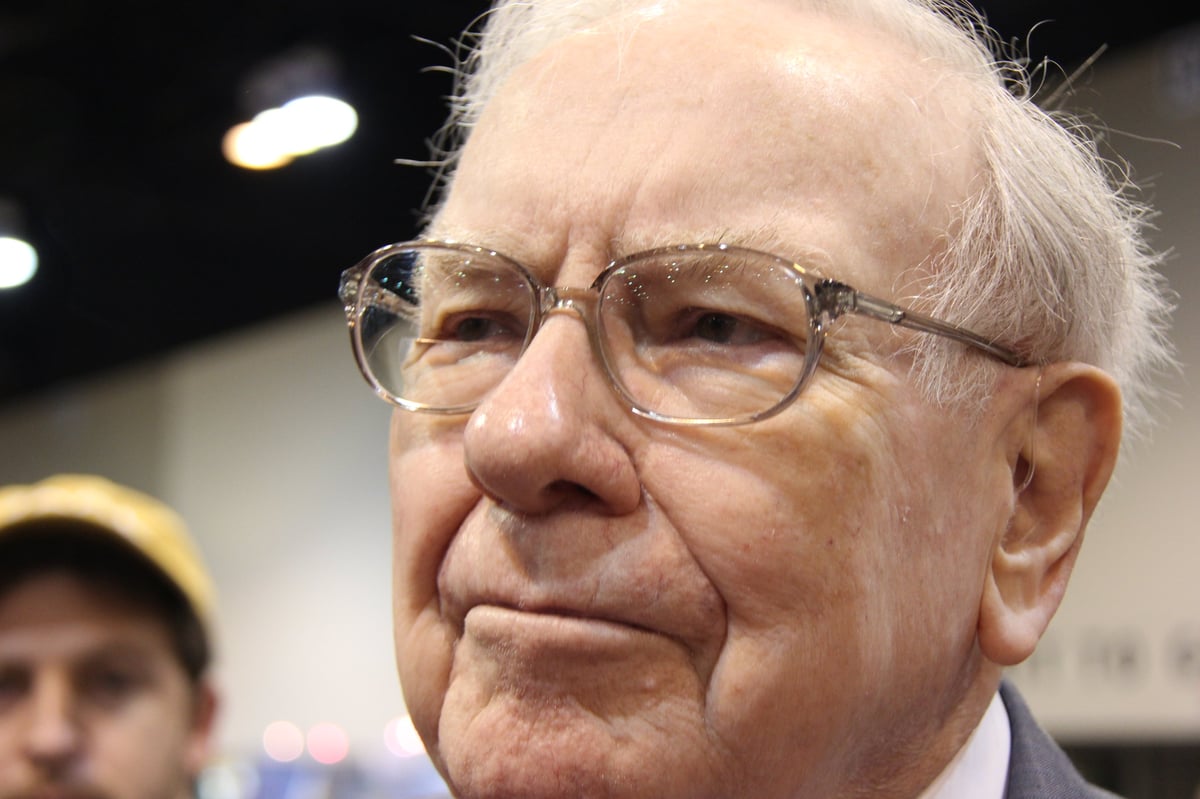
Berkshire Hathaway’s longtime CEO, Warren Buffett, retired on Dec. 31, 2025. Image source: The Motley Fool.
A historically pricey stock market made Buffett a net seller of stocks for 13 consecutive quarters (Oct. 1, 2022 – Dec. 31, 2025). While Berkshire’s 13Fs show he was a persistent seller of his company’s No. 1 holding, Apple (AAPL 0.61%), he did purchase shares of a well-known consumer goods company for six consecutive quarters prior to retiring as CEO.
The Oracle of Omaha dumped 75% of Berkshire’s once-enormous stake in Apple
On Sept. 30, 2023, Buffett’s company held 915,560,382 shares of Apple, representing well over 40% of Berkshire’s invested assets. But over the next nine quarters, leading up to the Oracle of Omaha’s departure, 687,642,574 shares were sold, ultimately reducing this still-No. 1 position by 75%. This includes an additional 10,294,956 shares sold in Buffett’s final quarter as CEO.
Warren Buffett made clear in his letters to shareholders and during annual meetings that he values Apple as a company. While most investors have been focusing on Apple’s artificial intelligence (AI) aspirations of late, Buffett tended to home in on the customer loyalty aspect of its business. Although trust takes time to build in the retail world, consumers have demonstrated a willingness to pay a premium for Apple’s physical devices, including its heralded iPhone.

Today’s Change
(-0.61%) $-1.62
Current Price
$262.56
Key Data Points
Market Cap
$3.9T
Day’s Range
$260.20 – $263.38
52wk Range
$169.21 – $288.62
Volume
282K
Avg Vol
48M
Gross Margin
47.33%
Dividend Yield
0.39%
Furthermore, Berkshire’s billionaire boss was a fan of Apple’s market-leading share repurchase program. Since initiating its buyback program in 2013, Berkshire’s No. 1 holding has spent more than $841 billion to repurchase over 44% of its outstanding shares. Public companies with steady or growing net income that regularly repurchase their stock should see their earnings per share (EPS) rise over time.
But Apple wasn’t flawless, as Buffett’s persistent selling activity indicates.
Arguably, Apple’s primary issue is its valuation. When Warren Buffett initially bought shares in the first quarter of 2016, it was trading at 10 to 15 times trailing 12-month (TTM) EPS. As of the closing bell on Feb. 25, Apple’s TTM EPS is 34.5. Buffett has historically not been shy about paring down positions where he no longer sees value.
Apple’s innovative growth spurt also hit a snag between fiscal years 2022 through 2024. While subscription service revenue has been rising at a steady pace, physical device sales for Apple, including the iPhone, were relatively stagnant for three years. This makes its historically expensive price-to-earnings (P/E) ratio all the more egregious.
Lastly, corporate taxation may have come into play. During Berkshire’s 2024 annual meeting with shareholders, Buffett opined that corporate income tax rates were likely to rise in the future. He intimated that selling Apple stock would, in hindsight, be viewed as an astute move, given Berkshire Hathaway’s sizable unrealized gain in the company.

Image source: Getty Images.
Warren Buffett wanted a bigger slice of the pie before retirement
While a lot of attention was paid to Warren Buffett’s final addition to Berkshire Hathaway’s investment portfolio, The New York Times Co., it’s fast-food restaurant chain Domino’s Pizza (DPZ 1.70%) that was his most consistent buy leading up to retirement.
According to Berkshire’s 13Fs, its now-former billionaire chief purchased shares of Domino’s for six straight quarters and built up a 9.9% stake:
- Q3 2024: 1,277,256 shares purchased
- Q4 2024: 1,104,744 shares purchased
- Q1 2025: 238,613 shares purchased
- Q2 2025: 13,255 shares purchased
- Q3 2025: 348,077 shares purchased
- Q4 2025: 368,055 shares purchased (3,350,000 total shares held)
The “why Domino’s Pizza?” argument begins with trust. In the late 2000s, Domino’s undertook a then-risky marketing campaign where it admitted its pizza was subpar and vowed to do better. For more than 15 years, the company has relied on transparent marketing to earn and retain consumers’ trust. With shares of Domino’s soaring by 6,700% since its initial public offering in July 2004, including dividends, it’s plainly evident that this strategy has worked wonders.

Today’s Change
(-1.70%) $-6.85
Current Price
$395.66
Key Data Points
Market Cap
$14B
Day’s Range
$394.21 – $398.32
52wk Range
$370.70 – $500.55
Volume
3.4K
Avg Vol
753K
Gross Margin
39.95%
Dividend Yield
1.73%
Warren Buffett was likely also attracted to Domino’s international opportunity. The 1.9% international same-store sales growth reported for fiscal 2025 (ended Dec. 28) marked the 32nd consecutive year of positive same-store sales growth in overseas markets. This is a testament to the value of the company’s products and brand.
Additionally, Domino’s Pizza offers a steady diet of share buybacks and dividends for its investors. Buffett commonly gravitated to time-tested businesses that put shareholders first.
But perhaps the most compelling investment thesis for Domino’s Pizza has been its ability to meet or exceed its five-year growth initiatives. The company’s latest plan, dubbed “Hungry for MORE,” utilizes AI to improve output and make its supply chain more efficient. It also relies on product innovation and the company’s team members and franchisees to build up the brand globally.
Rounding things out, Domino’s forward P/E of less than 19 (as of Feb. 25) represents a 31% discount to its average forward P/E ratio over the trailing five-year period — and we all know how much Warren Buffett loved a bona fide price dislocation.
First Appeared on
Source link

Leave feedback about this