

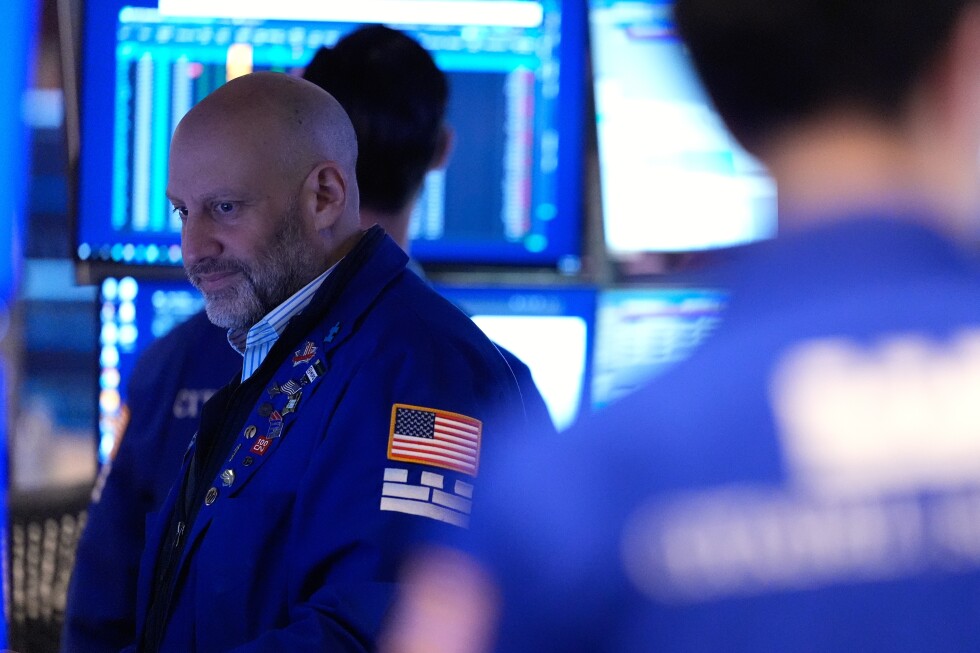
NEW YORK (AP) — The U.S. stock market is holding relatively steady, for now, following sharp swings up and down since the war with Iran began and sent oil prices spurting. The S&P 500 was flat in early trading Tuesday, a day after careening from a sharp early loss to a solid gain. The Dow Jones Industrial Average slipped 34 points, and the Nasdaq composite edged up 0.2%. Trading was also relatively calm in the oil market, which has been the center of action because of worries about the potential for long-term disruptions to the energy industry in the Middle East.
THIS IS A BREAKING NEWS UPDATE. AP’s earlier story follows below.
Trading steadied early Tuesday and crude prices eased after wild swings this week with investors trying to figure out how long the war with Iran will continue.
Futures for the Dow Jones Industrial Average rose 0.2% before the opening bell, while S&P 500 futures inched up 0.1%. Futures for the Nasdaq were up 0.2%.
On Monday, markets swung from big losses to finish the day with gains, while oil prices neared $120 per barrel before falling back to about $90. Oil prices inched down further early Tuesday.
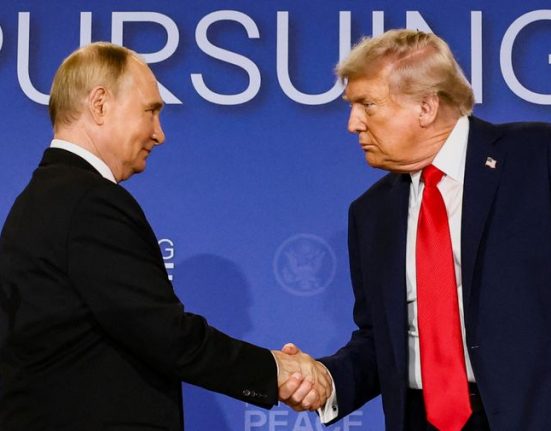
Helping to assuage investors’ fears, U.S. President Donald Trump told CBS News on Monday that he thinks “the war is very complete, pretty much.” However, Trump also made other somewhat contradictory comments that seemed to threaten intensified action against Iran if it makes any “attempt to stop the globe’s oil supply.”
Iran launched new attacks on Tuesday at Israel and Gulf Arab countries, keeping pressure on the Middle East in a war started by Israel and the United States 10 days ago that has sent oil prices surging.
Benchmark U.S. crude fell $5.44 to $89.33 a barrel. Brent crude, the international standard, dipped $6.97 to $91.99 a barrel. Oil prices are still up about 34% since the war began.
The average U.S. price for a gallon of gas continued to climb, rising to $3.54, according to auto club AAA on Tuesday. That average was just under $3 a gallon in the days before the conflict began, and $3.11 last week.
There is a great deal of uncertainty about just how high oil prices will go and how long they will stay there because of disruptions to Middle East energy facilities.
If oil prices stay very high for very long, household budgets already stretched by high inflation could break under the pressure. Companies would see their own bills jump for fuel and to stock items on their store shelves or in their data warehouses.
Concerns have focused on the Strait of Hormuz, a narrow waterway off Iran’s coast that a fifth of the world’s oil sails through on a typical day. Iran has threatened to set fire to ships sailing the strait.
Global shares rebounded Tuesday from their sharp declines a day before.
France’s CAC 40 added 2.1% in early trading, while Germany’s DAX surged 2.5%. Britain’s FTSE 100 gained 1.7%.
In Asia, Tokyo’s benchmark Nikkei 225 added 2.9% to finish at 54,248.39 after the government released revised economic data that showed Japan’s economy grew slightly faster than initially estimated in the final quarter of last year, boosted by solid business investments.
Japan’s economy expanded at an annual pace of 1.3%. The initial estimate was a much weaker 0.2%.
“Today is the rebound, obviously positive comments from President Trump overnight, we’re starting to see the light at the end of the tunnel for the war,” said Neil Newman, a managing director and head of strategy at Astris Advisory Japan.
“So volatility is going to remain with us but things are certainly looking a lot brighter today,” he said.
Australia’s S&P/ASX 200 gained 1.1% to 8,692.60. South Korea’s Kospi jumped 5.4% to 5,532.59.
Hong Kong’s Hang Seng added 2.2% to 25,959.90, while the Shanghai Composite index rose 0.7% to 4,123.14.
South Korea’s Kospi, where extremely volatile trading set off two circuit breakers in the past week, including Monday, rose more than 5% Tuesday.
In currency trading, the U.S. dollar rose to 157.78 Japanese yen from 157.67 yen. The euro was trading at $1.1646, up from $1.1636.
___
AP Videographer Ayaka McGill in Tokyo contributed.
First Appeared on
Source link




Leave feedback about this