

Sign up for the Slatest to get the most insightful analysis, criticism, and advice out there, delivered to your inbox daily.
If President Donald Trump and Israeli Prime Minister Benjamin Netanyahu can’t force regime change in Iran or control what comes afterward, it seems their Plan B is to break the country into pieces, maybe spark a sectarian civil war, or in any case spawn such internal strife that it can no longer threaten its neighbors.
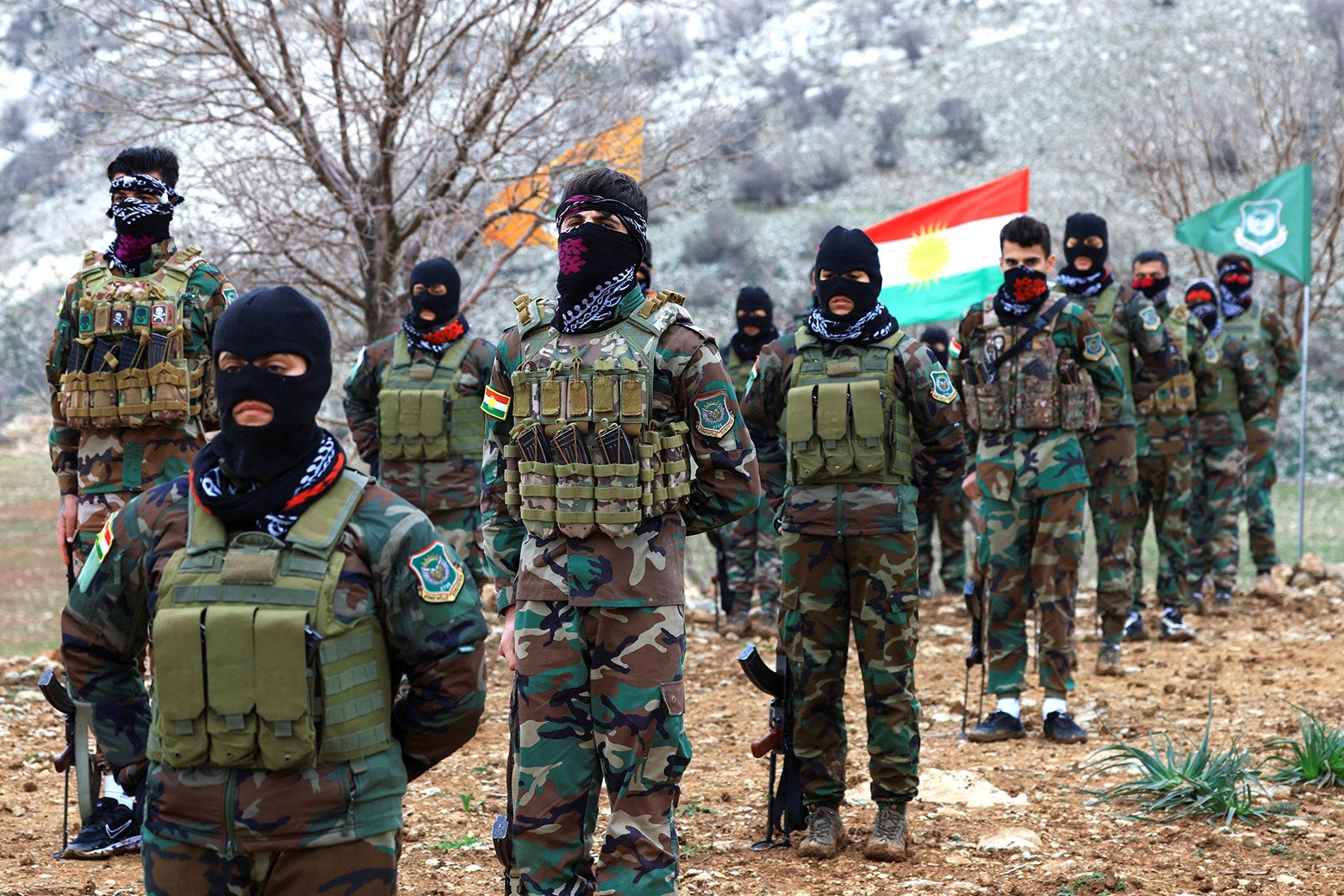
That’s one conclusion to derive—the only one that makes much sense—from the many news reports that the two are encouraging, and actively opening the way for, Kurdish militias to join the fight and foment an uprising against the Tehran regime.
For stirring trouble and fighting bad guys, there are few more formidable forces than the Kurds. Soldiers, aid workers, and journalists who have observed the Kurds in action tend to come away starstruck. In both Iraq wars (the 1991 Gulf War and the 2003 invasion), as well as the ensuing counterinsurgency fights against ISIS in Iraq and Syria, the Kurds were our most skilled, ferocious, and effective allies. And they were driven not just by the region’s typical assortment of ethnic hatreds and territorial disputes, but also by an ancient cause of justice and independence. (Some surprising supporters of George W. Bush’s invasion of Iraq, notably my old friend and Slate colleague the late Christopher Hitchens, were especially moved by hopes that ousting Saddam would open the way for Kurdish independence.)
In the wake of World War I, the Sykes-Picot Agreement—the pact between Britain and France to redraw the map of the Middle East by carving the crumbling Ottoman Empire into separate spheres of influence—created whole new states and declared Jerusalem a free city with open entry for Jews. But it gave no strip of land to the Kurds, who now number between 25 and 40 million people (no one has taken an official count), leaving them scattered across the region in an area informally called Kurdistan—encompassing patches of land in Turkey, Syria, Iraq, Armenia, and Iran—but not formally recognized as a state.
Post-ayatollah Iran is not likely to accommodate their dream of an official homeland. Kurds comprise a small fraction of Iran’s population—about 10 percent of its 90 million people, the vast majority of whom are Shia Muslims—far from the capital, with few links to either the established powers or rebel groups (though the latter have been pretty much broken up by the former). It is very doubtful that, even if they somehow captured Tehran, Kurds could hold on to power for long.
Still, according to several reports, Trump and Netanyahu have encouraged Kurds—those living in western Iran as well as those across the border in Iraq, Azerbaijan, and Turkey—to join the fight against Tehran’s regime. The CIA has been supplying some Kurdish militias with small arms. American or Israeli bombs have been dropped on Revolutionary Guard outposts on Iran’s northwestern borders, presumably for the purpose of allowing the Kurds to pass through with much-reduced resistance.
It is an open question whether many Kurds will answer the call. They have been roused to action and then abandoned so many times, not least by American presidents. George H.W. Bush rallied them to join the fight against Saddam Hussein in 1991, then left them open to slaughter by ending the war (at least by the Kurds’ calculations) prematurely. Trump himself openly betrayed the Kurds during his first term, in 2019, withdrawing U.S. troops from Syria whose main mission was to protect Kurdish militias, which had played a lead role in defeating ISIS. The Kurds had lost 11,000 men in the fight against ISIS—and now Trump was leaving them open to slaughter by the Turks. Thousands of Kurdish families fled, internecine fighting renewed, and the entire sector of Syria, which the Americans and Kurds had jointly been keeping stable, was plunged into violent chaos.
On Thursday, Kurdistan’s X account carried a “message to the American people,” noting that “the Kurds are your friends,” who “believe in the same values of freedom, dignity, and the fight against extremism.” Yet, citing the betrayals, including those inflicted by Trump, the statement noted:
At the same time, we have learned from the past. The Kurds in Iran will not repeat the mistakes that happened in Iraq and Syria. Partnership must be built on clear understanding and real guarantees.
There is no sign that Trump or Netanyahu has dangled any guarantees along with the arms and the prodding, perhaps at least in part because no guarantees could honestly be offered. Some Kurds must find the situation tempting—a debilitated Iranian regime, weakened further by the unprecedented joint U.S.-Israeli air strikes, creating a possible power vacuum in the heart of the country. But they are treading carefully, given the slim chance that they could actually supplant the Tehran regime, especially given their full recognition that they can’t rely on Trump to back them in the end.
Back in 2019, Turkish President Recep Tayyip Erdoğan wanted to wipe out the Kurdish militia in Syria because it was allied with the Kurdistan Workers’ Party, which had long been waging a secessionist insurgency against his government in Ankara. Trump in fact withdrew U.S. troops at the suggestion of Erdoğan, who knew that the “America First” president was keen to pull out anyway. Trump had tried to withdraw the year before, but was talked out of it by his national security team at the time—Secretary of Defense Jim Mattis and national security adviser H.R. McMaster. They’d long been gone when Erdoğan renewed his suggestion, and Trump took it swiftly, surprising not just the betrayed Kurds but even the appeased Erdoğan.
This backstory explains why the armed rekindling of Kurdish dreams could have the unintended effect of widening the war still further, as Erdoğan fears that Kurds in Turkey could take up arms as well—possibly against his own rule, certainly at the cost of drawing Turkey further into the war in Iran. The leaders of Iraq are worried for the same reason. In fact, in response to the news about the stirring of the Kurdish militias, Iran fired missiles at their headquarters in Iraq, drawing Baghdad into the war as well.
Now, as back then, Trump seems unaware of the mayhem that his utterances and actions unleash, or maybe he just doesn’t care. He sows chaos even when he clearly doesn’t mean the things he says.
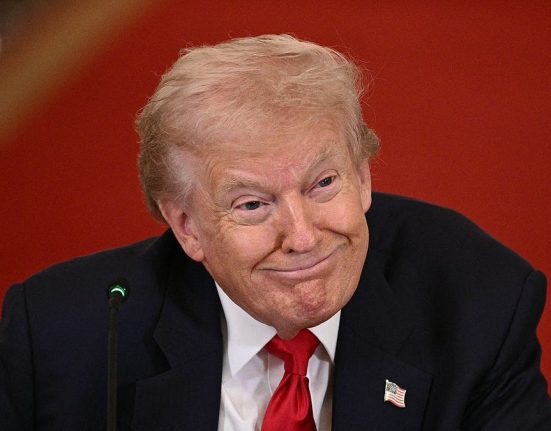
For instance, on Thursday, in a phone interview with Axios, Trump said, “I have to be involved in the appointment” of a new supreme leader in Iran, “like with Delcy [Rodríguez] in Venezuela.” Leaving aside his naive notion that Iran is anything like Venezuela, the remark should splash several gallons of cold water on anyone—democratic protester, Iranian military renegade, Kurdish militiaman, anyone—who might be thinking about heeding Trump’s call to join the war in the hopes of reshaping Iran afterward. Trump views himself as the one who will take charge; he sees domination as the just reward for violently ousting the old leader. The war in Iran is Trump’s war (and Netanyahu’s too)—even if thousands, in some way millions, of other people are paying the price.

First Appeared on
Source link




Leave feedback about this