

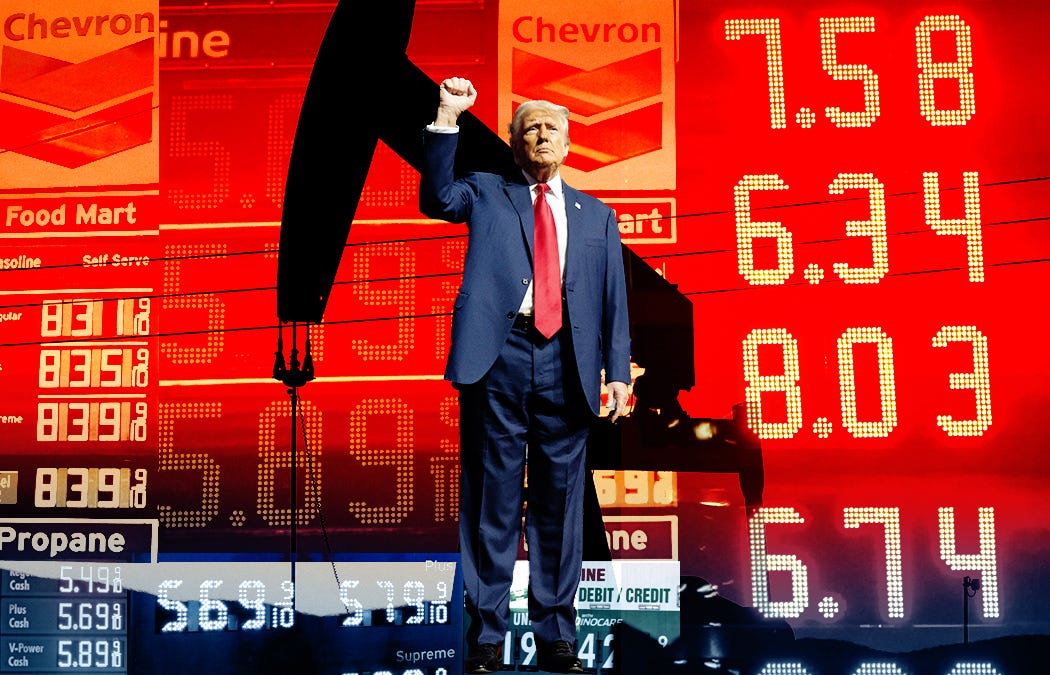
NEON SIGNS ANNOUNCING the price of a gallon of gasoline are as ubiquitous a feature of America’s roadways as strip malls, cigarette butts, and roadkill. With so many gas stations competing with one another, each is eager to advertise a lower rate—especially since cheap fuel helps bring people in the door of the shop, where the real profits are made selling cigarettes, lottery tickets, and snacks.
But the glowing numerals above the nation’s highways and byways aren’t just economic messages—they’re political messages, too. The price of a gallon of gasoline is one of the most tangible ways for voters to measure not only their own costs of living, but also the overall health of the economy. It’s an imperfect measure—cheap gas doesn’t always correlate with economic growth—but spikes in the price of oil usually do come with an economic downturn.
“Every time [Americans] drive to the grocery store, drive their kids to school or drive to work—there is that monstrous sign that shows them, day by day, how much [the price of gas] increases,” said Democratic pollster John Anzalone. “It’s maddening to people.”
Affordability has long been the key issue Democrats believed would motivate voters in the midterm elections—particularly the rising cost of health care, groceries, and electricity bills. But gas prices were not a part of the messaging plan because they had gradually dropped since Trump returned to office. Until the last week, that is.
Trump’s war of choice against Iran has been a self-inflicted political wound, allowing Democrats to connect their affordability case to literally the most visible price signals in the economy. As gas prices ticked up, staffers at party committees and super PACs have begun
First Appeared on
Source link


Leave feedback about this