

The U.S. economy remains the envy of the world in many respects, at least in President Donald Trump’s telling. But its lofty position is threatened by, among other things, America’s own chronic inability to keep a balanced budget, and the administration’s trade policy is part of what’s holding it back from doing so.
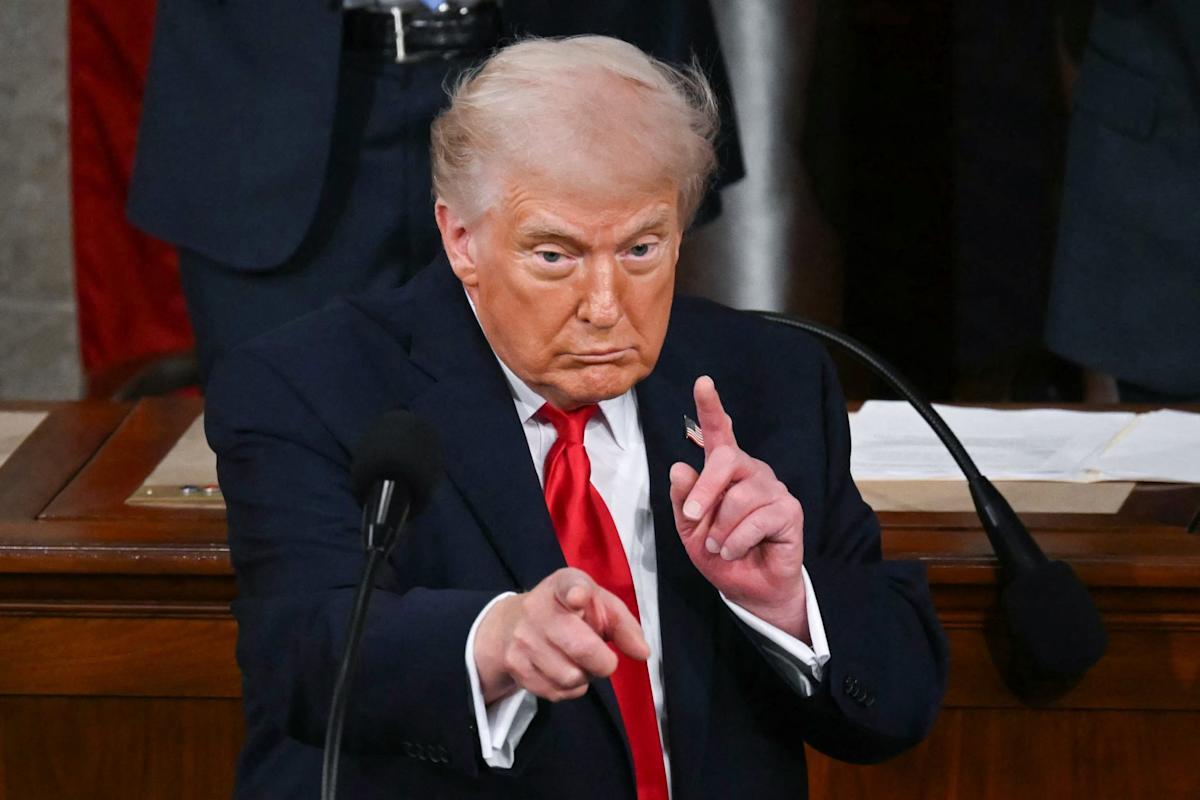
In his State of the Union address this week, Trump said the U.S. was “winning again, and in fact, we’re winning so much that we really don’t know what to do about it.” Despite suffering from low approval ratings, Trump might soon score points for the economy, courtesy of the International Monetary Fund, which this week highlighted how the U.S. remains in many ways an economic powerhouse.
Strong economic growth, rising productivity, and a labor market that has proved adaptable and resilient combine to paint a rosy picture of the U.S. economy, according to Kristalina Georgieva, the IMF’s managing director.
“We expect that a buoyant U.S. economy will continue to grow strongly throughout this and next year,” Georgieva said on Wednesday, shortly after her agency had released its annual review and outlook for the U.S. economy.
Georgieva lauded the “remarkable performance” of the U.S. private sector over the past year. GDP growth reached 2.2% in 2025, and the IMF projects it to accelerate to 2.4% for this year. This resilience has turned the U.S. into a primary economic driver for the world that is creating “positive spillovers to the global economy” at a time of high international uncertainty, she added.
A strong economy could be the country’s best chance to patch up its growing deficit, Georgieva said. But at least according to the IMF’s recommendations, Trump’s love for punitive tariffs as a main driving force in his trade policy might be actively working against reaching a balanced budget.
The deteriorating state of the country’s fiscal balance threatens to extinguish the benefits of America’s strong economy. Under current policies, general government debt—the measure of how much more the country is spending than taking in—could hit 140% of GDP in the next five years, according to the IMF, possibly more than $50 trillion. The agency noted a troubling paradox in recent policy shifts. While tax and spending changes legislated mostly through the Trump administration’s One Big Beautiful Bill Act last year are expected to modestly boost economic activity this year and next, they’ll be overshadowed by increased spending and lower tax revenue that continue to push federal debt higher.
Trump has framed his tariffs as a key measure to bring in more revenue and reduce the deficit, but Georgieva implicitly pushed back against that narrative. She called U.S. tariffs a “headwind to even stronger growth” that dragged down productivity. In the story of a strong U.S. economy, “we could have seen more of the good news” without the penalizing effect of tariffs, she said.
First Appeared on
Source link



Leave feedback about this