

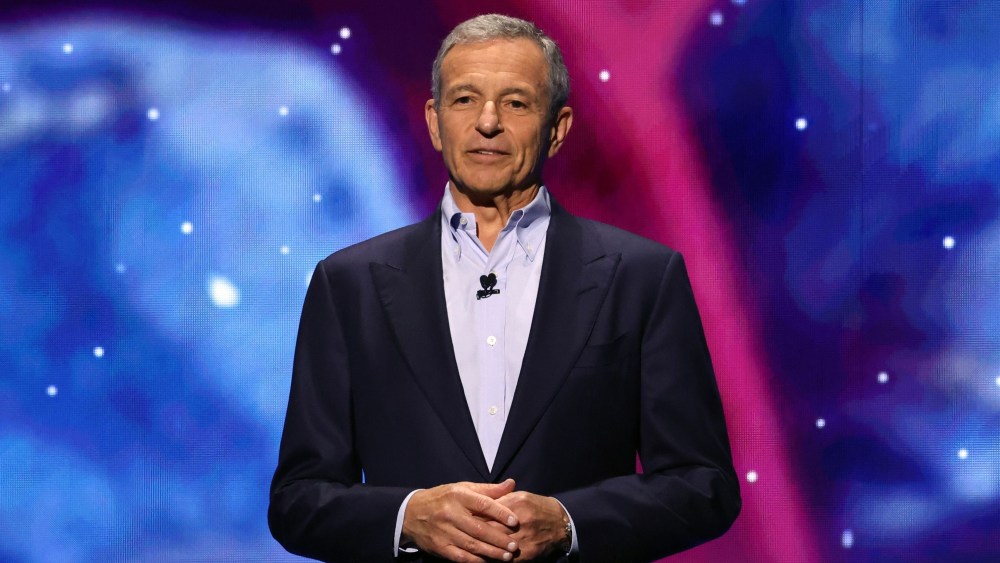
Bob Iger has been hailed as among the greatest CEOs of his generation. As he prepares to (finally) exit as Disney’s CEO and officially hands over the reins to former parks chief Josh D’Amaro on March 18, Iger will leave behind a strong track record of successfully executing big M&A deals and pulling the media conglomerate into the streaming era.
But while he’s earning kudos for a smooth CEO transition at Disney this time around, one of the demerits on his otherwise stellar report card will be how he mishandled the handoff in 2020 to his hand-picked successor at the time, Bob Chapek.
“If the succession had gone right with Chapek, Iger would be just a hero at this point. It’s like, ‘You did everything right,’” says Henning Piezunka, an associate professor of management at the University of Pennsylvania’s Wharton Business School, who studies corporate successions. Iger “probably stayed around too long. He succeeded at everything except succession.”
Iger, who turned 75 last month, began his career at ABC in 1974 — when D’Amaro was just a toddler. In October 2005, Iger was first appointed Disney’s CEO. After a remarkable run of nearly 15 years, he relinquished the role in February 2020 and Chapek (who, like D’Amaro, formerly ran the parks division) took over as CEO. Iger officially retired at the end of 2021. But in November 2022, the Disney board called Iger back into service to replace Chapek — who was ousted after a series of missteps.
Under Iger’s first term, Disney made a series of significant and ultimately extremely profitable acquisitions: Pixar ($7.4 billion) in January 2006; Marvel Entertainment ($4 billion) in December 2009; and Lucasfilm ($4 billion) in December 2012.
“It is quite right to say he was a transformative CEO, certainly in his first tenure,” says Sridhar Tayur, university professor of operations management at Carnegie Mellon University’s Tepper School of Business. “He didn’t just run Disney. He redesigned the company.” Iger understood “the importance of creators” and big entertainment franchises, Tayur says: “I think he understands the core of the secret sauce that Disney needs.”
The deals Iger led “were bold. They were breathtaking,” says Prof. Jeffrey Sonnenfeld at Yale School of Management. He says the Pixar deal in particular — in which Iger negotiated the company’s sale with Steve Jobs — “did so much to revive Disney animation,” which had grown very risk averse.
Per a 2024 analysis by the Yale School of Management’s Chief Executive Leadership Institute, each of those acquisitions have paid off handsomely. Disney has generated more than $40 billion in direct revenue from Pixar, not even counting derivative revenue streams such as park attractions and synergies with other Disney franchises; Marvel had contributed $13 billion and Lucasfilm had brought in $12 billion.
Michael Eisner, Iger’s former boss and mentor, had built Disney through internal development rather than through acquisitions. Iger changed that. “You can get a bigger impact, quicker through M&A — but you have to do it right,” says Dr. Ann Mooney Murphy, business professor at Stevens Institute of Technology. “Iger executed the M&A strategy well… The contrast with Eisner is so stark.”
Iger’s ascendance to Disney’s CEO in 2005 “is truly a credit to his diplomacy,” adds Sonnenfeld. Eisner, who was “getting a little monarchic,” could have been “threatened by Iger’s rise.” When Eisner later “trashed” Iger in his own biography, Sonnenfeld says, “that cut Iger free so he could be independent.”
Bob Iger and Mickey Mouse at Disneyland on June 24, 2006, in Anaheim, California, for the world premiere of “Pirates of the Caribbean 2: Dead Man’s Chest.”
Getty Images
Not all of Iger’s deals have paid off. In 2014 Disney, hoping to tap into the rising tide of YouTube creator content, acquired multichannel network company Maker Studios, ultimately paying $675 million for it. Maker was supposed to give Disney “an unmatched combination of advanced technology and programming expertise and capabilities” in short-form video, Iger said at the time. But Maker Studios’ business was steadily pared back, as the model failed to have legs.
Then there’s 21st Century Fox. Some on Wall Street think Disney drastically overpaid: The $71 billion deal closed in 2019, coming as linear TV was in decline (a descent that has only continued since then). The Fox deal was slammed by activist investor Nelson Peltz, who in 2024 failed in his a proxy war with Iger to get two seats on Disney’s board. The Fox deal was “strategically flawed,” according to Peltz’s Trian Partners: “We are skeptical that Disney has delivered on its targeted synergies and EPS accretion given the deterioration of Disney’s media earnings power following the acquisition.” The investment firm also alleged that Disney put in place “a strong financial incentive for Mr. Iger to pursue the Fox deal regardless of its prospects, creating a significant conflict of interest.”
Peltz exhibited “a lot of locker-room bravado,” Sonnenfeld says, but with respect to Disney’s Fox acquisition had “mistaken math.”
According to Yale’s analysis, Disney’s costs for the 21st Century Fox assets were closer to $45 billion (after Disney divested assets including selling the Fox regional sports network to Sinclair for $11 billion and selling Fox’s stake in Sky to Comcast for $15 billion). Moreover, Disney picked up key assets in the deal, including Fox’s 30% stake in Hulu; Disney ultimately acquired 100% of Hulu after buying out Comcast’s stake last year (for far less than Comcast was seeking). Assuming just a 6x multiple on $6 billion in immediate earnings, cost cuts and synergies, including earnings from properties like James Cameron’s “Avatar” and “The Simpsons,” the Fox deal “paid for itself within the first year,” according to Sonnenfeld.
Now Disney owns more content engines, like FX, that can pump content into Hulu, which the company is subsuming into Disney+. Also through the Fox acquisition, top TV exec Dana Walden joined Disney; Walden, who had been under consideration to be Iger’s successor, is becoming the company’s first chief creative officer under D’Amaro as CEO.
When it came to the Chapek debacle, Piezunka says it was a mistake for Iger to stay on as chairman through the end of 2021. “The fact they saw the need to keep Iger around the first time as chairman, that’s not a good sign. You are already admitting that person is not up to the job,” he says. Today, “the company seems like it is in a succession-ready state.”
To be sure, Chapek faced some unprecedented challenges. He became CEO of Disney just months before the onset of the COVID-19 epidemic in the U.S. — which essentially wiped out Disney’s theme parks business and theatrical moviegoing businesses for months. But Chapek also fumbled the “Don’t Say Gay” battle with Florida Gov. Ron DeSantis; he restructured Disney’s creative teams to report to a centralized distribution group, which was unpopular at the company; and he had tense relations with Hollywood talent, notably triggering a lawsuit from Scarlett Johansson, who alleged she was cheated out of millions when Disney put “Black Widow” directly on Disney+.
After Iger came back as Disney’s CEO, in early 2023, the exec instituted layoffs at the company and dismantled Chapek’s management structure by creating Disney Entertainment, headed by co-chairs Dana Walden and Alan Bergman. Iger said he’d had to fix problems at the company, some of which he blamed on “decisions that were made by my predecessor.”
Iger has at times angered the creative community — such as when he said in mid-2023 that Hollywood’s writers and actors unions going on strike were not being “realistic” with their expectations. “We’ve talked about disruptive forces on this business and all the challenges we’re facing, the recovery from COVID which is ongoing, it’s not completely back. This is the worst time in the world to add to that disruption,” Iger said at the time.
But in general, Iger is “good at staying above the fray and skating above controversy… He’s really good at impression management,” Stevens’ Murphy says.
In his second run as CEO, Iger pushed back against DeSantis’s anti-Disney campaign and in March 2024 Disney reached a settlement with Florida in the legal fight over the special district that governs Walt Disney World. Says Yale’s Sonnenfeld: “He speaks to the moral core of the company… He took on DeSantis to unravel that mess, and he was able to fortify the values of the employees and customers.”
Only a few CEOs have been not only visionary leaders but also “moral pillars of integrity and respect,” says Sonnenfeld. “And nobody has been like Bob Iger.”
Disney says Iger’s second tenure has been marked by momentum, with he and his senior management team having made the company more agile and better positioned for long-term growth.
In the past three fiscal years, Disney has delivered a 19% adjusted earnings per share (EPS) compound annual growth rate. The company also reinstated the dividend and increased it annually since 2023. Disney delivered five global franchise films surpassing $1 billion at the worldwide box office in the past two years: “Inside Out 2,” “Deadpool & Wolverine,” “Moana 2,” “Zootopia 2” and “Avatar: Fire and Ash” — although company observers note that Disney’s biggest hits are sequels and say the company is in need of fresh IP.
Iger is leaving Disney having overseen its streaming business achieve profitability, alongside a big post-COVID rebound at Disney Experiences (and a long-term strategic plan to invest $60 billion into that business). The consensus among Disney-watchers is that Iger is leaving the company in good shape as D’Amaro steps into the CEO role.
Iger’s “legacy is kind of safe in terms of pivoting to streaming and stabilizing it,” Tayur says, who predicts that the Fox deal will be seen as being the right long-term bet. “I really believe D’Amaro is inheriting the company in good shape. It’s not a crisis situation.”

Bob Iger and Willow Bay attend the 97th Oscars at Dolby Theatre on March 2, 2025.
Getty Images
What’s next for Iger after he leaves the Mouse House C-suite? He has said he wants to dedicate more time to non-Disney pursuits — including Angel City FC, the professional women’s soccer team in which Iger and his wife, Willow Bay, dean of the USC Annenberg School for Communication and Journalism, bought a controlling stake two years ago. On Monday, Iger posted a congratulatory message to the team on Instagram after it blanked the Chicago Stars FC 4-0.
Iger won’t fully retreat from the public eye, Murphy predicts. While she doesn’t foresee him taking another CEO job or, say, running for president, she says “he’ll have his pick” of joining the board of pretty much any company or organization he’s interested in.
“I don’t think he will truly retire,” she says. “A guy like that never just sails off into the sunset.”
First Appeared on
Source link



Leave feedback about this