

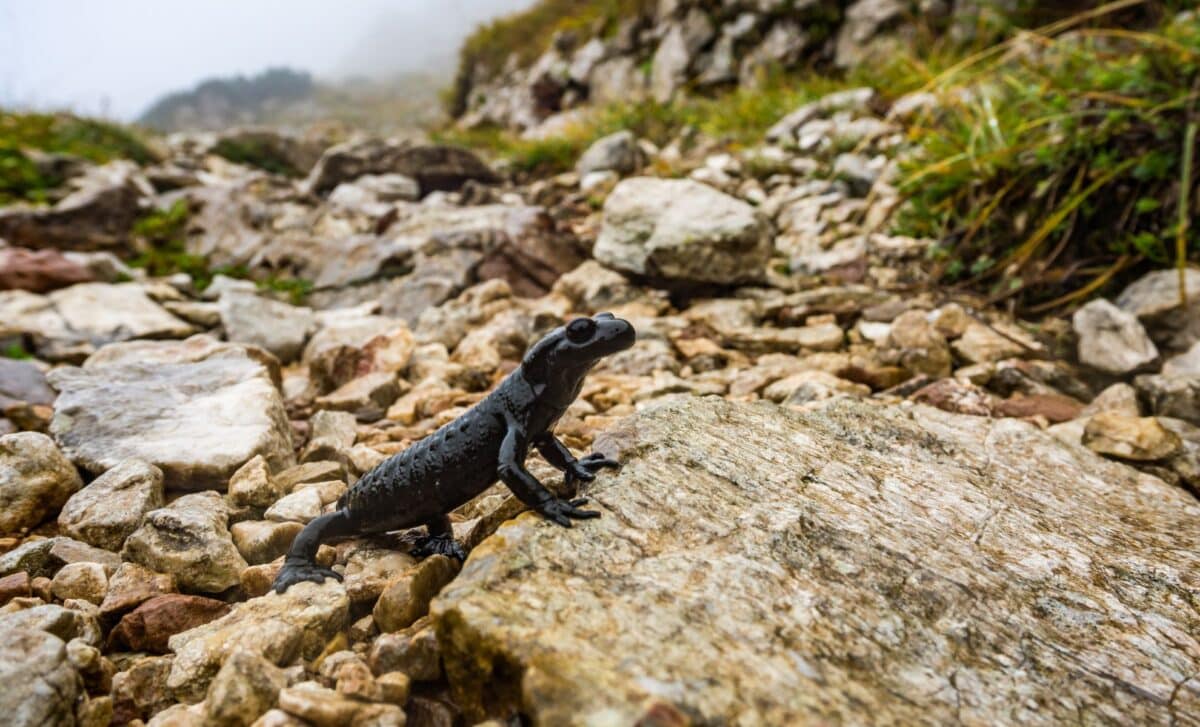
Paleontologists uncovered the fossilized jawbone of a creature that once lived around 275 million years ago, Tanyka amnicola, a strange ancestor of modern salamanders. Initially, scientists thought the jaw’s peculiar shape was a deformity. But as more fossils were discovered, it became clear that Tanyka was an evolutionary oddball with features unlike any other vertebrate of its time.
Found by researchers at Chicago’s Field Museum, Tanyka’s fossil revealed a perplexing structure that baffled experts. The odd twist of its jawbone, along with its backward-facing teeth, raised many questions about its biology and lifestyle. However, after years of analysis, paleontologists now understand that Tanyka’s bizarre jaw was not a freak accident of nature. It was simply a part of its evolutionary design.
An Ancient, Surviving Lineage
Tanyka amnicola was a relic from a nearly forgotten branch of vertebrate evolution. Tetrapods, the group of animals that includes all four-legged vertebrates, evolved about 370 million years ago. Over time, they split into two main groups: one that gave rise to animals that laid eggs on land and another that laid eggs in water.
Tanyka, however, remained firmly entrenched in the “stem tetrapod” lineage, a group that didn’t evolve into modern amphibians or reptiles but instead followed its own evolutionary path. According to Jason Pardo, a paleontologist from the Field Museum, Tanyka represents an early form of vertebrate that survived much longer than scientists originally thought possible.
“The jaw has this weird twist that drove us crazy trying to figure it out. We were scratching our heads over this for years, wondering if it was some kind of deformation,” he added.
Just as the platypus holds onto ancient traits, Tanyka preserved characteristics from a bygone era, maintaining its position as a living fossil of sorts, albeit one that lived millions of years ago.
The Jaw’s Hidden Story
As stated in the latest research, published in the Field Museum, the team first discovered the fossil and were puzzled by its strange shape. The teeth pointed to the sides, rather than upward like those of most vertebrates. The twist in the jawbone was unlike anything seen in early vertebrates.
“We’ve got nine jaws from this animal, and they all have this twist, including the really, really well-preserved ones. So it’s not a deformation, it’s just the way the animal was made,” explained Pardo.
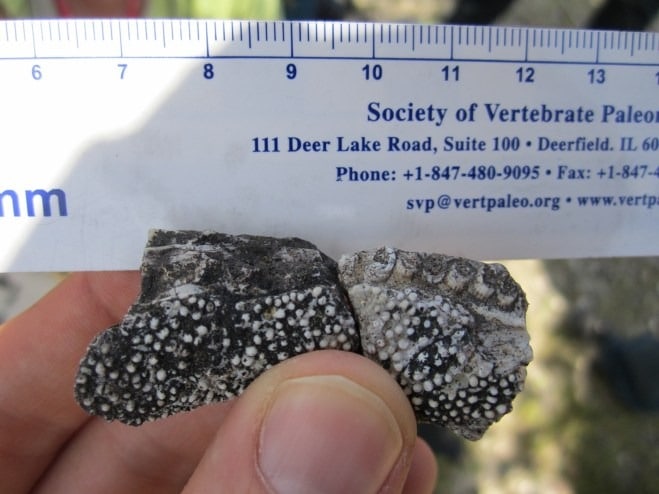
In fact, its unusual design appears to have served a specific purpose. The teeth were covered with tiny denticles, which likely acted like a grinding surface, enabling Tanyka to process plant material. This suggests that, unlike most other early tetrapods that were carnivorous, Tanyka may have been an herbivore.
Juan Carlos Cisneros, a paleontologist from Brazil’s Federal University of Piauí and co-author of the study, explained that the denticles could have helped Tanyka grind plants in a way that most of its contemporaries could not.
Uncertainty Surrounding Its Appearance
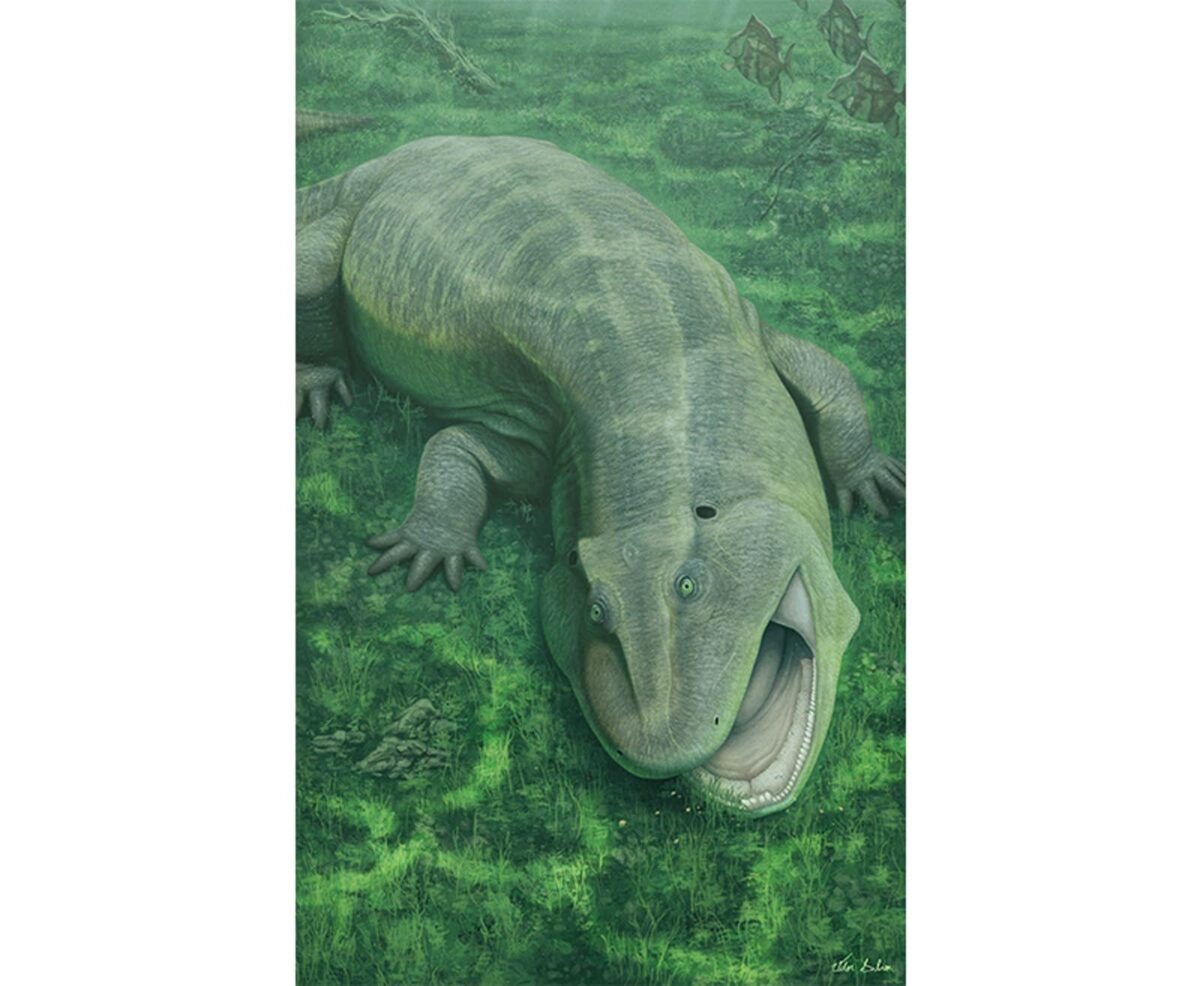
Paleontologists believe that Tanyka was about three feet long and likely resembled a salamander, with a particularly long snout. But because the jawbone is the only part of the creature found so far, its full physical appearance remains a mystery.
“We found these jaws in isolation, and they’re really weird, and they’re very distinctive,” said Ken Angielczyk, another co-author of the study. “But until we find one of those jaws attached to a skull or other bones that are definitively associated with the jaw, we can’t say for sure that the other bones we find near it belong to Tanyka.”
Without more fossil evidence, Tanyka’s full form remains speculative. Still, the features of this creature alone provide a wealth of information, shedding light on the ancient beings that once roamed the Earth long before the rise of modern vertebrates.
First Appeared on
Source link






Leave feedback about this