

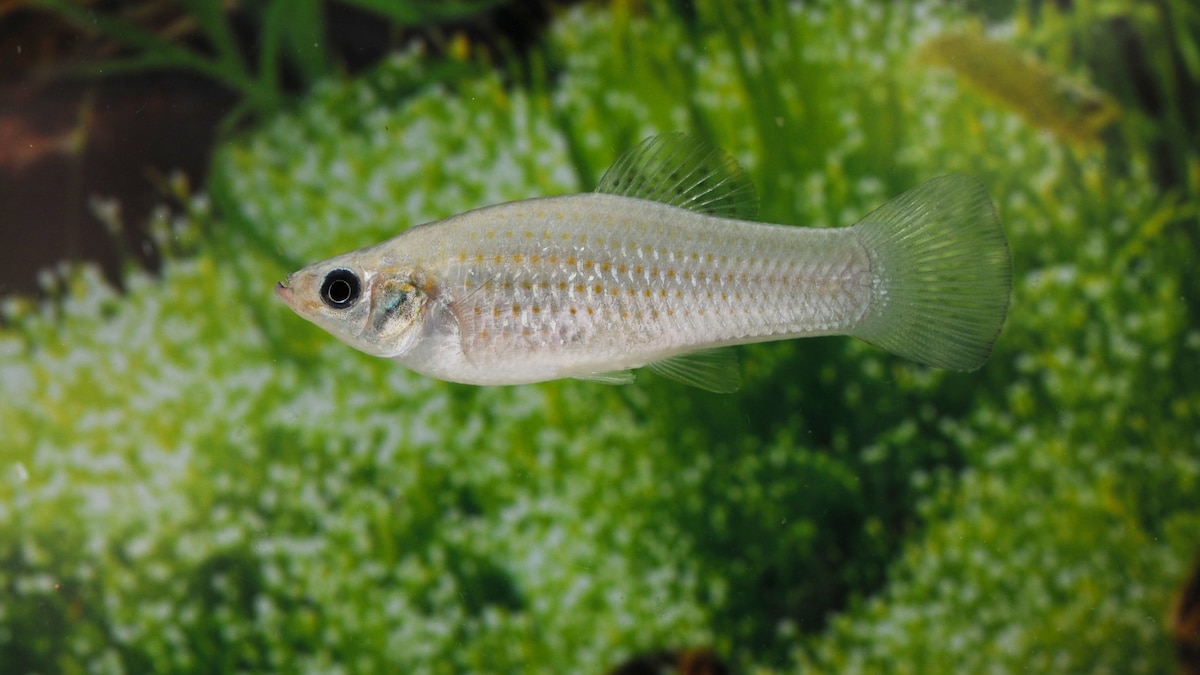
(How some animals have ‘virgin births’: Parthenogenesis explained)
Girl power
Amazon mollies are small, round-finned fish no bigger than a thumb. Named after the female warrior race from Greek mythology, these fish first appeared around 100,000 years ago after a female Atlantic molly took a liking to a male Sailfin molly. While couplings between members of different species usually produce infertile offspring, this one gave rise to a species capable of giving live birth to carbon copies of itself. These fish do need to have sex with male mollies of other species to trigger their self-cloning, a process known as gynogenesis, but their offspring never carry the DNA of those males.
When Amazon mollies were discovered in 1932, they were the first vertebrates known to be capable of asexual reproduction. While dozens of vertebrates have since been discovered to possess the same power, including Komodo dragons and hammerhead sharks, Amazon mollies are one of the only vertebrates to do so exclusively.
How they’ve managed to do so has long been a mystery. According to current models of how genetic mutations accumulate over time in asexual reproduction, Amazon mollies “should have gone extinct after 10,000 years or so,” says Edward Ricemeyer, computational biologist at the Ludwig Maximilian University of Munich and co-author of the new study. “The fact that they have been around for much longer than that presents this paradox.”
Ricemeyer, who was a research scientist at the University of Missouri when he began studying Amazon mollies in 2019, says scientists still don’t know how asexual species, especially complex ones like vertebrates, don’t rack up harmful mutations, given that natural selection isn’t constantly weeding them out.
First Appeared on
Source link




Leave feedback about this