

On a bad day for the planet, the first signs would look ordinary at first. A bright streak in the sky, a strange pulse on space-weather monitors, or a distant star suddenly flaring where none had before. The danger would not be the flash itself, but what comes next for the surface environment. Dust, darkness, collapsing food webs, and temperatures swinging out of the narrow range most animals need create a hostile landscape for life.
That is where the familiar guesses usually appear in popular culture. People mention cockroaches and rats, as if toughness is mostly about surviving cities without humans. But a group of researchers took a different route, one that starts with physics instead of pests. They asked what it would take to erase even the hardiest animal life, not just topple civilizations or end human history.
Their target was not a dramatic crater or a headline-grabbing extinction like the one that claimed the dinosaurs. It was a simpler, colder question regarding how much energy it takes to sterilize a planet. To answer it, they required a creature that sets the biological floor for survival. That search led them to the tardigrade, a microscopic organism that redefined the limits of terrestrial resilience.
Why Oxford and Harvard stopped asking human questions
The investigation moved away from human vulnerability to focus on absolute biological endurance. Dr. David Sloan and Dr. Rafael Alves Batista of the University of Oxford led the inquiry. Their analysis, published in the journal Scientific Reports, abandoned the typical focus on surface-dwelling mammals to hunt for a true “survivability baseline” for the entire planet.
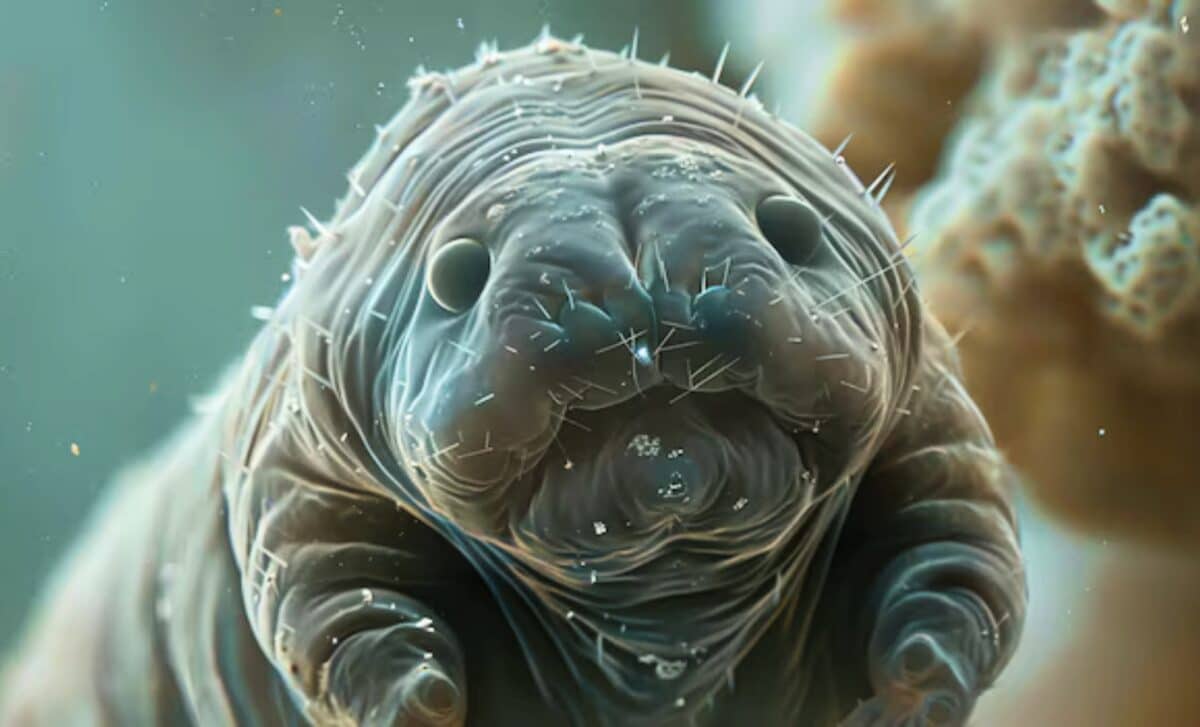
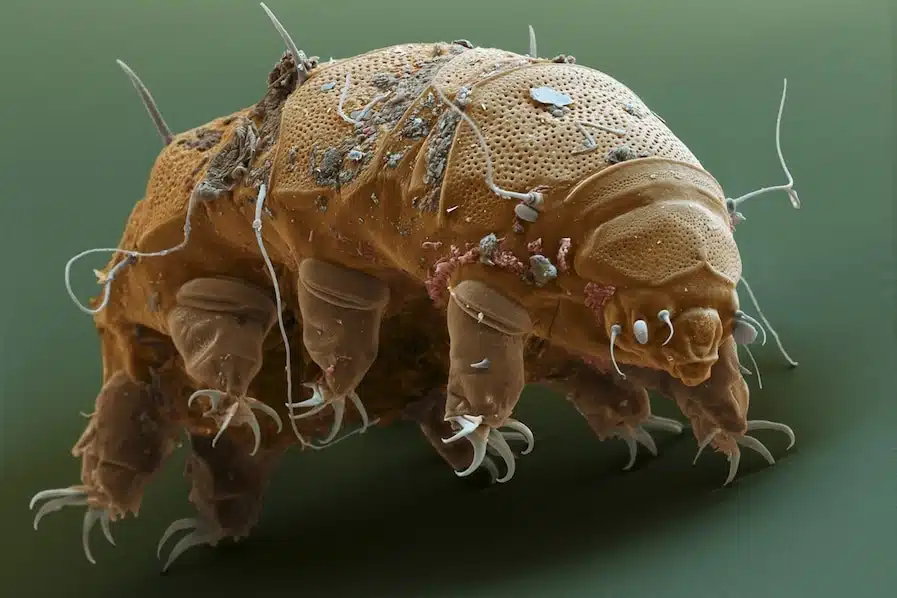
A tardigrade is a microscopic, eight-legged animal often called a water bear. The University of Oxford summary notes they can grow to around 0.5 mm and in some cases live up to 60 years. Under harsh conditions, a tardigrade can enter cryptobiosis, a state where metabolism nearly stops and the body can endure long stretches without water. In that mode, researchers report they can survive up to 30 years without food or water.
Those facts matter because the study’s logic is deliberately unfair to the cosmos. If the goal is to sterilize Earth, it is not enough to starve forests or freeze the land surface. You would need to eliminate refuges, especially deep, buffered environments where small animals can wait out catastrophe. That is why the researchers kept returning to one physical threshold involving the global ocean.
The ocean boiling line that reshapes the problem
The study argues that to truly eliminate the hardiest animals, you have to remove the ocean as a safe haven. For a tardigrade living in deep water, many planet-wide disasters translate into inconvenience rather than extinction. An impact can darken skies for years, and a nearby stellar event can strip ozone or spike radiation at the surface. But water is shielding, and the deep sea is stable compared to land.
So the analysis focuses on what it would take to boil the oceans. That is the planet sterilization bar the authors use as a practical endgame for complex animal life. It is also a bar that most famous catastrophes fail to reach. The result is not a promise of safety, but a ranking of extremes that demonstrates the durability of the tardigrade.
The asteroid case is the clearest example of this energy requirement. University of Oxford reports that an impactor would need a mass of about 2,000,000,000,000,000,000 kg to boil Earth’s oceans. That is a wildly different class of object than the one associated with most known mass extinctions. The researchers also note that only about 12 known asteroids and dwarf planets are even large enough to approach this scenario.
Asteroid math remains brutal before checking the sky
University of Oxford gives a sense of scale by naming specific bodies that could theoretically meet the energy requirement. It lists Vesta and Pluto, both far above the boiling threshold in sheer mass. But the problem is not only size. The report adds a detail that sharply limits the drama: none of these large bodies are on trajectories that intersect Earth’s orbit.
That does not make impacts trivial for humans. It means the planet-destroying version requires a rare kind of collision, involving a rare kind of object, arriving on a rare kind of path. In the study’s framing, the more realistic outcomes are still devastating for surface ecosystems, while failing to erase deep-ocean refuges. A tardigrade does not need the surface to recover quickly if it can simply persist below.
This is also where pop-culture myths about the last animal on Earth often wobble. A cockroach’s advantage is flexibility in human-built environments, not immunity to ocean-scale heat. The tardigrade advantage is that it can retreat into a protected layer of the planet and slow its biology down. The researchers were modeling energy and habitat, not urban survival skills.
Exploding stars only win if they get close
The same threshold thinking carries into supernovae and high-energy bursts. The University of Oxford reports that a supernova would need to occur within about 0.14 light-years to provide enough energy to boil the oceans. That number matters because it is not a nearby galaxy problem. It is a next-door issue in astronomical terms.
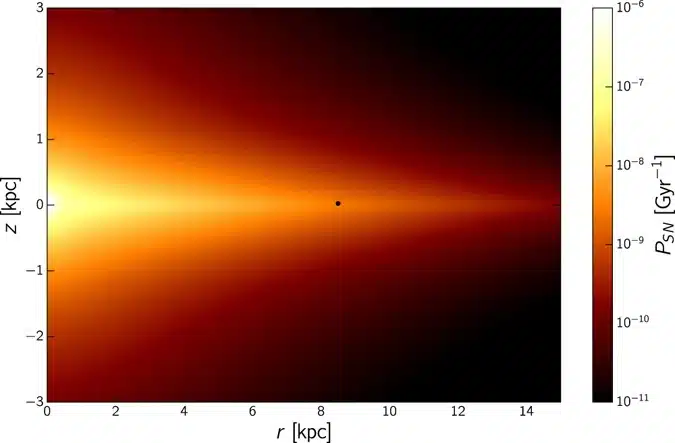
For context, the closest star system is Proxima Centauri, about four light-years away. That makes an ocean-boiling supernova effectively outside the local neighborhood as we know it. The report calls the probability of such a sterilizing event within the Sun’s lifetime negligible. It is a distance argument as much as a violence argument.
“Life on this planet can continue long after humans are gone.”
Rafael Alves Batista of the University of Oxford emphasized how researchers separate human fate from planetary fate. He stated: “Without our technology protecting us, humans are a very sensitive species. Subtle changes in our environment impact us dramatically. There are many more resilient species on earth. Life on this planet can continue long after humans are gone.”
First Appeared on
Source link




Leave feedback about this