

The ringing of a phone echoed through the Nevada county, California, sheriff’s office just before noon on 17 February.
The 911 call brought devastating news: an avalanche had occurred on nearby Castle Peak – a 9,110ft (2,780-meter) mountain north of the Donner summit in the Lake Tahoe area. A group of backcountry skiers had been on the mountainside, returning home from a three-day expedition, during a heavy winter storm. While six had survived, more than half their group was missing.
The ensuing rescue mission in harrowing conditions would bring those six home. In the additional days since the disaster unfolded, family and friends have shared glimpses of the tight-knit group of women, all experienced skiers, whose backcountry excursion took a deadly turn, becoming one of the worst avalanche disasters in US history.
After receiving the emergency call, the sheriff’s office quickly marshaled a team of 46 first responders. But the conditions outside remained treacherous. The University of California, Berkeley’s Central Sierra Snow Lab, near Donner Pass, reported 28in of snow that day, with another 3ft expected in the next two days. The risk of another avalanche occurring during the rescue effort was high.
At first, the sheriff’s office believed 16 people had been in the group trapped on the mountainside: 12 clients and four guides with an expedition group called Blackbird Mountain Guides. But when they arrived on the scene, Blackbird told them that one person had decided to back out of the trip “last minute”, according to the Nevada county sheriff Shannan Moon. Among the missing was the spouse of one of the search-and-rescue volunteers.
The Blackbird group had been on a backcountry ski trip, sleeping two nights at the Frog Lake ski huts – upscale cabins equipped with heaters, wall sockets and bathrooms – before returning to the trailhead on the third day, when the avalanche hit.
Amid the ongoing storm, ski rescue teams headed out into the field onboard a Sno-Cat, a truck-sized vehicle equipped with tank-like tracks that allow it to navigate polar conditions. By 5.30pm, the rescue team had reached a location about 2 miles from where beacons told them the surviving skiers were sheltering. First responders skied the remaining 2 miles of mountainous terrain until they reached the six survivors.
In the hours since the avalanche had occurred, the survivors had built a shelter out of tarps and managed to uncover the bodies of three of their group members. First responders found five additional bodies. One person’s remains are still unaccounted for.
It took several more hours to get the group off the mountain. At a press conference the following day, Placer county sheriff Wayne Woo implored the public to stay off the Sierras as the storm continued. “Please allow us to focus all of our resources on continuing to recover these bodies for the family and bring them home,” he said. The recovery was expected to last into the weekend.
‘They cherished time together in the mountains’
With eight skiers confirmed dead and one still missing, the Castle Peak avalanche is now the fourth deadliest in US history. In its wake, details are beginning to emerge about the deceased – the majority, a group of mothers and close friends from the Bay Area.
In a statement, the families of six of the deceased identified them as Carrie Atkin, Liz Clabaugh, Danielle Keatley, Kate Morse, Caroline Sekar and Kate Vitt, of the Bay Area, Idaho and the Lake Tahoe area. Two of the women – Sekar and Clabaugh – were sisters.
“They were passionate, skilled skiers who cherished time together in the mountains,” the families said.
The families added that the six were part of a group of eight friends, indicating two of the survivors were among the group who went on the trip. They were experienced backcountry skiers “fully equipped with avalanche safety equipment”, the families said.
Max Perrey, mayor of Mill Valley, a town north of San Francisco, acknowledged that some of the women were residents of the city in a statement to the Marin Independent Journal, calling it “a huge tragedy and a huge loss”.
School district officials there said authorities were preparing to support students whose mothers may be among the dead. At least one of the victims was the mother of two children in the Kentfield school district, according to local media.
Three of the deceased were guides with Blackbird Mountain Guides. Zeb Blais, the company’s founder, issued a statement calling it an “enormous tragedy, and the saddest event our team has ever experienced”, adding that the guides had all been trained or certified in backcountry skiing by the American Mountain Guides Association and were instructors with the American Institute for Avalanche Research and Education.
Blackbird Mountain Guides referred additional questions from the Guardian to the Nevada county sheriff’s office.
Information about what went wrong on the mountainside is still forthcoming – including why the group decided to leave the huts where they had sheltered the night before. An analysis by the San Francisco Chronicle shows that the group took a route on Tuesday that passed over terrain rated at a higher risk for an avalanche than a longer, slower alternative exit, although the reasons for doing so are not yet clear.
The Nevada county sheriff’s office and Cal/Osha have opened standard investigations into the incident, to determine whether criminal charges are warranted.
A mountain range with a history of avalanches
Avalanches are not uncommon in the Sierras, although Tuesday’s is the most devastating in modern California history.
“Naturally occurring avalanches are relatively common in mountainous areas that receive snow, like the greater Tahoe area covered by our daily avalanche forecast,” said David Reichel, executive director of the Sierra Avalanche Center. “Every time a major storm hits the area, it is reasonable to assume many avalanches occur.”
The Sierra Avalanche Center, which provides forecasts for the region, has observed at least 50 avalanches in the area near Lake Tahoe since September 2025, and people have died in avalanches in the Lake Tahoe area in six out of the past 10 years. Most recently, a snowmobiler was killed earlier this year when an avalanche occurred in the same area near Castle Peak.
Perhaps the most well-known avalanche to occur in the region was the Alpine Meadows avalanche of 1982, which killed seven and was memorialized in the film Buried: The 1982 Alpine Meadows Avalanche and the book A Wall of White by Jennifer Woodlief.
What specifically caused the heavy sheet of snow to break loose and cascade down the slopes remains unclear. But a series of conditions set the stage, and forecasters had warned that the risks for an event like this were perilously high.
Before this week’s storms blanketed the Sierra in dense and heavy snow, the mountains were worryingly bare. In an exceedingly warm winter, where precipitation fell more often as rain and a more rapid melt-off was likely, brown patches could be seen poking through the thin icy layer at elevations typically shrouded in white during the early months of the year.
This created a dangerous foundation for new snowfall, which couldn’t easily integrate onto frozen landscapes. It also meant hidden hazards – rocks, gravel and downed trees – could slip into layers near the surface, increasing the dangers.
This one-two-punch – a devastating snow drought that produced a thin layer of ice followed by heavy and rapid snow accumulation – “fits the pattern of major avalanche events we have seen in this part of California in the past”, said climate scientist Daniel Swain. Swain has long warned of the compounding threats posed by these extremes, and how the climate crisis will fuel more damaging swings between extremes.
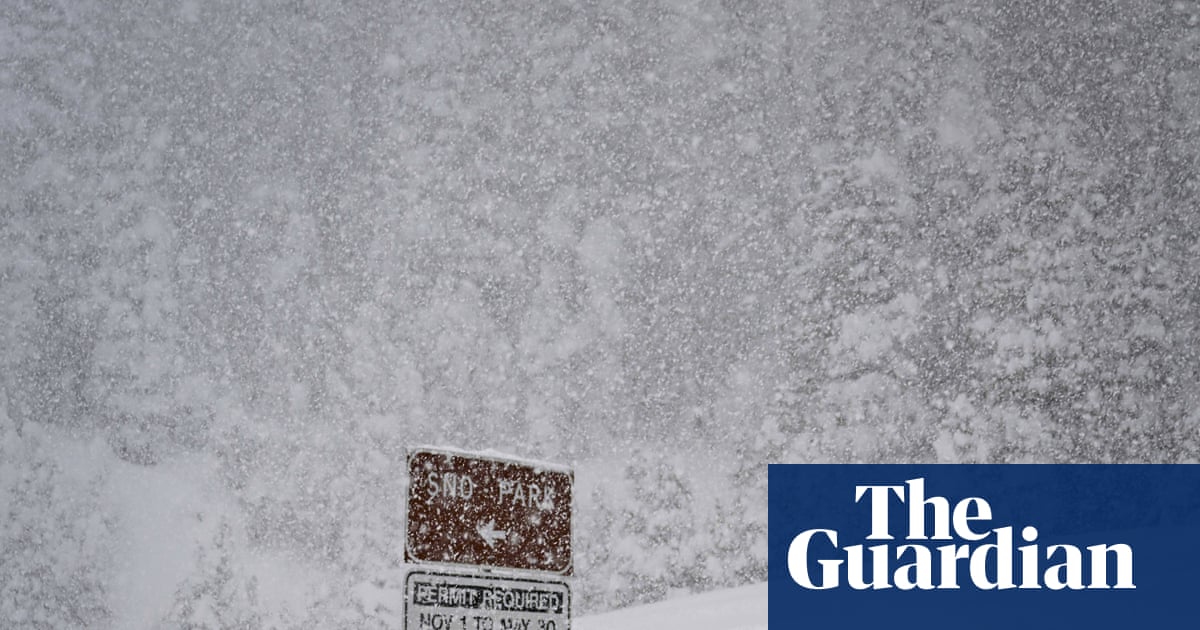
The storm at the center of this tragedy was not extraordinary by Sierra standards, where furious winter elements can turn turbulent quickly, but it was intense. More than 66in had fallen over three days, the UC Berkeley Central Sierra Snow Lab reported on Wednesday morning, the day after the avalanche. Whiteout conditions and gale-force winds added threats faced by the skiers and complicated rescue efforts.
Before Tuesday’s avalanche, the Colorado avalanche information center had tallied six US avalanche deaths so far this season. It says avalanches have claimed an average of 27 lives a year over the past decade in the US.
The communities affected by this particular disaster are only just beginning to come into focus, as family members mourn their loss.
“Our focus right now is supporting our children through this incredible tragedy and honoring the lives of these extraordinary women,” the families shared in their statement. “They were all mothers, wives and friends, all of whom connected through the love of the outdoors.”
Gabrielle Canon contributed reporting
First Appeared on
Source link






Leave feedback about this