

We’ve been obsessed with our origins ever since we realized just how ancient Earth really is. We’ve stared at billion-year-old rocks, some with microbes still inside, and run countless computer simulations trying to crack the code. Most hypotheses zoom in on the simplest steps, the basic reactions needed to form life’s fundamental molecules. But that reductionist approach, while tidy, may be selling the process short.
The path to abiogenesis was likely messy, chaotic, and anything but simple. Some scientists prefer systems chemistry, which tries to map how chemical components mingled and created entirely new properties, properties that eventually led to protocells. It’s a solid approach, though it carries a built-in bias: it assumes the finish line was always a cell with a membrane. But maybe a membrane wasn’t the point. At least, not at first.
The Gel That Changed Everything
Tony Z. Jia from Hiroshima University and Kuhan Chandru from the National University of Malaysia, both prebiotic chemistry specialists, are making a compelling case for a different starting line. Writing in the journal ChemSystemsChem, the team puts forward a hypothesis centered on what they call prebiotic gels. They define these as “any soft, structured material formed from plausible prebiotic compounds that creates a semi-solid matrix capable of supporting localized and integrated chemical interactions.”
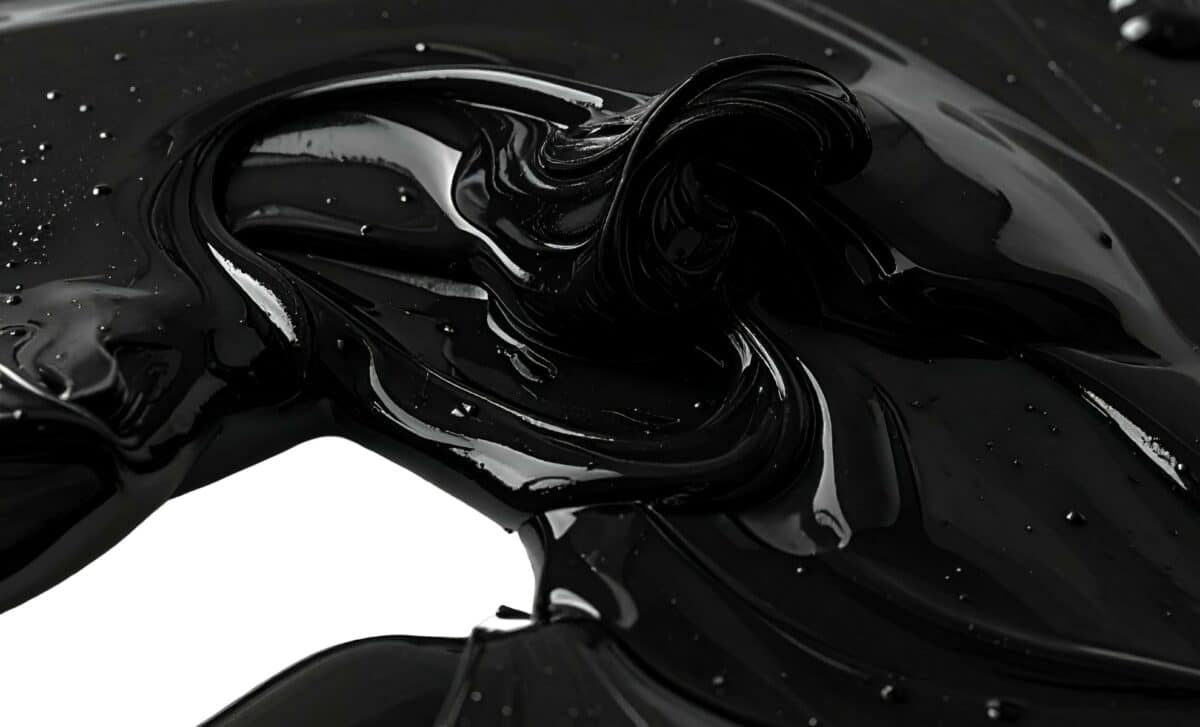
So, what does that actually mean? Picture a kind of chemical sponge, a three-dimensional net where molecules could hang out, bump into each other, and gradually organize. The gel wasn’t just a passive puddle. It was a structured environment that offered multiple evolutionary pathways depending on local conditions, rather than forcing everything down a single, predetermined route. And crucially, it solved a major headache: how to get complex chemistry going without a protective barrier.
The Slime That Shielded
To grasp how this might have worked, consider biofilms. You’ve seen them as the slimy film on river rocks. They’re complex microbial communities wrapped in a polymer shield secreted by the microbes themselves. The researchers believe prebiotic gels likely operated on the same principle. That slime is sophisticated stuff, made of proteins, lipids, cellulose, sugars, and even DNA floating outside of cells. If ancient gels were anything like that, they would have been game-changers for early microbes.
Living in a biofilm means sharing resources, which lowers the metabolic load on any single organism. Free-living microbes have to burn energy just coping with stress and moving around, which hurts their chances of reproducing and surviving. Biofilm dwellers, by contrast, get to redistribute those metabolic tasks, saving precious energy. And that polymer slime? It’s a fortress. It shields against radiation, which was brutal on young Earth, plus desiccation, toxins, and whatever else the planet threw at them. The gel wasn’t just a home. It was a life-support system.
Two Roads to the First Cells
According to Popular Mechanics, the team outlines two distinct ways protocells could have formed inside these gels. The first is phase separation. It’s an efficient process that requires hardly any energy and happens fast. Inside the gel, a watery solution could have naturally separated from a denser, molecule-packed liquid. That separation alone might have assembled the precursors of protocells, creating simple compartments without any membrane required.
The second path is more organic. Molecules within the gel might have simply clustered together into discrete groups, forming what the researchers call proto-films. Inside these clusters, protocells could take shape, and crucially, they would have been capable of the basics: metabolizing nutrients and making copies of themselves.
Why This Changes the Alien Hunt
Here’s where it gets really interesting for anyone scanning the skies. Our search for extraterrestrial life is, perhaps unavoidably, biased by what we know. We look for water, for carbon, for things that resemble our own biology. But as the researchers point out, this “earthbound focus inherently limits our ability to detect truly alien biofilm-like structures, or ‘xeon-films,’ should they exist.”
These hypothetical xeon-films could be built from entirely different stuff, shaped by the unique chemistry and evolutionary path of their home world. If life here started not in a cell but in a glob of gel, then we need to expand our search parameters. Looking for alien life might mean looking not for little green men, or even little green cells, but for the chemical fingerprints of ancient, alien slime.
First Appeared on
Source link





Leave feedback about this