

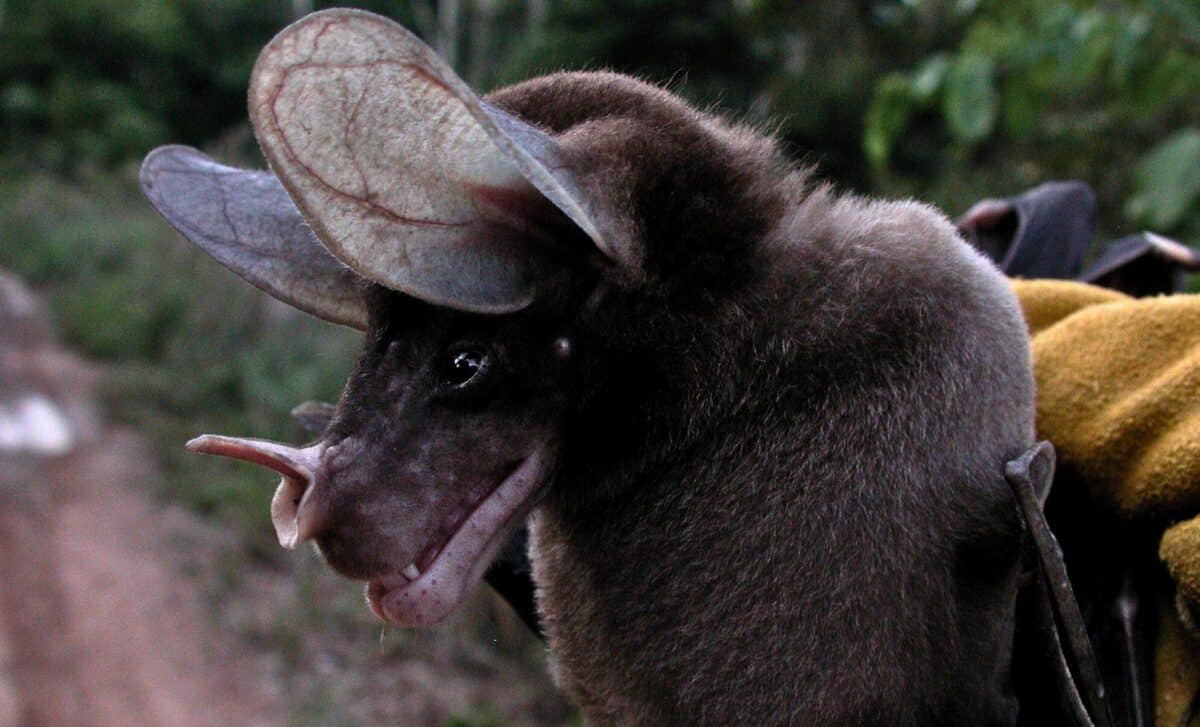
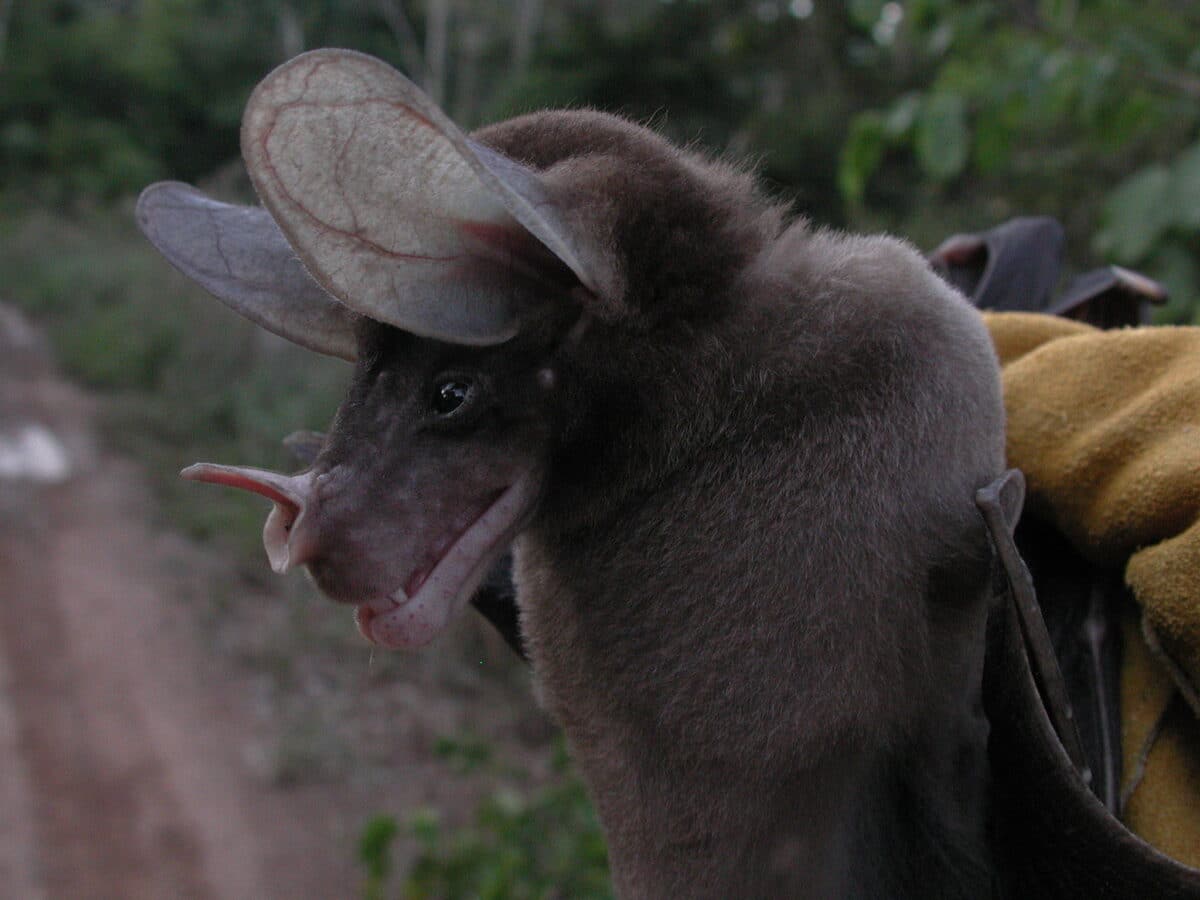
The spectral bat has long occupied an awkward space in the scientific literature. Too rare to study systematically, too intimidating to approach casually, it existed for most of the twentieth century as a collection of specimens and a reputation. Natural history guides described a solitary predator with a three foot wingspan, a creature that emerged at dusk to hunt birds and small mammals in the forests from southern Mexico to Brazil. The name Vampyrum spectrum suggested something spectral, almost mythical.
What no one had ever seen was how it lived when the sun was up. The roost remained a closed box, and the bat inside remained an abstraction.
In late 2023, a team of researchers managed to open that box. They installed a motion sensitive infrared camera inside a hollow tree in Costa Rica where a family of four spectral bats was roosting. Over the following months, the camera recorded more than five hundred videos. What emerged was not a portrait of a solitary hunter but something stranger: a cooperative, physically affectionate family unit that shared food, greeted returning members with wing wrapped embraces, and slept in a tightly clustered ball with all snouts touching.
What the Camera Captured Inside the Roost
The study, published in the journal PLOS One, provides the first detailed description of social behavior in a wild Vampyrum spectrum group. Researchers Marisa Tietge, Eduardo Artavia Durán, and Mirjam Knörnschild placed the camera approximately two meters from the bats’ primary roosting site inside a living Manilkara chicle tree in the tropical dry forest of Guanacaste, Costa Rica. The camera captured footage over sixty days, triggered by movement each time a bat entered or exited.
The group consisted of four individuals. Based on observable features including size differences, the visibility of the female’s teats, and the eventual visibility of the male’s penis, the researchers identified them as a breeding pair and two offspring from different years. The older pup remained with the parents after the birth of a new pup, indicating extended cohabitation unusual among carnivorous bats. Background information on the species from the Animal Diversity Web confirms that these bats typically form small roosting groups consisting of a mated pair and their young.
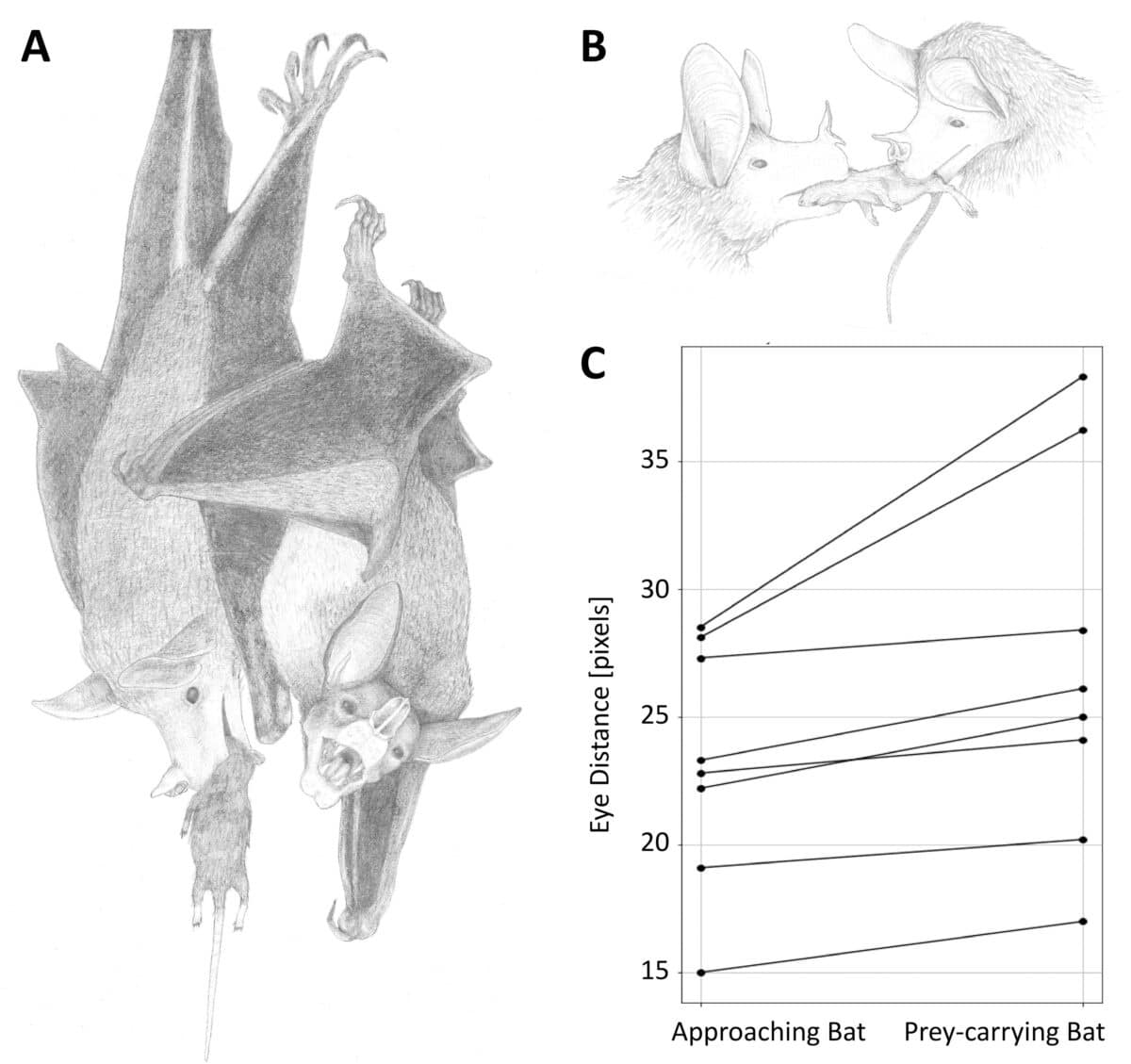
Data from the recordings showed the bats engaged in eight main types of behavior, including social interactions, food provision, and play. Bats returning to the roost with prey were observed voluntarily transferring food to younger bats. In one sequence, the adult male brought prey to the lactating female.
The study notes that this prey provision likely serves as a method for adults to transition young bats from milk to a carnivorous diet, allowing them to practice handling large prey items before they are capable of hunting on their own. An overview published by IFLScience describes the species as the largest carnivorous bat in the world, with a wingspan approaching one meter.
Physical Bonds Between Hunters
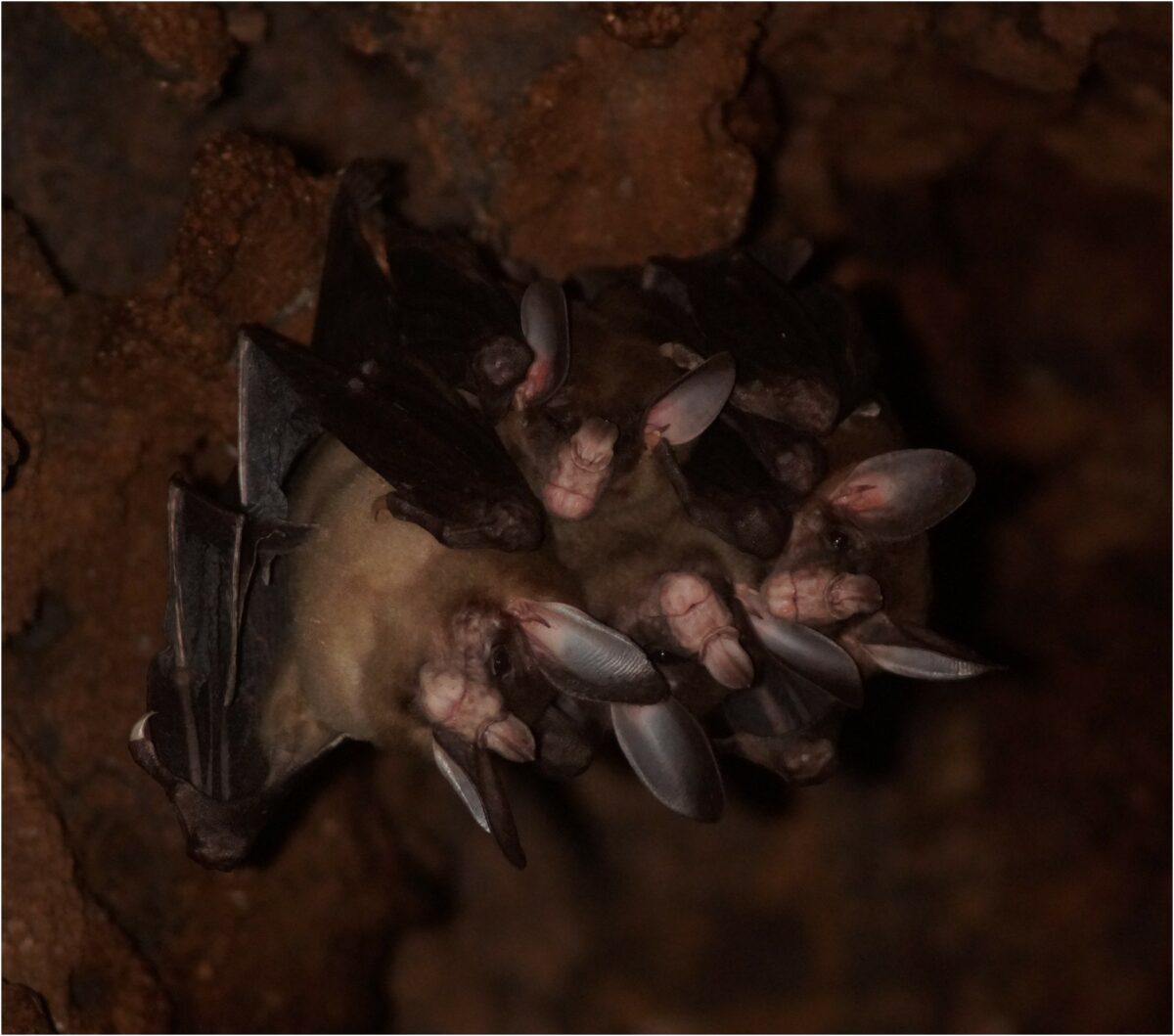
The footage also documented physical interactions that researchers had not anticipated. When a bat returned to the roost after an absence, another bat would greet it by wrapping a wing around its body in what the researchers described as a social greeting similar to a hug. Bats regularly groomed each other and made social vocalizations. When the group settled to sleep, they formed a tight cluster described in the study as a cuddle ball, with each bat wrapping one wing around its nearest neighbor and all snouts touching.
The study challenged previous assumptions about foraging behavior. For decades, researchers assumed Vampyrum spectrum hunted alone. The camera data showed multiple instances of bats leaving or returning to the roost together.
The report notes that this suggests they sometimes undertake cooperative foraging trips, perhaps as a way for younger bats to develop hunting skills. Prey transfer from the adult male to the lactating female was also observed, further supporting the idea that foraging is not strictly solitary. A EurekAlert news release covering the findings emphasized that these observations represent the first documented evidence of food sharing and social greetings in wild spectral bats.
Lead author Marisa Tietge said in a statement: “We were astonished by how gentle and cooperative these apex predators are.” She added: “The most endearing behavior was forming a tight cuddle ball when falling asleep: each bat wrapping one wing around its nearest neighbor, all snouts touching.”
Forest Loss and the Fragility of Family Groups
The International Union for Conservation of Nature assessed Vampyrum spectrum as Near Threatened in 2018, with a decreasing population trend. The assessment, available through the IUCN Red List, notes that the species is forest dependent and requires primary forest habitat. Local threats include habitat fragmentation and destruction. Because the species occurs in low densities anywhere it is found, it is extremely susceptible to population decline from habitat loss.
The new behavioral data adds a layer of complexity to those conservation concerns. If spectral bats rely on extended family groups for teaching young, reinforcing pair bonds through physical contact, and potentially coordinating hunting efforts, then population viability cannot be measured solely by numbers of individuals. The integrity of the social unit itself becomes a factor. Habitat fragmentation that isolates family groups could disrupt these cooperative behaviors in ways that are not captured by standard population counts.
Tietge also described an unexpected interaction with the bats themselves. In a statement, she said: “I was astonished to find that the bats seemed to recognize me after several consecutive weeks of visiting the roost. At first, I was greeted with threat like calls, and the bats broke their roosting formation to hide in the corners.
But over time, their response shifted to just a few curious looks no vocalizations, and they remained in a relaxed roosting formation. Even after nine months away, they appeared to recognize me immediately when I returned the following season.”
First Appeared on
Source link





Leave feedback about this