

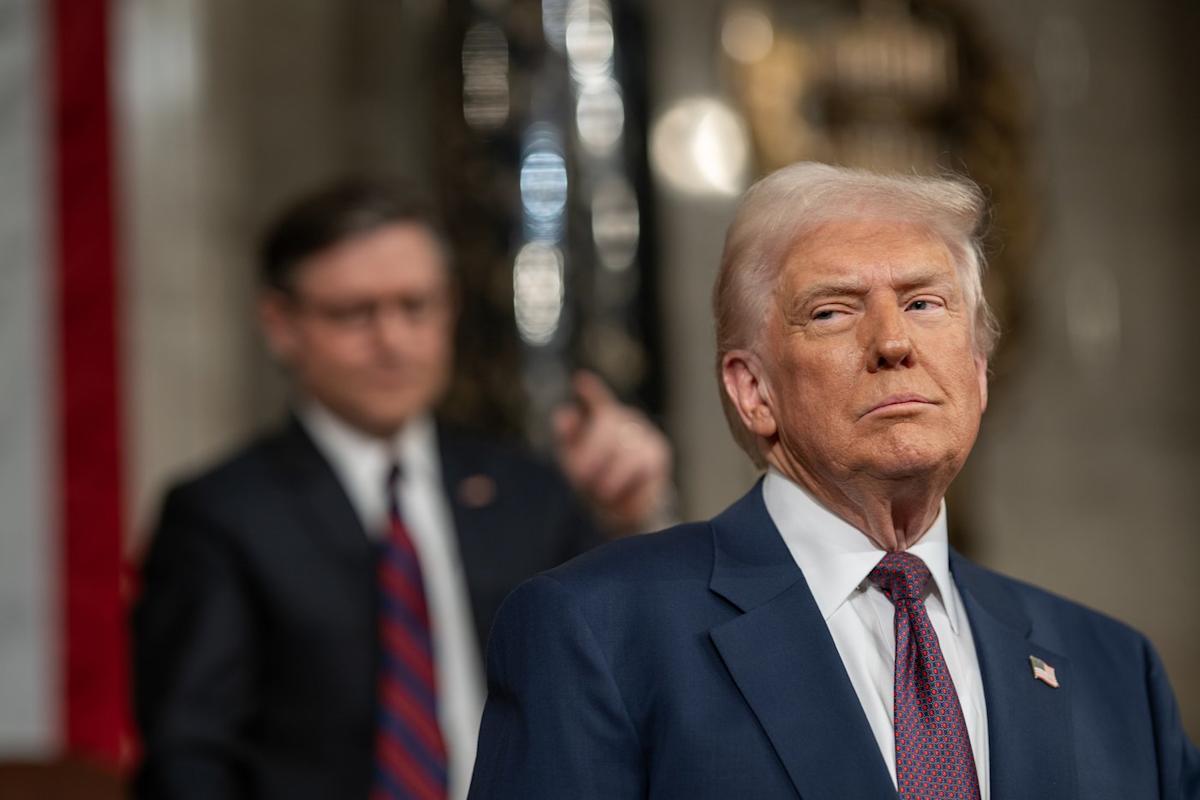
From an investment standpoint, Wall Street is a fan of Donald Trump in the White House. During President Trump’s first term in office, the mature stock-driven Dow Jones Industrial Average (DJINDICES: ^DJI), benchmark S&P 500 (SNPINDEX: ^GSPC), and innovation-fueled Nasdaq Composite (NASDAQINDEX: ^IXIC) gained 57%, 70%, and 142%, respectively.
In the year and change since he was inaugurated for his second, non-consecutive term, an encore Trump bull market rally has taken shape. From Jan. 20, 2025, through the closing bell on Feb. 10, 2026, the Dow, S&P 500, and Nasdaq Composite have, respectively, rallied 15%, 16%, and 18%. Outsize returns have become something of the norm.
Will AI create the world’s first trillionaire? Our team just released a report on the one little-known company, called an “Indispensable Monopoly” providing the critical technology Nvidia and Intel both need. Continue »
While several catalysts are behind this exceptionally strong bull market, some of which can be attributed to Donald Trump, there are also headwinds that can derail this rally. One insurmountable obstacle that has over 150 years of history in its sails is of particular concern.
To get a bit of housekeeping out of the way, Wall Street’s major indexes climbing is nothing new. Since March 1897, there have been 33 presidential terms, 26 of which resulted in a positive return in either the Dow Jones Industrial Average or S&P 500. Most presidents oversee a growing U.S. economy and investment optimism, leading to stock market gains during their tenure — and Trump has been no exception.
However, the early annualized return for President Trump’s second term is among the best of any president dating back well over a century. As investors, it pays to understand what’s behind this outsize return.
Not all of the stock market’s upside catalysts have been influenced by the president. For instance, the rise of artificial intelligence (AI), which began during Joe Biden’s presidency, and the advent of quantum computing are playing key roles in lifting the broader market. Analysts at PwC believe AI can add $15.7 trillion to the global economy by 2030, while Boston Consulting Group estimates quantum computing will create up to $850 billion in global economic value by 2040. These technologies are clearly exciting investors.
Likewise, President Trump had no hand in the Federal Reserve lowering interest rates on six occasions since September 2024. Lowering lending rates can encourage corporate borrowing, in turn leading to an increase in hiring, acquisition activity, and capital devoted to innovation.

First Appeared on
Source link






Leave feedback about this