

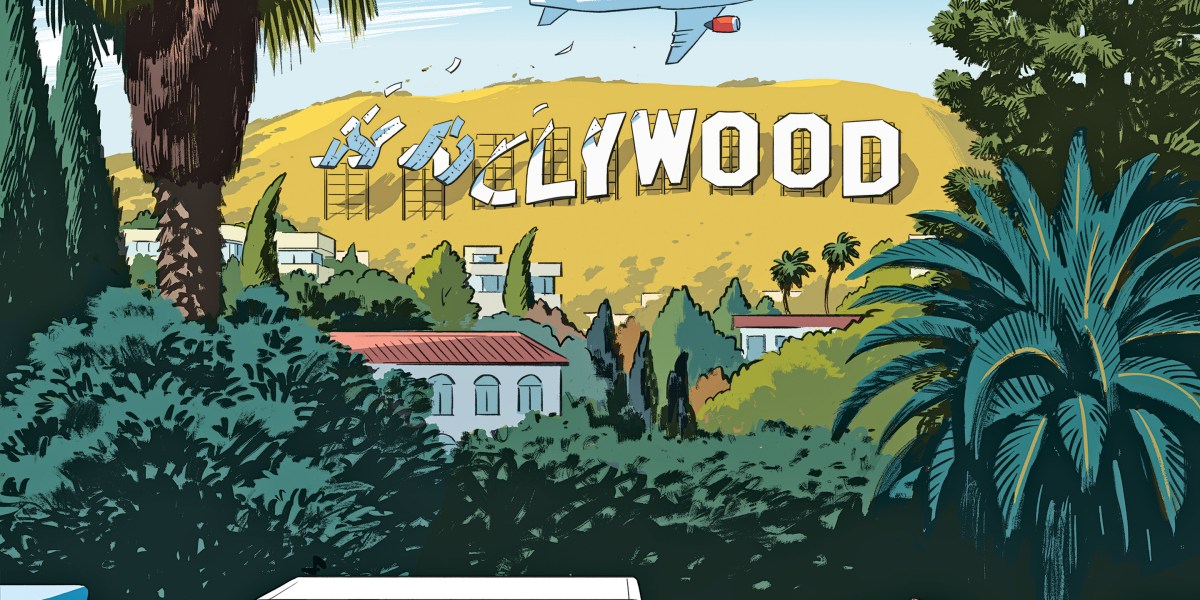
This Sunday will be the biggest night of the year for Los Angeles: Tinseltown’s stars will turn out en masse for the Academy Awards at the Dolby Theatre on Hollywood Boulevard, to celebrate the magic that only this storied city can create.
But a look into the field for the Best Picture Oscar reveals an uncomfortable surprise: Not a single one of the 10 nominated movies was produced on the famous soundstages or studio lots of Hollywood. While some post-production was done in L.A.-based facilities, all were entirely or largely filmed elsewhere, from Marty Supreme (New York) to Sinners (Louisiana) to Hamnet (U.K.).
Hollywood, the name for the entertainment industry headquartered and operating in Los Angeles County, is disintegrating. Production measured in Los Angeles shoot days is plunging, down from 36,792 in 2022 to just 19,694 in 2025, according to FilmLA research. Some 41,000 of the workers who make the industry function left from 2022 to 2024, the most recent data available—some by choice, some by necessity. The industry’s most powerful person is not a traditional studio boss but Ted Sarandos, co-CEO of streaming giant Netflix, which is headquartered in Silicon Valley.
And yes, that remains true even after Paramount Skydance’s David Ellison outbid Netflix to purchase the legendary studio Warner Bros. Discovery. Indeed, the outcome of that intensely watched deal negotiation looks likely to be another nail in the coffin for the film industry as a dominant economic force in Los Angeles—with Ellison, Hollywood’s newest mogul, promising to find $6 billion–plus in “synergies” following the acquisition. He has promised that the majority of these cost cuts will affect “nonlabor sources”—but the Town (as the film industry based in Los Angeles is often called) is bracing for large-scale layoffs.
Meanwhile, the threat of AI reshaping the business of making films looms, and the specter of industry collapse, of American cities hollowed out by manufacturing jobs going overseas and workers made obsolete by new technologies, hangs heavy over the boulevards and palm trees of Los Angeles. “The sunny version of Detroit,” was the assessment of Michael Lynton, former CEO of Sony Pictures Entertainment, on a recent visit to his previous stomping ground. “It was crickets,” he told The Hollywood Reporter. “There’s nothing going on.”
The collapse of an entire industry is a sad story no matter how you slice it. The collapse of Hollywood is also something more. For years, movies were a major American export, sending not just celluloid film but also an American worldview around the globe. Now, measured strictly in dollars, the $20 billion–plus the U.S. earns from exporting films and television shows each year is dwarfed by other exports—oil, cars, and industrial machinery among them. But still, these quintessentially American products—action movies, bingeable streaming shows, and a bevy of dashing superheroes and impossibly glam movie stars—punch far above their weight in establishing the nation’s “soft power” internationally, seeding American language, culture, fashion, and societal mores into living rooms from Seoul to São Paulo in a way no container ship full of LNG can match. When we say, “an offer he can’t refuse” or “I don’t think we’re in Kansas anymore,” everyone knows what it means, and where it came from.
The cluster effect
For 100 years Hollywood was among the world’s most successful and famous examples of what is called an “industry cluster.” The Harvard Business School’s Michael Porter, who coined the term in 1998, described such clusters as “critical masses—in one place—of unusual competitive success in particular fields.” Other examples are high-performance car companies in southern Germany; pharmaceutical companies near Philadelphia; and high-fashion shoe companies in northern Italy. But in his writings, Porter singled out the two starriest examples: “Silicon Valley and Hollywood may be the world’s best-known clusters.”
Such clusters foster success because they create virtuous circles: When an industry’s best people and companies become concentrated in an area, the industry’s other people and companies want to be there. Those who join the cluster gain knowledge, relationships, and motivation “that distant rivals cannot match,” Porter said. The result is an upward cycle that draws in more industry players and further strengthens the industry.
Hollywood emerged as an industry cluster when early 20th‑century filmmakers fled New York and New Jersey to escape Thomas Edison’s aggressive enforcement of his patents on motion‑picture cameras, projectors, and other technologies, and to take advantage of Southern California’s cheap land and year‑round sunshine. Between roughly 1910 and the early 1920s, dozens of independent producers consolidated into vertically integrated studios—Paramount, MGM, Warner Bros., Fox, Universal—concentrating production in and around Los Angeles and locking in a dense ecosystem of stages, back lots, labs, equipment houses, and skilled labor. Worldwide distribution and exhibition were likewise managed from L.A. By the late 1920s and 1930s, this agglomeration had become a self‑reinforcing cluster: The “Golden Age” studio system produced hundreds of films a year; recruited and developed “bankable” stars beloved around the world; and drew in talent and suppliers from everywhere, elevating Hollywood from geographic neighborhood to dream factory.
Underwood Archives/Getty Images
Today, Hollywood’s upward cycle seems to be reversing. It didn’t happen all at once or from one single cause. It’s partly a story of technology barriers coming down, enabling more consumers to choose from and stream more sources of entertainment than ever—much of it not from Hollywood.
From the consumer’s perspective, an economist might applaud the abundance of choice and competition in the streaming era. More options at lower cost? What’s not to like? But in the real world rather than the theoretical one, today’s transition is miserable for thousands of talented middle-class people who are living in the downward cycle—and for anyone who loves films and TV. The loss of the industry’s talent pipeline may well result in a decline in the quality of the product the industry produces and unleash an abundance of AI slop. And in an era where politicians on both sides of the aisle pay lip service to the goal of Americans getting back into the business of making things, it’s worth noting that the nation’s most culturally significant export industry is in a state of spiraling crisis.
What’s left of the Hollywood dream job?
Consider Jason Lazarcheck, a writer who came to Hollywood from New York City in 2008, right after college. He got a job on a Lifetime show called Army Wives—“the last show on earth I would have picked,” he says, but it offered a sustainable writing life. In those pre-streaming years, most shows produced 22 or 23 episodes per season, “so that meant a lot of jobs for writers,” he says. Even more important, his writing job continued through the production of all the episodes, including the filming, in case changes had to be made on the fly. Through it all, the showrunner mentored him on all aspects of getting those episodes done. The result, he recalls, was “I learned more about writing and producing TV than a lot of writers ever do.”
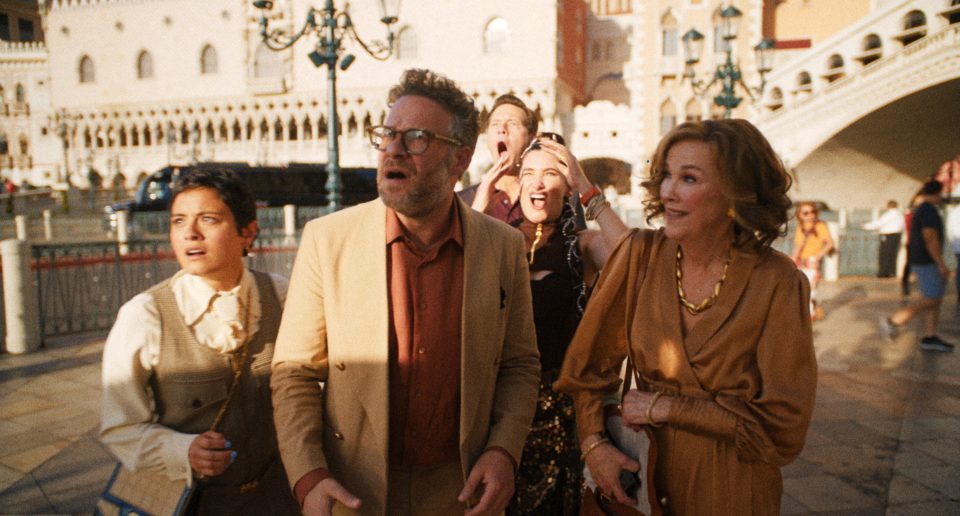
An eager young writer arriving in Los Angeles today would be unlikely to find such a career springboard. “One of the darkest things that changed about TV for writers is that now most shows have fewer episodes,” Lazarcheck says. In the streaming world there is no requirement of a given number of episodes, so virtually no shows produce 22 episodes anymore; some make as few as four or five episodes at a time. “The last show I was staffed on was a limited series at Apple,” he says. The producers told the writers to write all the scripts, and then Apple would decide whether to make the show, called Lure. Apple passed, though the project could still be produced elsewhere. Even if the show gets a green light, the writers won’t be hired through production.
The streaming era just doesn’t offer the steady flow of work many directors, cinematographers, writers, gaffers, sound mixers, and other workers have relied upon. “There’s no need to fill eight o’clock on Wednesday night,” says Mark Goffman, a producer and writer, so today, “[producers]will order one script, then six months later they’ll approve a second script. A very precious few are on the timeline where they get green-lit and move at light speed. Everything else kind of lumbers along with no real urgency.”
©Apple TV+/Courtesy Everett Collection
The upshot is that landing a writers’ room job today is no longer such a golden opportunity. With “fewer episodes, fewer writers in the room,” and no role in production, Lazarcheck says, it’s a meager version of the screenwriter’s previous job. For those trying to eke out a living in Hollywood, he says, “I feel like it’s never been harder.” That reality became even more starkly obvious after 2023, when the writers’ and actors’ labor unions went on strike—going without salaries for almost five months to ensure better pay, minimum staffing requirements, better health insurance, and protections against AI.
Like many others in Hollywood’s once mighty workforce, Lazarcheck has had to find work outside the industry. He recently took a job as an expert writing consultant for AI companies—the industry that threatens to take over his previous job function. “If you had asked me on the picket line at the Disney lot if I’d be comfortable doing that with an AI company, I would have said, ‘Hell no!’” he says. “But a few years go by, and I just need to earn money.”
Lazarcheck still lives in the Los Angeles area, but many other industry workers are leaving, some giving up on the industry, others working remotely from places less expensive than L.A. Lazarcheck offers this advice to his peers: “Don’t define yourself by Hollywood.”
Hollywood’s broken business model
Veteran Hollywood denizens, when asked about the decline of the Hollywood industry cluster, often say the same thing: “Netflix changed everything.”
But the shift away from traditional filmmaking started before the streaming giant began to eat the grand old studios’ lunch by producing its own films and shows in the 2010s. Hollywood’s primary business ceased to be movies long ago, says Jeff Bewkes, former CEO of Time Warner, where he oversaw HBO, Warner Bros., Turner Broadcasting, and New Line Cinema. “For the last 30 years, the biggest business for most legacy media companies, in terms of the number of people employed and profit and return on money invested, has been television series production, not movie production,” he explains. “The exception may be Disney, with its huge franchise films and revenues not just from exhibition, but also from consumer products and onsite parks and cruise line experiences.”
Hollywood’s large studios had been making TV shows for years before, but for most of that time there were only three TV networks—not a huge market. Then, starting in the 1970s and accelerating in the 1980s, cables and set-top boxes were installed in millions of homes, enabling dozens of new channels to reach large audiences. All those channels needed programming, and Hollywood stood ready to help.
In the mid-1990s, the government rescinded an old rule that prohibited distributors (the TV networks) from owning the programs they showed. The goal had been to get more producers with more perspectives and ideas on TV’s “big three” channels, but cable had solved that problem. Since cable channel owners could now own the programs they showed, they started producing more—ramping up in‑house and affiliated production; increasing vertically integrated ownership of primetime and cable programming; and opening the door to more business for Hollywood, and more consolidation.
As consumer technology advanced, still more revenue for Hollywood, in the form of royalties, rolled in from Blockbuster and similar companies renting VHS tapes and DVDs to consumers in those same years.
Little noticed in 1997 was the founding of Netflix, which at the time seemed just an evolution of Blockbuster’s sector, renting DVDs by mail. The revolution—what changed everything—was Netflix’s introduction of streaming media over the internet in 2010. At the time, the preeminent cable channel for high-quality proprietary entertainment was HBO, with The Sopranos, Sex and the City, The Wire, Band of Brothers, and more.
But when Netflix started reaching consumers over the internet, HBO faced a major competitive disadvantage. It reached its subscribers through local cable companies, which charged HBO a fee. If subscribers paid the cable company $15 a month for HBO, the cable company kept $5. Netflix, reaching subscribers directly online, received all the money its subscribers paid. It wasn’t much help that HBO’s parent company, Time Warner, was a major supplier of home internet—one of the “pipes” streamers relied upon to deliver content to consumers. The Obama administration’s “net neutrality” rule prevented the internet providers favoring their own products or “throttling” their competitors’.
Even more important, as it turned out: Netflix could collect vast amounts of data on every subscriber—what genres, actors, and directors they like, what scenes they replay or skip, and countless other data points. It used all that data to design a powerful algorithm, presenting popular shows such as Orange Is the New Black and Arrested Development to users based on the tastes their viewing habits revealed. That data also guided the streamer’s original content spend, including the famous $100 million bet it made to green-light two seasons of David Fincher’s House of Cards in 2013, sight unseen. And many have speculated that Netflix’s vast trove of data informs certain narrative habits on its shows (cliff-hangers to encourage bingeing, for example, and frequent restating of plot points to engage viewers distracted by their phones). Until they had their own streaming platforms, HBO and other channels reaching subscribers through a cable company had none of that data.

Blanca CRUZ—AFP/Getty Images
Competition intensified—with Hulu, Amazon Prime, and Apple TV+, among others, entering the fray—and the 2010s’ Streaming Wars led to a golden age of TV as premium cable channels and streaming upstarts feverishly outspent one another for top talent.
That fire hose of money has slowed considerably since, and so far the original streamer has come out on top: Netflix is by far the world’s largest streaming company, with 325 million subscribers. In the U.S. last year it attracted 59% of all streaming viewing time; 10 other streamers shared the rest, says Luminate’s 2025 Year-End Film & TV Report. And it is now competing on a larger scale: Its recent market value of $358 billion makes it more valuable than the next two most valuable companies in Hollywood, Disney and Sony, combined. In a December 2025 ranking of Hollywood’s most powerful people, assembled by industry journal Variety, No. 1 is Netflix co-CEO Ted Sarandos. No one seems to dispute it—even with the inroads David Ellison has lately made.
Another disorienting element in Netflix world is the company’s approach to paying actors, writers, and others. Studios traditionally have offered upfront fees and residuals based upon a film’s or TV show’s earnings—sustaining payments that sometimes continue for years, based on its success. But Netflix, which hoards its user data like gold in Fort Knox, offers a larger lump sum upfront, with no residuals and no performance data released. This is perhaps understandable given how precious that data is, Jason Blum, founder and CEO of Blumhouse Productions, wrote in the New York Times in 2022. “But the system leaves creators with precious little visibility into whether their works succeed in drawing viewers,” Blum explained. “By typically paying an upfront flat fee, Netflix buys out the usual success-based incentive compensation (known as the back end in Hollywood).”
A well-known agent, who prefers to stay anonymous because he still negotiates with Netflix and other companies, seems almost traumatized by the new order: “The big hits of the past that paid off, don’t pay off anymore,” the agent explains. “Therefore, all these people in the business are not working at the rate that they used to and for the money they used to get.”
“I didn’t want to go live in Bulgaria”
The Los Angeles area is an expensive place in which to live and to produce movies and TV shows, so it makes sense that productions and workers are looking elsewhere. The Atlanta area has been a major production locale for many years, offering producers lower costs and even subsidies in some cases. Disney has produced many of its Marvel films there, including Black Panther and Captain America: Civil War. Movies in the Hunger Games and Fast & Furious franchises have been made there, along with hundreds more projects. Vancouver is another attractive and growing alternative to Hollywood, especially when the Canadian dollar is low.
Many projects go to other countries offering subsidies and low costs while absorbing Hollywood know-how. “In the last couple of years I’ve been to Taiwan several times,” says Goffman. “I’ve been to parts of Asia and the Middle East where they’re ramping up production. A lot of Eastern European countries have built up productions.”
The globalization of filmmaking may be healthy for the industry in the long run—expanding markets, lowering costs, and spreading know‑how to new filmmaking hubs—but for Los Angeles–based crews, uprooting to live on far‑flung sets for months at a time can be profoundly disruptive and deeply undesirable. “Often you’ll be asked if you want to do a series,” Goffman says, “but you’ll need to move to another country that’s on another continent for six to nine months, away from your family.” Marjorie David, a producer and writer with 40 years in the business, says: “There’s a whole show I didn’t do, because I didn’t want to go live in Bulgaria.”
Silicon Valley devours Hollywood
Why does it matter if movies are made in Hollywood or in Atlanta or Dublin? Perhaps, in the age of online collaboration and Zoom meetings, it doesn’t. But with the disintegration of Hollywood, one of the world’s greatest industry clusters, something more than jobs and income is lost.
For a century, Hollywood’s geographic specificity meant writers, directors, cinematographers, editors, actors, and executives were all working in close proximity, moving from project to project and swapping ideas, techniques, and contacts on sets, over martinis at Musso & Frank’s or at coffee shops in Silver Lake. That self-propelling upward spiral built a small patch of Southern California into the center of an industry and, culturally, the world.
If that cluster scatters to cheaper locations, the city will lose those everyday collisions—shared stages, repeat partnerships, in‑person mentorship—that helped knit individual talents into an ecosystem of innovation. The knowledge built over decades won’t be handed down as it once was, nor improved in the process of close cooperation and competition.
What replaces it is likely to be more fragmented: Great work can still happen, but it becomes harder to sustain the same level of collective craft and experimentation. And unfortunately, a downward spiral is also self-propelling.
For now, Netflix and the other streamers are clearly ascendant—and continuing to pay professionals to make films and TV shows around the world—but the picture could change dramatically, and soon. Teenagers spend more time watching user-generated videos on TikTok, YouTube, Facebook, Instagram, X, and other social media than they do any other type of video, according to research by eMarketer, the Pew Research Center, and the Centers for Disease Control and Prevention. YouTube reports that users are uploading 500 hours of video every minute; that’s more product in a day than all the movies and TV shows that Hollywood produces in a year. As AI roars ahead, billions of people worldwide will have the tools to make increasingly high-quality videos all by themselves.
This Sunday’s telecast on Disney’s ABC TV network will be a celebration of everything that is Tinseltown—fabulous gowns on the red carpet, heartfelt speeches by celebrated creatives, and wall-to-wall coverage of the after-parties. But come 2029, the 100th anniversary of the Oscars, the gala will leave the television network that has carried the Oscars every year since 1976. It will then be shown exclusively by YouTube, owned by Alphabet, parent of Google. And it might well be consumed largely via next-day clips of viral moments.
As Michael Porter said, the world’s two most famous industry clusters are Hollywood and Silicon Valley. With one of them fading, it seems the other may be devouring it.
Bewkes—once a Hollywood mogul himself—describes it as the end of an era. “The most powerful people controlling the media now, and determining its future, are the tech oligarchs,” he says. “That’s not a prediction, it’s a description of what’s happening now.”
This article appears in the April/May 2026 issue of Fortune.
First Appeared on
Source link






Leave feedback about this