

In the opening days of the Iran war, there was something of a shock in markets but then markets settled into the idea that it would be a temporary disruption, with oil prices retreating afterwards. That was exactly what Trump said as he outlined a 4-5 week timeline, and affirmed when he later said the US was ahead of schedule.
Now the market is sensing that the plan is falling apart as Iran weaponizes the global energy supply by bombing tankers trying to pass through the Strait of Hormuz. There is talk of naval escorts but not until month-end and it’s not clear they will work.
That’s kicked off a fresh bid in oil — up 10% today — and a rethink on the path of global growth and inflation. In the US, Fed rate cut pricing is now down to 22 bps this year from 60 bps last month.
It’s the same thing globally and it means higher inflation and slower growth, as consumer spending goes to the gas pumps and companies struggle to price products.
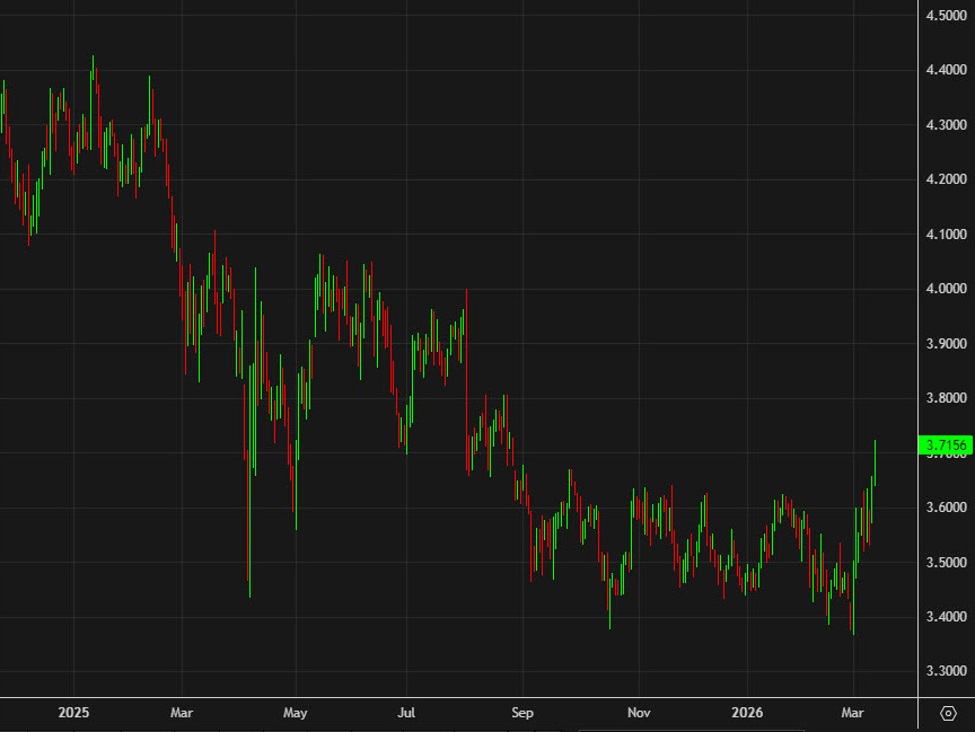
I think that’s best show through 2-year yields, which have broken out of autumn range despite three rate cuts in that timeline.
US 2-year yields
There is some good news just breaking as Iran’s deputy foreign minister says they’re not laying mines in the Hormuz Strait and has allowed some ships to cross the strait.
The market has bounced on that and it highlights how quickly this war can change on a headline. Hopefully that’s one in the direction of de-escalation but the market is contemplating the risk this could continue for many months, or even into a ground war.
It seems the US will have a choice to make: Escalate or de-escalate because the current strategy isn’t working. If there is escalation, then it’s time to reprice lower growth and higher oil prices, simple as that.
First Appeared on
Source link






Leave feedback about this