

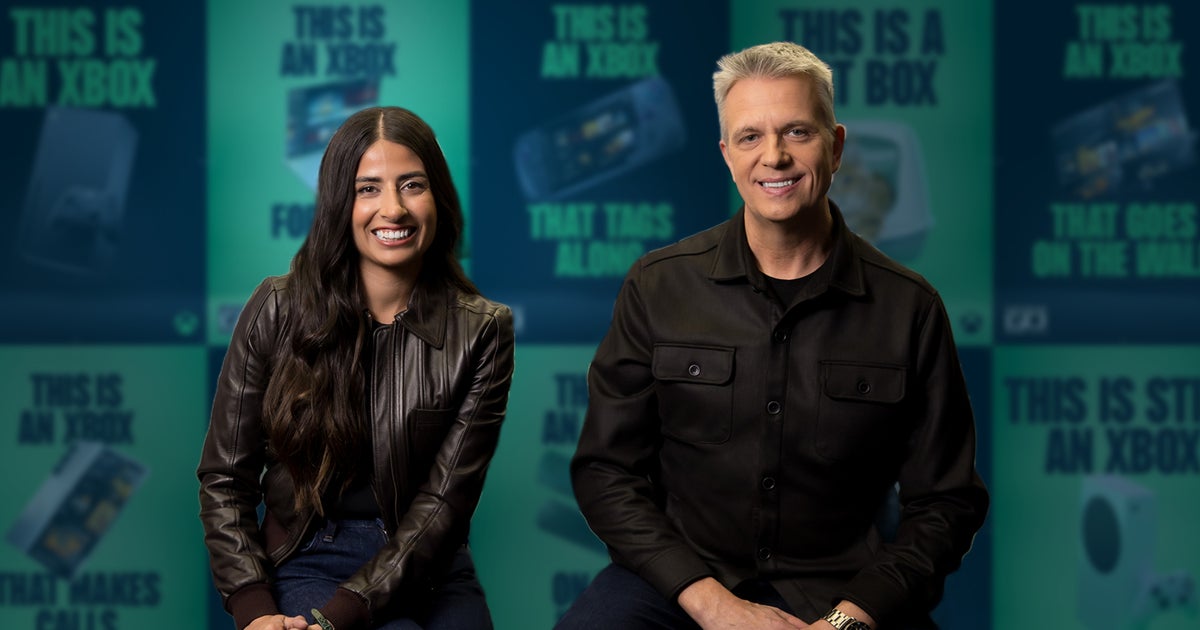
So Phil Spencer is gone. So too is Sarah Bond who, per some reports, had as much if not more influence over strategy than Spencer in recent years. Up comes Matt Booty, who was already part of the main leadership trio and is now chief content officer, broadly overseeing Xbox’s internal studios and the games they make. And in comes Asha Sharma.
Sharma, now the executive vice president and CEO of Microsoft Gaming – essentially the new Spencer and Bond combined – seems a peculiar character. Not a household name to gamers, or really anyone outside the business world, much has already been made of the fact her background lies outside of video games altogether, having previously worked at Instacart and Meta, before moving into AI at Microsoft. And much too about that background in AI.
For many that’s two alarm bells already ringing. (This writer’s take, for what it’s worth, is that you needn’t be a gamer to be a gaming CEO, but you do have to get it, whatever getting it ultimately means. Friend of Eurogamer Chris Dring has pointed to 2K’s Strauss Zelnick as one non-gamer example there, which seems wise. I’d personally look at Sharma’s initial interactions on X, including with one person currently locked in a legal battle over alleged repeat harassment of a journalist, as a reason to at least raise one very large eyebrow. And look at original Xbox creator Seamus Blackley’s quotes, in a rare interview, about how many others have promised him they’ll “figure it out” in video games only to fail. And also generally the less said about gen-AI the better).
And then there’s the comments Sharma made on a podcast last year which instantly began to circulate after her arrival at Xbox, where she talks about how AI can help with, of all things, birth rates, and which have seen her labelled a natalist and worse. (The very short summary of this already very odd sidebar is that, on the one hand, natalist views and excessive fixations on birth rates have become a central pillar of the modern far right, especially those in the world of tech, and also that talking about birth rates out loud is always at the very least a bit weird; on the other, Sharma, still an AI executive at the time, was in the middle of citing all the wonderful ways ChatGPT and AI as a whole can help with everything, in healthcare and beyond – many asterisks required – and is at least as likely to be generally pumping up the AI hype balloon here as she is to be revealing personal beliefs of anything more sinister).
Either way, her appointment has not exactly sparked joyous celebrations in the streets of Xbox land – and it comes alongside yet more corporate intrigue as well. A report from the Verge, citing anonymous senior sources within the company, throws Sarah Bond well and truly under the bus, placing the infamous “This is an Xbox” marketing campaign at her feet, intimating that she was the driving force behind much of Xbox’s recent strategy while Spencer was occupied with the Activision Blizzard merger, and describing her as “tough to work with”.
But one important twist here is that this narrative bears a lot of the hallmarks of a classic “glass cliff”, where women, especially women of colour, break through the glass ceiling of the corporate world only to be stitched up with a role of impossible responsibility – and all the blame for failure. Football fans here in the UK might also recognise a bit of classic upper brass arse-covering after a big leadership change – in the vein of briefing an ‘inside story’ after a top club’s manager is sacked that details, say, all the many reasons the players didn’t like their training methods, or the cruel banning of canteen ketchup.
This is not to say this reporting can’t be entirely true – it may well be; the Verge is mostly reliable on Microsoft – only that some reading between the lines is often required. It’s notable, for instance, that the only evidence given for Bond being “tough to work with” is in that she “built a team structure that meant if you didn’t follow the vision or questioned it, you were out” – which while cutthroat, also sounds an awful lot like how most big vision corporate leaders tend to operate. (Another curious observation: Microsoft’s blog announcing the change, made in haste as IGN looked to break the story, featured the internal messages of Spencer, Sharma, Booty, and Microsoft CEO Satya Nadella – but no inclusion of Bond, who instead shared her own internal memo on LinkedIn.)
What this does signify, with some certainty, is that the task of managing Xbox is not a smooth one. Even putting the corporate politics aside there’s the fact the platform now finds itself in a number of Catch-22 dilemmas. Sharma’s own blog post-née-internal-memo is a perfect example. In it she makes three key commitments which, in the absence of any other public manifesto, will serve as the main yardstick of her success for now, and the main means by which the gaming public sizes her up.
The first is “great games” – strong start – where she rightly says Xbox “must have great games beloved by players before we do anything”, correctly identifying this as perhaps the most terminal of Xbox’s ongoing issues, at least until the brute force solution of acquiring Zenimax and Activision Blizzard King. She then goes on to cite this as her reasoning for promoting Matt Booty, who has overseen years of projects stuck in development hell, infinite reboot cycles, waves of cancellations, and the shuttering of numerous once-prestigious studios. (And who was also the unfortunate face of corporate creativity-harpooning in the DoubleFine documentary, where he’s filmed informing eager developers that all their fun side project ideas will be the intellectual property of Microsoft going forward, at which point we see the light seem to drain from those developers’ eyes in real time).
The second, somewhat muddier, is the promise of “the return of Xbox”. On the one hand this seems to be a promise to return to an Xbox fan’s idea of the brand: “a renewed commitment to Xbox starting with console” and a promise to “recommit to our core Xbox fans and players”. But this is also followed by the acknowledgement of the ‘new Xbox’ way – that “gaming now lives across devices”. It leaves a confused view of what might come next – a return to exclusives? Some kind of unified Xbox priority? Or maybe just a marketing rework to re-emphasise the console’s importance above all. But as our friends at Digital Foundry have already pointed out, these ideas each come with a sacrifice of some other, equally prioritised commitment – and on the next-gen console front, the technology reportedly more or less locked in now, there’s very little that can be changed beyond the surface.
Sharma’s third commitment is to “the future of play”, where again there are promising lines, again met with immediate contradictions. She promises not to “chase short-term efficiency” with monetisation or “flood our ecosystem with soulless AI slop”, but as many have already noted, this makes for an interesting contrast to the views of her boss. Satya Nadella has made much-publicised comments recently that people “need to get beyond the arguments of slop vs sophistication”. There’s a note that “the next 25 years belong to the teams who dare to build something surprising, something no one else is willing to try, and have the patience to see it through” – spot on! This is just what Xbox has failed to do! – made shortly after a heavy hint at creating a UGC platform of Xbox brands, that user-generated content being the buzzword of GDC at least two years ago, and another case of looking to a different company – namely Roblox – for answers rather than seeking new ones of your own.
Maybe it’s worth putting this in the context of Phil Spencer‘s own legacy. By all accounts a nice bloke in person – he’s reported as well-liked internally, is someone who does seem to evidently ‘get’ video games, has always been personally friendly and has been known to privately contact members of the gaming world with messages of support in times of difficulty – Spencer strikes me as a decent person who chose to work a job not made for decent people, whose responsibility includes removing thousands and thousands of people from their jobs, for a company that seems increasingly hellbent on placing humanity last. (All the AI talk aside, Microsoft – specifically Xbox and its products – continues to be subject of a boycott request from the Boycott Divestment and Sanctions movement, specifically selected because of its involvement in supporting the Israeli military enact what the United Nations and scores of academic experts have ruled a genocide.)
Spencer will be remembered for rescuing Xbox from the brink after the Xbox One generation’s debacle, saying an awful lot of the right things in seeming earnest – and in fairness doing plenty of them, in consumer-friendly moves such as crossplay, cross buy, and arguably Game Pass itself – and then overseeing its return right back to that same brink all over again. Much of his role has been to close barn doors after bolted horses, building powerful consoles in the Xbox One X and Series X after being outmuscled by the PS4, but then being without any tentpole games for their launch. Then buying up all the games in response, only for that to come at a huge, pandemic-infused premium, and result in wave upon wave of layoffs and closures as the market returned to normal size. Then putting those games everywhere in search of growth, since the console battle itself was already lost, only for gaming’s growth to be abruptly halted by the rise of the rivalling attention economy (and the fact that, ultimately, nowhere near enough people want to play a big fancy triple-A game on a tiny little phone).
But above all, Spencer’s time running Xbox for Microsoft has been defined by Microsoft. While Spencer, Booty and Bond are not innocent of the axe-swinging, the demand for those cuts will always come from the very top. The same will happen to Sharma, eventually and inevitably, sooner or later as the line swerves up and down over time. Amongst all the many mistakes and mistimings at Xbox over the years, there’s none bigger than the amount of raw talent shunted out the door. You only need to look as far as Sharma’s promise to renew the “renegade spirit that built Xbox” and her deference to the “generations of artists, engineers, designers, musicians, operators and more” that made it what it was, and then look just over her shoulder at, say, 343 Industries, or Turn 10, or Undead Labs, or Rare, or Lionhead – not to mention the Arkane Austins and Tango Gameworks and beyond – and wonder just how many of those fabled Xbox OGs there actually are left.
Mismanagement plays a real part, but ultimately it begins above the managers, above the executives, above even Nadella at the top – it might seem trite or obvious, but much of Xbox’s extraordinary propensity for self-sabotage comes from the same place as so many other big companies that suffer from the same; it comes from the system they find themselves in (and that many once-independents at Xbox find themselves dragged into through no choice of their own), the great big shareholder in the sky, the way this all somehow detaches decisions about budgets and cuts from what’s actually, rationally best for a business long-term. Sharma and the new team might revitalise Xbox, the good sides to her promises defeating the many built-in obstacles on the way. Even with her somewhat wobbly first steps, no real judgment should come before giving this new Xbox some time. There is, in many of her points about investment, creativity, artistry, patience, a genuine glimmer of hope – for all the talent lost, plenty of talented developers remain, and deserve acknowledgement. But we’ve also heard Xbox leaders talk the good talk before – and the big problem at its heart is never truly going to go away.
First Appeared on
Source link




Leave feedback about this