

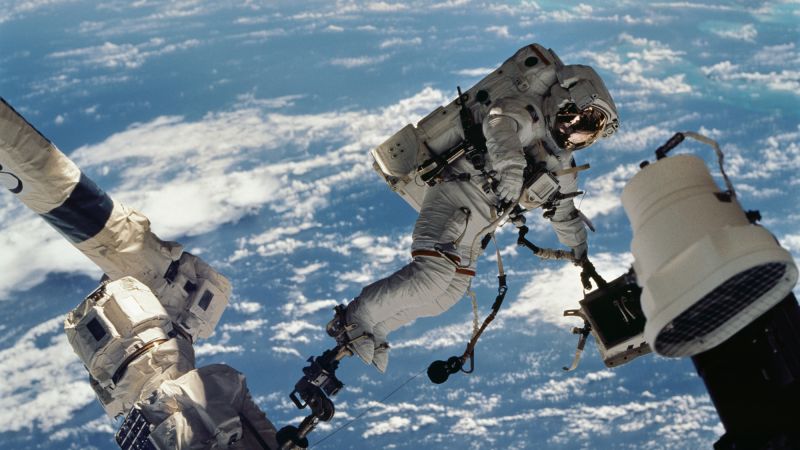
As the US sets its sights on establishing a permanent base on the moon, its foothold in an area of space much closer to home is growing more uncertain.
Located in low-Earth orbit — or LEO, a region that stretches up to 1,200 miles (2,000 kilometers) above ground — the aging International Space Station has hosted nearly 300 people over more than 25 years of continuous habitation, but its retirement is looming. The plan is for new space stations developed by commercial companies to fill the void, providing home bases for astronauts from NASA and its international partners.
However, with the International Space Station’s end expected as soon as 2030, NASA is racing against the clock. And the stakes of having a continuous presence in orbit go far beyond science objectives.
Leaving LEO without a functioning space station on which NASA astronauts can conduct research necessary to support missions deeper into space would create a dire gap in the United States’ in-space capabilities and even pose a national security risk, experts warn.
“It’s an expression of our values. I’ll call it soft power,” said Dylan Taylor, the CEO of Voyager Technologies, one of the companies involved in the development of a commercial space station concept. “China has a new, advanced space station…so it’s really important that we have continuous human presence on orbit.”
China’s shiny new orbital outpost, called Tiangong, was completed in 2022 and is hosting up to three astronauts at a time to carry out advanced research projects. And with a new space station comes the opportunity to design spacecraft and other technology compatible with it. If the ISS is retired, leaving Tiangong as the only space station in LEO, many global space technologies will evolve to fit it.
Taylor said the situation is like the early days of smartphone development and the emergence of Apple and Android as the dominant duo. Without a presence in LEO, the United States would be throwing in the towel on a massive opportunity to lead in this area, he notes.
And while the US has said it will keep the orbiting outpost afloat until at least 2030, lawmakers are now signaling that will not allow enough time to develop, vet and launch a commercial space station to replace the ISS.
A recent Senate bill called for the United States to continue funding the ISS as late as 2032. And the legislation, which has advanced out of committee but would still need approval from the full chamber and the House, makes clear that this extension is necessary because a replacement isn’t on the near-term horizon: “NASA has repeatedly delayed the release of a request for proposals for sustained commercial low-Earth-orbit services, and such delays, coupled with shifting requirements and inconsistent programmatic direction, have introduced substantial uncertainty into the development planning, financing, workforce scaling, and infrastructure investment decisions of commercial providers,” the bill states.
In other words, private companies that are in the early design and mockup phase of developing these space stations are still waiting on NASA for guidance — and money.
Policy experts point out that NASA has long been expected to hand down a formal “Request for Proposals” from private companies working to design these next-generation space stations. But those requests were delayed, in part because it took all of 2025 to cinch a confirmation for Trump’s on-again-off-again pick for NASA administrator, Jared Isaacman. Isaacman was ultimately confirmed in December.
Similarly, 2025 saw a 45-day government shutdown, the longest in history — adding another hiccup in the space agency’s plans to begin formally soliciting proposals from the private sector. Companies now expect that NASA will issue its Request for Proposals in late March or early April, one CEO told CNN.
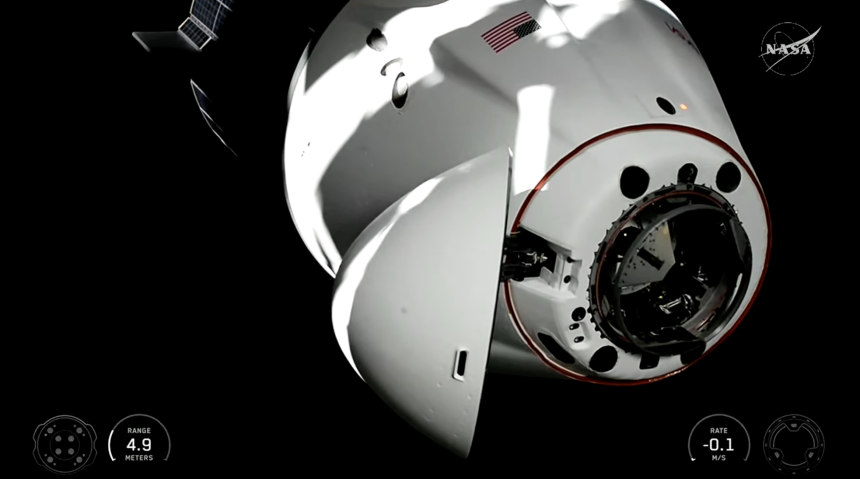
NASA declined to comment on the Senate bill, but its press secretary Bethany Stevens said in a statement that NASA is committed to “the transition of the International Space Station to commercial operations in low Earth orbit (LEO).”
“NASA is taking the time necessary to ensure decisions align with the President’s policy while moving forward as affordably and expeditiously as possible,” Stevens’ statement reads, referring to President Donald Trump’s recent executive order on space policy. “Additional details will be shared as soon as they are available.”
Meanwhile, the private companies spearheading the design of these next-generation space stations are shoring up their resources.
Several commercial outfits have recently announced big funding influxes aimed at speeding up the development and launch of new orbiting outposts.
Houston-based Axiom Space announced a $350 million funding round last month. Its California-based competitor Vast then notched a $500 million raise in early March.
Vast is determined to launch a bare-bones station to orbit as soon as possible, with or without federal input, according to the company.
“Our approach is to actually not wait for (NASA) and get going and build a minimum viable product, single-module space station called Haven-1, which we’re launching into orbit next year,” Vast CEO Max Haot told CNN in a phone interview earlier this month.
Similarly, Axiom Space is working toward a 2028 launch date for a module that it plans to initially attach to the ISS before breaking off to orbit on its own. A spokesperson told CNN that it the company is “committed” to winning the NASA contract money and may continue pursing such goals even without contract awards.
Still, there’s lingering doubt that any of the companies pursuing space stations will be able to stay afloat without securing a coveted NASA contract or at least cinching significant business from the public sector.
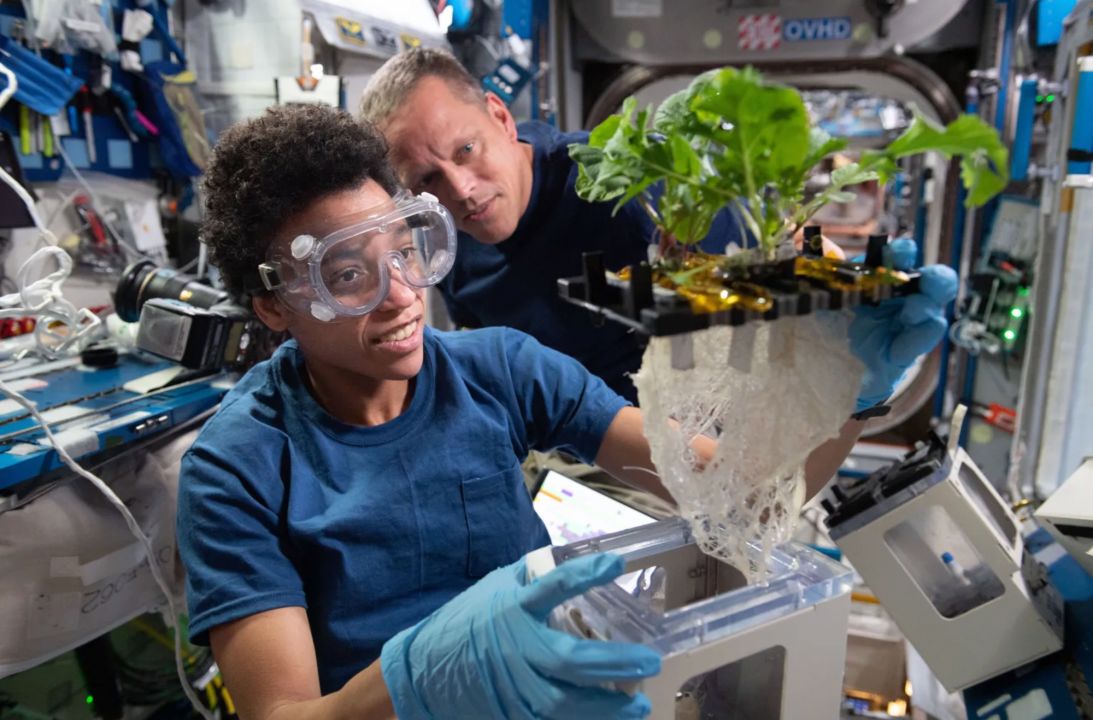
In that sense, the word “commercialization” may be a misnomer. Not many private-sector companies have an urgent need to spend millions of dollars to send people or research projects to an orbiting laboratory, so NASA and other government agencies are likely the primary customers for these space-bound destinations.
“Privatization” may be a more accurate descriptor — at least right now.
“For a venture investor, that near-term picture is a little bit rocky,” said Phil Scully, the cofounder and general partner of Balerion Space Ventures, which led Vast’s recent fundraise.
But in the distant future, there’s potential for a bustling space economy: “What’s obvious to us is you’re going to have multiple vehicles with myriad companies go into space. You’re going to have vehicles leaving from celestial bodies, like the moon. And we need a habitat,” Scully said, adding that space stations in LEO will eventually serve both a national security and research purpose.
That long-term picture is giving some venture capitalists the confidence to start backing commercial space station operators, Scully said, even if the return-on-investment is years or decades down the line.
Still, before that future can unfold — NASA will serve as a kingmaker of sorts. The space agency will evaluate proposals from Vast, Axiom Space, and several other competitors, including Jeff Bezos’ Blue Origin, Max Space and Voyager Technologies.
It will be up to space agency officials to determine which company has the best shot at success and hand down the contracts, which are expected to be given out between 2026 and 2031 and will likely total up to $1.5 billion.
That’s still a paltry sum compared to what it took to build the football-field-size ISS, which is widely considered the single most expensive object ever constructed at more than $150 billion. It also costs the US roughly $3 billion per year to operate.
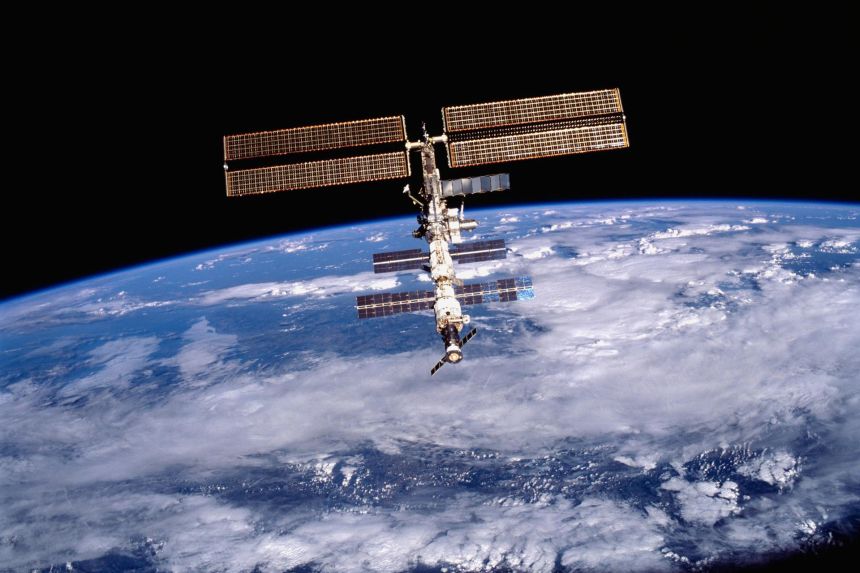
With the forthcoming NASA contract money, the companies are pursuing an array of different strategies and concepts, which today exist mostly in the form of precursor prototypes, tech demonstrations and computer renderings — each with a sleek, futuristic ambience.
Vast’s Haven-1 module, for example, is designed to have just 45 cubic meters (1,500 cubic feet) of habitable volume, with soft white walls accented by maple wood veneer slats that conceal research gadgets in the walls. It’s slated to launch as soon as 2027, with plans to rapidly expand the habitat in the following years.
Orbital Reef — which is part of a partnership among Blue Origin, Sierra Space, Boeing and others — is billed as a “mixed-use business park” that will scale up to about 830 cubic meters of pressurized volume.
Other companies’ concepts offer an array of different accoutrements and capabilities, including inflatable habitat designs, sprawling windows, robotic arms, research labs and astronaut accommodations.
(The Orbital Reef and Starlab — a joint venture from Voyager Space, Northrop Grumman and several other firms — have each received multimillion-dollar contracts for design development from prior Space Act Agreements with NASA.)
Meanwhile, the International Space Station is grappling with the wear and tear that comes with age. In recent years, it has faced leaks and micrometeoroid strikes, and the orbiting laboratory frequently requires “costly maintenance and system upgrades,” according to NASA’s inspector general.
But stakeholders are warning about the risks of decommissioning the ISS before a commercial replacement is ready — and as things stand, it is far from certain a new orbital outpost will be in place in time.
“It is increasingly clear that the remaining station life is insufficient to meet all critical test and research objectives necessary to support development and reduce risk for the Artemis campaign and beyond,” NASA’s Aerospace Safety Advisory Panel (ASAP), a committee that provides safety recommendations to NASA and Congress, wrote in an annual report released last month.
The spillover effects of leaving the US without a LEO space station go beyond the immediately obvious, said Space Foundation CEO and retired United States Air Force major general Dr. Heather Pringle.
“A lot of people think that national security only rests on the military, but frankly, national security and economic prosperity — they go hand in hand,” said Pringle.
And the economic importance of LEO, Pringle added, is far more than just the financial boom that venture capitalists are beginning to envision. This area of space is becoming a stage for worldwide commerce.
“Just as the Panama Canal became a symbol of American leadership and a vital artery for global trade, LEO will become the pathway to scientific discovery, economic growth and peaceful coexistence — if the U.S. maintains thoughtful leadership and fosters international cooperation and new technological development,” said Axiom Space CEO Tejpaul Bhatia in a 2025 op-ed.
Pringle noted that she’s confident Isaacman, who previously ran a defense and military training company before becoming NASA chief, will take the necessary steps to ensure the US doesn’t cede ground on the geopolitical stage.
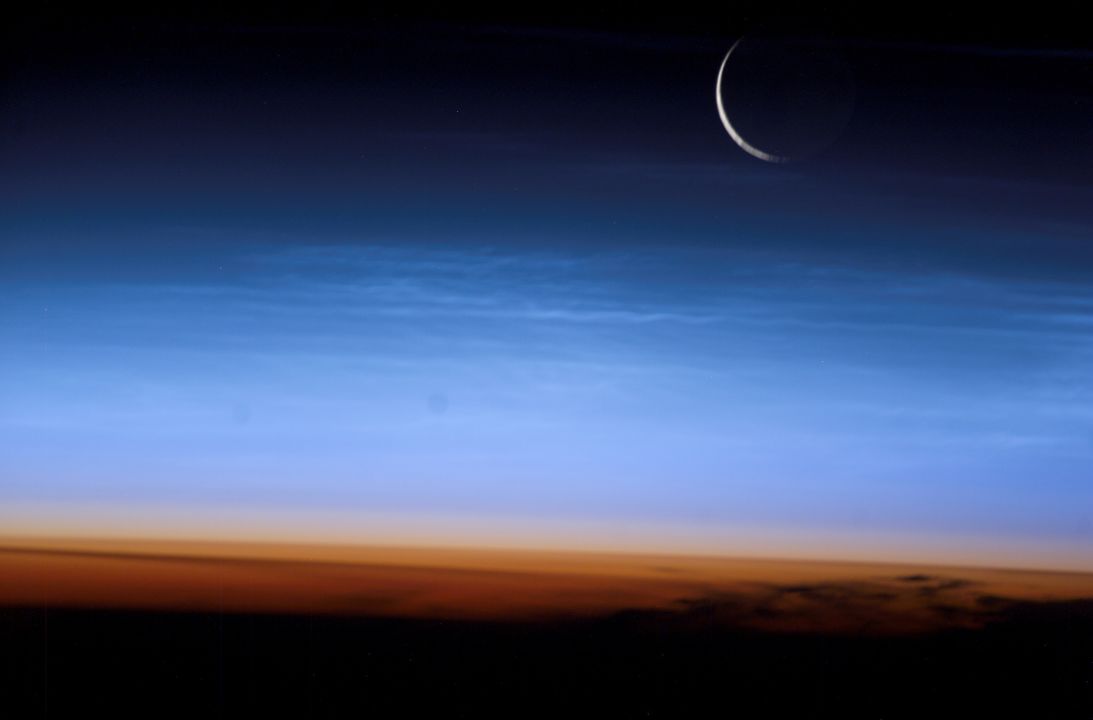
For decades, the International Space Station has been the only destination to which US astronauts have been able to fly. And even with the Artemis program promising flights to the moon, it could be years or decades before such missions are routine.
Another complicating fact: Russia, the United States’ primary partner on the ISS, has not pledged to keep operating its half of the space station past 2028. It’s not clear how a Russian withdrawal might impact the United States’ operations or the resources required to maintain the station.
What is clear: Without a space station in LEO, American astronauts could be left stranded on Earth for long periods of time. And that’s a less-than-ideal scenario to be in, considering that the US has continuously had at least one astronaut in space for the last 26 years.
Importantly, research in LEO also serves as an essential stepping stone for gaining the knowledge NASA needs to keep its astronauts safe on journeys deeper into the cosmos.
“This strategy will be important to ensure we maintain a continuous presence in lower orbit to support a number of objectives, including uninterrupted research Moon and Mars, both as a test pattern for human health and overall leadership in space,” a member of NASA’s ASAP meeting said during a March 16 meeting.
NASA’s Artemis program is sending humans into deep space for the first time in more than five decades. Sign up for Countdown newsletter and get updates from CNN Science on out-of-this-world expeditions as they unfold.
First Appeared on
Source link


Leave feedback about this