

Mobile World Congress 2026 opened its doors today in Barcelona, Spain, but some of the biggest announcements from the mobile-focused show were already made over the weekend.
To make sure you don’t miss the best new smartphones, laptops, concepts, and accessories, we’re rounding up all the most newsworthy gadgets that have debuted so far at MWC 2026. And if you want to stay on top of all the news, you can follow our full coverage of the show right here.
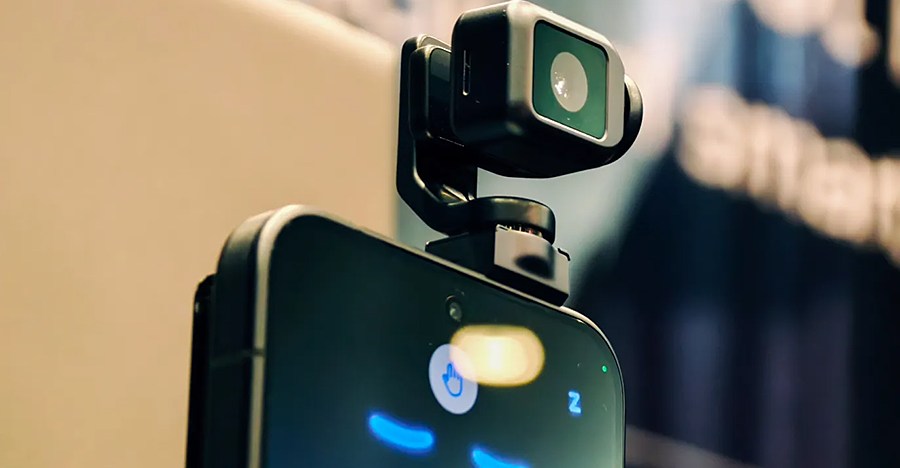
After first announcing it last October, Honor shared more details about its Robot Phone at MWC 2026 while also demoing a functional unit. The company confirmed plans to launch the phone, which features a folding gimbal-stabilized camera arm stored on its back, in China in the second half of this year. That main camera will have AI-powered tracking capabilities and a generous 200-megapixel sensor, but other specs remain a mystery for now.

Photo: Antonio G. Di Benedetto / The Verge
Lenovo’s latest concept capitalizes on a bunch of different tech trends at once. It’s a Windows-based handheld built around an 11.6-inch POLED display that can be folded in half, creating a more compact portable console with a 7.7-inch screen. Like the Nintendo Switch’s Joy-Cons, the Legion Go Fold Concept’s controllers can be removed, letting you attach the folding screen to a folio-style case with a built-in keyboard, trackpad, and stand, effectively turning it into a laptop.

Photo: Dominic Preston / The Verge
Honor announced its latest book-style folding phone at MWC, and while an international release isn’t expected until the second half of the year and pricing is still TBA, the new Honor Magic V6 could be worth waiting for. The V6 is just 4mm thick when open, and 8.75mm when folded, making it slightly thinner than last year’s model and Samsung’s Galaxy Z Fold 7. What’s more notable is that the Magic V6 is the first folding smartphone with an IP69 rating. While Google’s Pixel 10 Pro Fold was the first foldable to boast an IP68 rating, the V6 is even more durable and can survive both water jets and a complete dunking, meaning it’s safe for big screen doomscrolling in the tub.

Photo: Dominic Preston / The Verge
If you care more about a smartphone’s photography chops than any other feature, Xiaomi’s Leica Leitzphone is a co-branded special edition of the company’s 17 Ultra flagship featuring a rotatable camera ring and Leica’s iconic red dot. The Verge’s Dominic Preston calls it their “favorite phone of 2026 so far” that takes excellent photos with its single 1/1.4-inch type 200-megapixel sensor. As part of the Leica branding, the phone features a customized interface with extra Leica widgets, expanded Leica filters, and simulation modes for the Leica M9 and M3 cameras. However, the rotating camera ring that’s designed to quickly zoom or cycle through filters or exposure settings isn’t as useful as it sounds, given how close it sits to the back of the phone.

Photo: Antonio G. Di Benedetto / The Verge
The most interesting feature on Lenovo’s ThinkBook Modular AI PC Concept isn’t its pair of 14-inch 4K OLED touchscreens that can be configured as a dual-screen setup with its keyboard and trackpad connected wirelessly over Bluetooth. What’s more interesting are the concept’s interchangeable plug-and-play ports so you can swap between USB-C, USB-A, and even HDMI ports as needed. There’s no timeline for when this concept may ever see the light of day, but it could be an intriguing alternative to Framework’s modular laptops.

Image: Honor
At just 4.8mm thick, Honor’s MagicPad 4 takes the crown of thinnest Android tablet. It’s thinner than the 5.1mm thick Samsung Galaxy Tab S11, and even Apple’s 6.1mm thick iPad Air. But with a 12.3-inch, 165Hz OLED screen and a Qualcomm Snapdragon 8 Gen 5 chipset under the hood, it’s not a cheap tablet. It’s priced at £599.99 / €699.99 (around $820) configured with 12GB of RAM and 256GB storage.

Image: Tecno
Modular phones have more often than not been failures when they manage to actually reach consumers. That’s not stopping Tecno from taking another stab at it. Using the company’s “modular magnetic interconnection technology” the concept phone can be upgraded with features like an extended battery, a telephoto lens, game controls, or an action camera.

Image: Xiaomi
It lacks the ultra wideband (UWB) tracking capabilities of the AirTag for precise pinpointing, but Xiaomi’s first tracker could be a more useful alternative to Apple’s tracker. The Xiaomi Tag is compatible with both Apple’s Find My and Google’s Find Hub tracking networks and mobile apps (you’ll have to choose one or the other), while a single coin cell battery will power it for up to a year. It has a more elongated design than AirTags, but with an integrated metal loop that makes it easier to attach to things like a keyring without the need for a case or other accessories. At £12.99 (around $18) each, it’s also cheaper than an AirTag.
First Appeared on
Source link






Leave feedback about this