

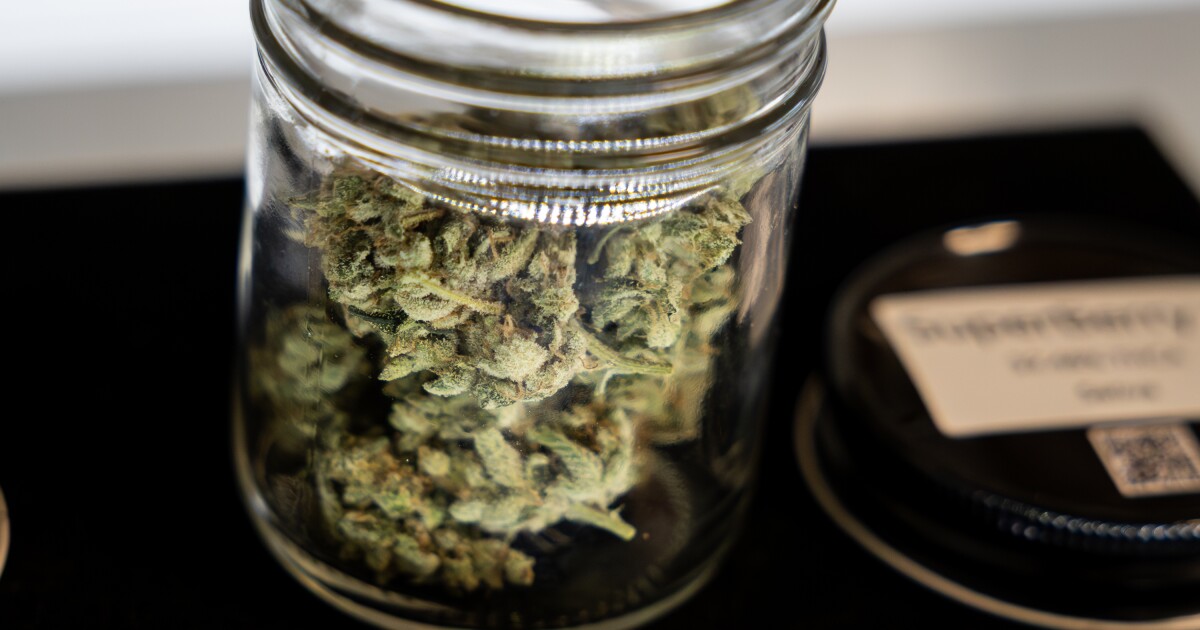
Smokable cannabis products must be removed from Texas stores by the end of the month under new rules adopted by the state’s health department.
Virtually all edible hemp products will still be allowed with stricter packaging and testing requirements. But sharply higher fees on retailers and manufacturers, while lower than initially proposed, could lead to more expensive products or force some companies out of business.
The sweeping regulations for the state’s hemp industry were first recommended in December. They were created based on an executive order issued by Gov. Greg Abbott after the Texas Legislature couldn’t agree whether to regulate THC products more strictly or ban them entirely.
Last week, the Texas Department of State Health Services adopted its final version of the rules and said they would take effect March 31.
The new regulations effectively ban the sale of smokable hemp and extracts by changing how DSHS measures Delta-9 THC, the primary psychoactive ingredient in cannabis.
Michael Minasi
/
KUT News
Under the state’s 2019 hemp law, cannabis with no more than 0.3% Delta-9 by dry weight is considered legal hemp.
The adopted DSHS regulation includes a new “total THC” rule, which counts a cannabis compound known as THCA in the Delta-9 calculation. THCA converts to Delta-9 when heated or smoked, which is why a product known as THCA flower has become widely popular in Texas.
During the public comment period, hundreds of people told DSHS they oppose counting THCA as Delta-9. THCA is not explicitly banned by state or federal law.
In its response, DSHS said the “total THC” policy follows existing state and federal regulations, which are the rules written by government employees tasked with interpreting law.
The Texas Agriculture Commission adopted regulations in 2020 requiring that tests account for the potential conversion of THCA to Delta-9. The U.S. Department of Agriculture proposed a similar rule on the last day of President Trump’s first term. The rule was adopted two months later by the Biden administration.
The state’s new hemp regulations slash a proposed 10,000% increase in the annual fees charged to retailers and manufacturers of what Texas calls “consumable hemp products.” But the adopted fees — $5,000 per year for each retail location and $10,000 per year for each manufacturing facility — are still 33 and 40 times higher, respectively, than existing levies.
More than 9,100 retail locations in Texas are registered to sell consumable hemp products, according to state health records.
Michael Minasi
/
KUT News
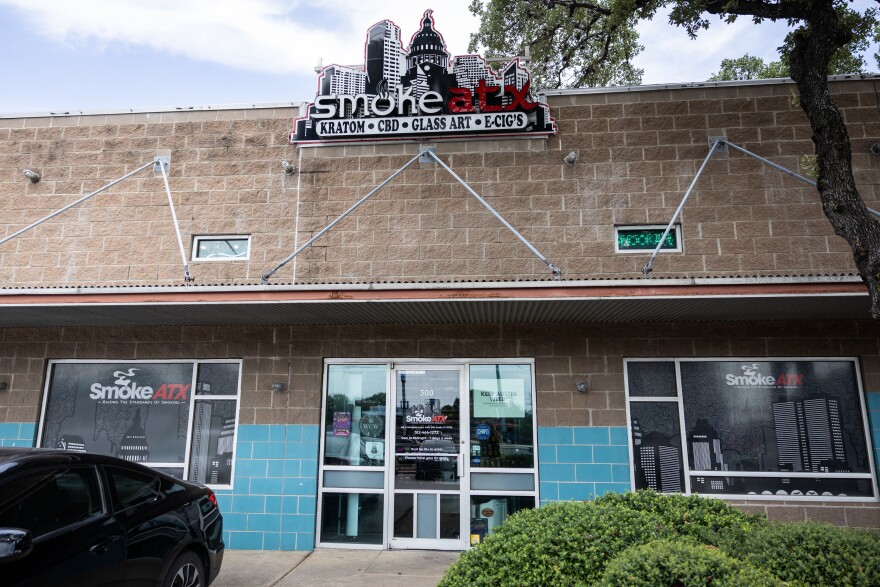
Some retailers say the fees are still crippling, especially coupled with the new prohibition on smokable products.
“It’s a high rate, but it would still be feasible, but then we come into the [THCA] regulations,” said Estella Castro, owner of the hemp store Austin Cannabis Co. “If you don’t have the flower, and the flower is going off completely, I don’t think you’re going to have the $5,000.”
Castro said smokable products account for about 40% of her sales.
Cannabis advocates say they are glad to see new product recall standards and a process to track consumer complaints, but they believe high licensing fees and a ban on flowers and extracts will power up the unregulated market.
“We know that consumers will be able to still acquire these products either from out of state operators who are not restricted by DSHS regulations or from the illicit market, which causes the most concern for us,” said Heather Fazio, who leads the Texas Cannabis Policy Center. “The illicit market doesn’t have age restrictions. It doesn’t have safety mechanisms and consumer protection.”
The new DSHS rules only affect the manufacture, distribution and sale of hemp products. They don’t affect state law allowing for possession of them.
Mark Bordas, head of the Texas Hemp Business Council, compared the $10,000 fee annual on hemp manufacturing facilities to the Texas Alcoholic Beverage Commission’s fee on distillers: $3,000 every two years.
“Our concern is some of these measures are so draconian that you are going to drive people out of the business and then folks’ access to the products,” Bordas said. “Invariably, we’re going to have to bring forth a [lawsuit], and the state has to defend what it’s done, and that’s taxpayer money, and it’s a waste.”
First Appeared on
Source link





Leave feedback about this