

By Nehal Malik
Elon Musk has just set a timer on what could be Tesla’s most ambitious infrastructure project to date. On Saturday, the billionaire CEO took to social media to announce that the company’s “Terafab Project launches in 7 days.” While the post was brief, it signals the start of Tesla’s move to solve its next great supply chain bottleneck: the manufacturing of artificial intelligence chips.
Why Tesla Needs a Terafab
For years, Tesla’s strategy has been to build the machine that builds the machine. We have seen this with battery production at Giga Nevada and lithium refining in Texas. Now, as Tesla pivots from being a simple carmaker to an AI and robotics powerhouse, it has identified silicon as its biggest hurdle.
During the company’s 2025 Shareholder Meeting last fall, Musk seriously floated the idea of a “Terafab” — a facility that is like a Gigafactory, but for AI chips. The goal is total vertical integration. Musk previously explained that “even when we extrapolate the best-case scenario for chip production from our suppliers, it’s still not enough.” By building its own fab, Tesla can stop being beholden to the limited capacity of external foundries and secure the volume needed for its future.
The Computational Backbone: AI4 to AI8
Tesla’s AI chips are meant to be the brains behind everything it builds. Currently, the AI4 chip powers the company’s mainstream vehicles and the Full Self-Driving (FSD) system. It will also be the core of the upcoming Cybercab robotaxis. However, Tesla is already looking much further ahead.
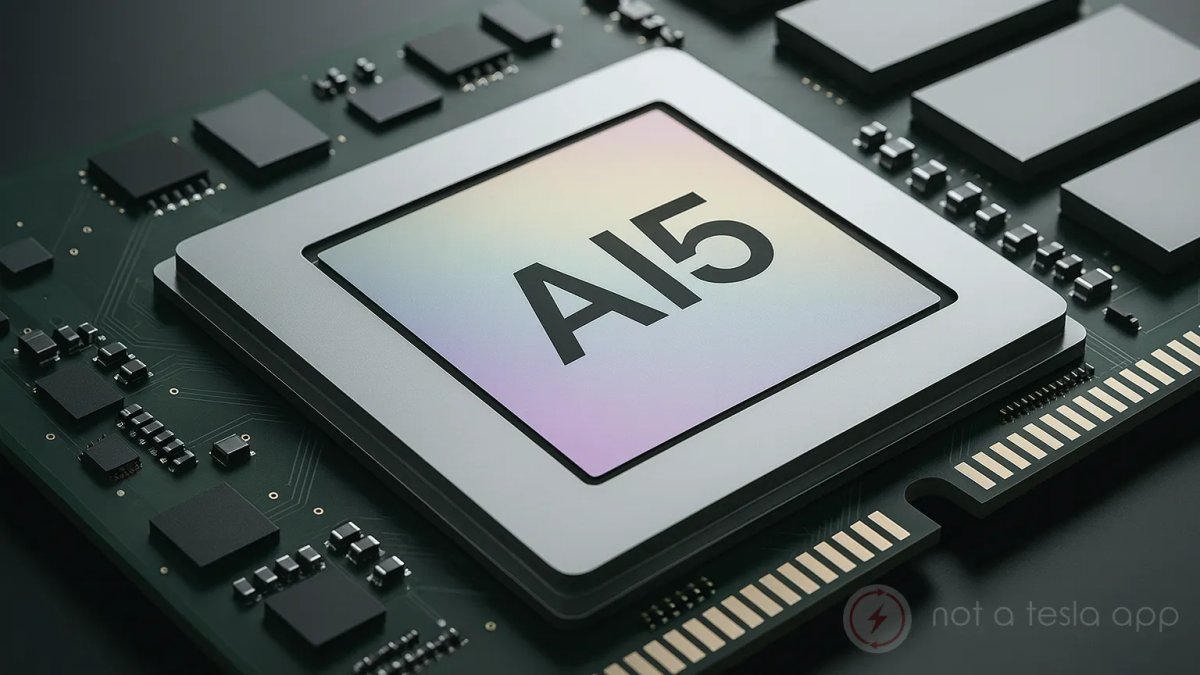
The company has finished designing its next-gen AI5 chip, which is expected to enter mass production in mid-2027. This chip is a generational leap, boasting 10x more raw compute and 9x more memory capacity than AI4. It isn’t just for cars; it is the unit required to power millions of Optimus humanoid robots.
Following that, the AI6 chip is already part of a $16.5 billion production agreement with Samsung. Musk has even theorized that AI7 and AI8 could eventually be destined for space, powering orbital data centers managed by xAI and SpaceX.
The Challenge of Building a Foundry
Building a chip factory from scratch is arguably the hardest technical challenge in the world. Currently, Tesla relies on a mix of partners: Samsung builds AI4, while the Taiwanese giant TSMC is slated to handle the first wave of AI5. Musk has even mentioned potentially working with Intel to bridge the gap until Tesla’s own facility is ready.
The vision for the Terafab is staggering. It is expected to include 10 separate modules, each capable of producing 100,000 chips per month. If successful, this would be the most advanced AI chip factory on Earth. It would allow Tesla to treat its entire fleet of parked cars as a decentralized supercomputer, with every vehicle running the same high-end hardware.
With the project’s launch just a week away, we still don’t know where Tesla plans to put this massive Terafab, or if Tesla will break ground on a brand-new site or expand an existing facility with a partner like Samsung or Intel. One thing is certain: Tesla is tired of waiting for the rest of the world to catch up to its compute needs.
By Karan Singh
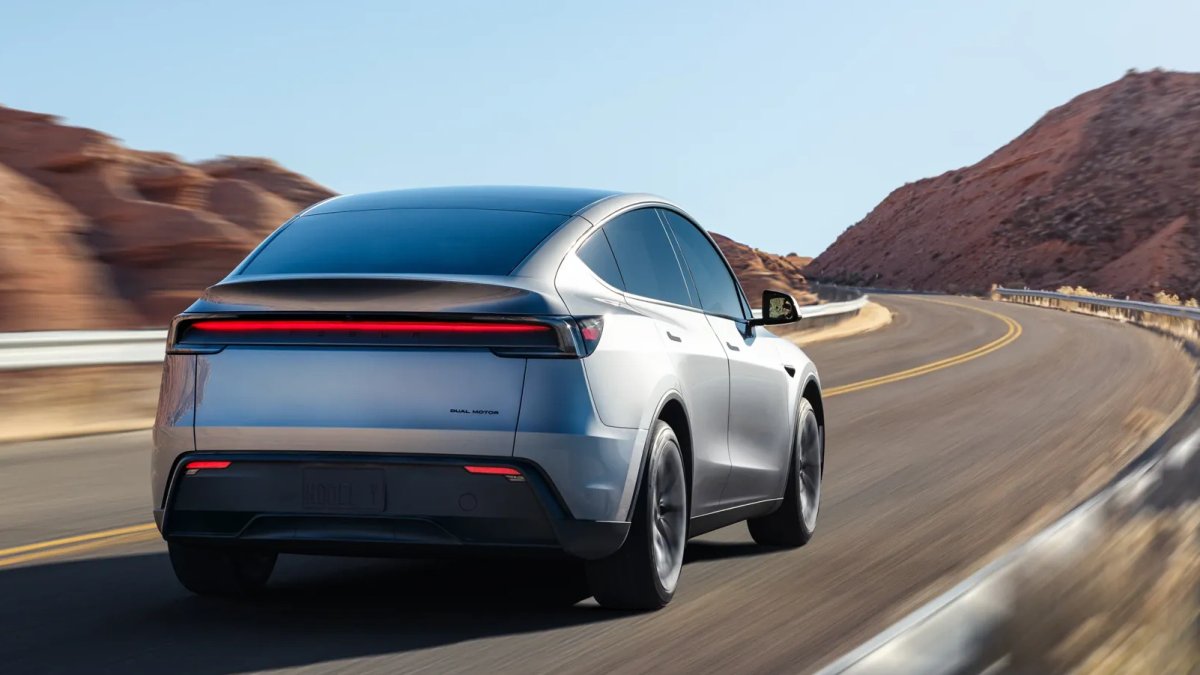
Tesla is officially rolling out software update 2026.8, and the release notes include another quality-of-life improvement for new Model Y owners. Dubbed Comfort Braking, the new feature is designed to eliminate the little jerky feeling that can sometimes occur in the final seconds when coming to a complete stop.
However, if you are driving an older-generation Tesla, you won’t be seeing this in your software menu. Comfort Braking is an exclusive feature on the refreshed Model Y, thanks to major under-the-hood hardware changes Tesla made with the vehicle.
The Chauffeur Stop
According to the 2026.8 release notes, the update “now provides a smoother feel as you come to a complete stop during routine braking.”
If you’ve driven an electric vehicle with aggressive regenerative braking, you are likely familiar with the slight “jerk” or rocking motion that happens the exact millisecond the car physically stops moving. In the automotive world, smoothly easing off the brake pressure at the very last second to prevent this rock-back is known as a “chauffeur stop.”
With Comfort Braking, Tesla has automated the chauffeur stop. The vehicle’s software now actively manages the physical friction brakes in those final moments, feathering the pressure to ensure a perfectly smooth, unnoticeable transition from rolling to a complete halt.
Exclusive to the Refreshed Model Y
While older vehicles also utilize regenerative braking to come to a stop, the refined Comfort Braking feature is hardware-locked to the refreshed Model Y. The secret lies in the vehicle’s hydraulic architecture.
During an interview with Top Gear discussing Tesla’s engineering roadmap, Vice President of Vehicle Engineering Lars Moravy detailed the magic of Tesla’s newer braking systems. Unlike older vehicles, the refreshed architecture utilizes a dual master brake cylinder setup. This redundant, advanced hardware allows the vehicle’s computer to dynamically decouple the brake pedal from the physical calipers and manage hydraulic pressure with extreme precision.
Because the refreshed Model Y has this advanced dual-cylinder hardware, the vehicle can actively modulate the physical brake pads in micro-adjustments at zero miles per hour. This is something the older, traditional single-cylinder brake boosters simply cannot replicate with the same level of granular smoothness.
The Evolution of Brake Blending
Comfort Braking is the ultimate culmination of a software journey Tesla started a few years ago.
Tesla originally introduced “Apply Brakes When Regenerative Braking is Limited,” which lets your vehicle provide a consistent regenerative braking experience by having the vehicle use the physical brakes when regen braking is limited. This lets the driver feel the same amount of deceleration whether regen is fully available or limited.
More recently, Tesla introduced deceleration options in the new Model Y, allowing the vehicle to apply regenerative braking even when the brake pedal is pressed. This maximizes efficiency by leveraging regenerative braking, whether the driver lifts their foot off the accelerator or presses the brake pedal.
Now, with the advanced dual-cylinder hardware of the refreshed Model Y, Tesla takes over some of the braking by smoothly applying the brakes at the end of a stop without spilling your morning coffee.
By Nehal Malik
Tesla has officially cleared a major regulatory hurdle to tighten the financial bonds within Elon Musk’s growing ecosystem of companies. According to new filings with the U.S. Federal Trade Commission (FTC), the electric automaker has received government approval to convert its previous $2 billion investment in xAI into a minority equity stake in SpaceX.
This move follows a massive restructuring of Musk’s private ventures. According to Bloomberg, the conversion formalizes the ties between Tesla and the rocket manufacturer just as SpaceX prepares for what could be the largest initial public offering (IPO) in history.
The SpaceX and xAI Merger
The reason for this equity shift stems from SpaceX’s official acquisition of xAI last month. By folding the artificial intelligence startup into the space-launch company, Musk created a combined entity valued at a staggering $1.25 trillion.
The logic behind the merger is to utilize SpaceX’s Starlink satellite network and launch capabilities to ultimately put AI data centers in space, powering xAI’s massive computing needs. Musk wants to launch millions of solar-powered AI satellites that could process information far above the Earth’s atmosphere. Since Tesla’s initial $2 billion investment was funneled into xAI before the merger, that capital is now being rolled over into a SpaceX stake, which analysts estimate to be less than 1% of the rocket company.
A Converging Path for the Musk Empire
This news confirms that Tesla is no longer just a car company working in a vacuum; it is becoming a central node in a multi-industry network. We are already seeing the practical results of these converging paths. Just a few days ago, Musk announced Digital Optimus (playfully nicknamed “Macrohard”), a joint venture between Tesla and xAI aimed at automating office work.
There is growing speculation that this consolidation is only the beginning. With xAI now under the SpaceX umbrella and Tesla holding a direct stake in the parent company, the boundaries between the “car company,” the “space company,” and the “AI company” are blurring. Rumors even surfaced earlier this year that SpaceX had explored a full merger with Tesla, and while that hasn’t happened yet, the financial and technical overlap suggests that Musk is building a singular, vertically integrated technology giant.
What This Means for Shareholders
For Tesla investors, this conversion provides a rare piece of indirect exposure to SpaceX before it hits the public market. If the SpaceX IPO proceeds at its rumored $1.5 trillion valuation later this year, Tesla’s small stake could see a significant jump in value.
While some investors worry about the complexity of these intertwined deals, the FTC’s green light suggests that regulators are satisfied for now. As Musk continues to reorder his empire ahead of the big IPO, the “Musk Galaxy” is looking more like a single, unified organism than a collection of separate businesses.
First Appeared on
Source link



Leave feedback about this