

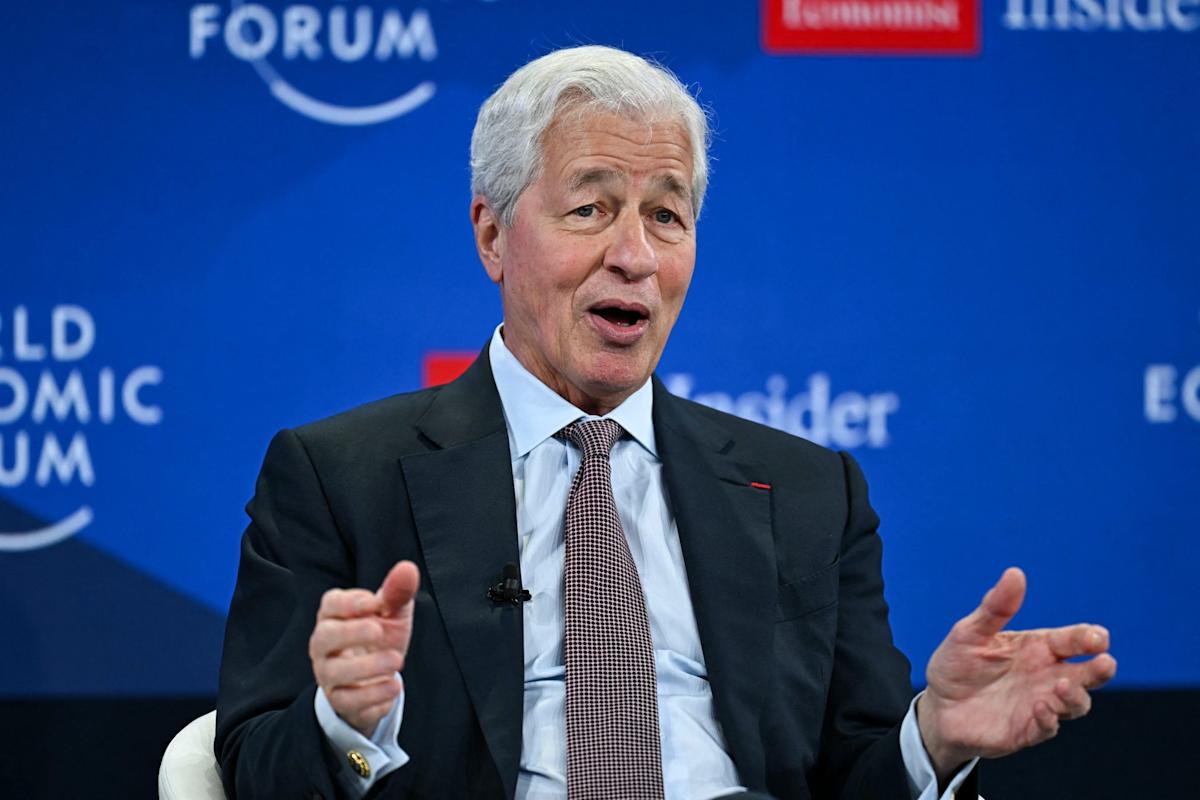
The S&P 500 is up 14% over the past 12 months; the Magnificent Seven are up near 17%. Bull spirits are riding high, billions upon billions of dollars are being funneled into artificial intelligence, which the vast majority of Wall Street agrees will prove transformative for growth and efficiency. What could possibly go wrong?
That’s the question JPMorgan Chase CEO Jamie Dimon is asking himself, and the answer he’s come up with is “plenty.”
The Wall Street veteran and leader of America’s largest bank is well known for his pragmatism: Even during relatively healthy economic cycles, Dimon ensures JPM analysts are constantly stress-testing to ensure the bank would survive any market blip or economic downturn. With so much being bet on AI (hyperscaler capital expenditure this year is expected to reach approximately $646 billion, or about 2% of U.S. GDP), Dimon’s hackles are raised even higher.
At the bank’s update event yesterday afternoon, the 69-year-old acknowledged it’s easy to get caught up in bull spirits. But he also reiterated the long-term, macroeconomic headwinds he believes will inevitably lead to a turn in the cycle. On calls that rising tides will lift all boats in the market, Dimon shared: “I’m not quite that optimistic about the year.
“We know … that there are all these tailwinds. The One Big Beautiful Bill, bank deregulation, other deregulation, animal spirits, faster permitting … I think it’s all going to drive growth this year,” he began. “It may have a slight inflationary effect.”
But turning to headwinds, Dimon cited geopolitics, global deficits, trade issues, the remilitarization of the world. “Those are longer-term things that may effect the economy, but they could be harsh,” he added. “If you read history books, there are a lot of examples where you could get surprised.”
Those familiar with Dimon’s economic outlook won’t be surprised to hear him discussing geopolitics and global deficits as key concerns. The Wall Street giant built a “lean and mean” geopolitics arm last year to monitor the shifting world order, after Dimon said rising tensions are the biggest threat to the world economy. Likewise, the banker said earlier this year that the U.S.’s fiscal trajectory is unsustainable and that forces “may crash” one day as a result.
“We don’t run the company hoping for good times; we don’t run the company just thinking there are bad times. We run the company [with] a full range of possible outcomes, so that regardless of the outcome we can serve our clients day in and day out,” he added.
First Appeared on
Source link


Leave feedback about this