

Scientists have long wondered whether other social animals show any consistent response to companions that stop responding, seemingly in distress.
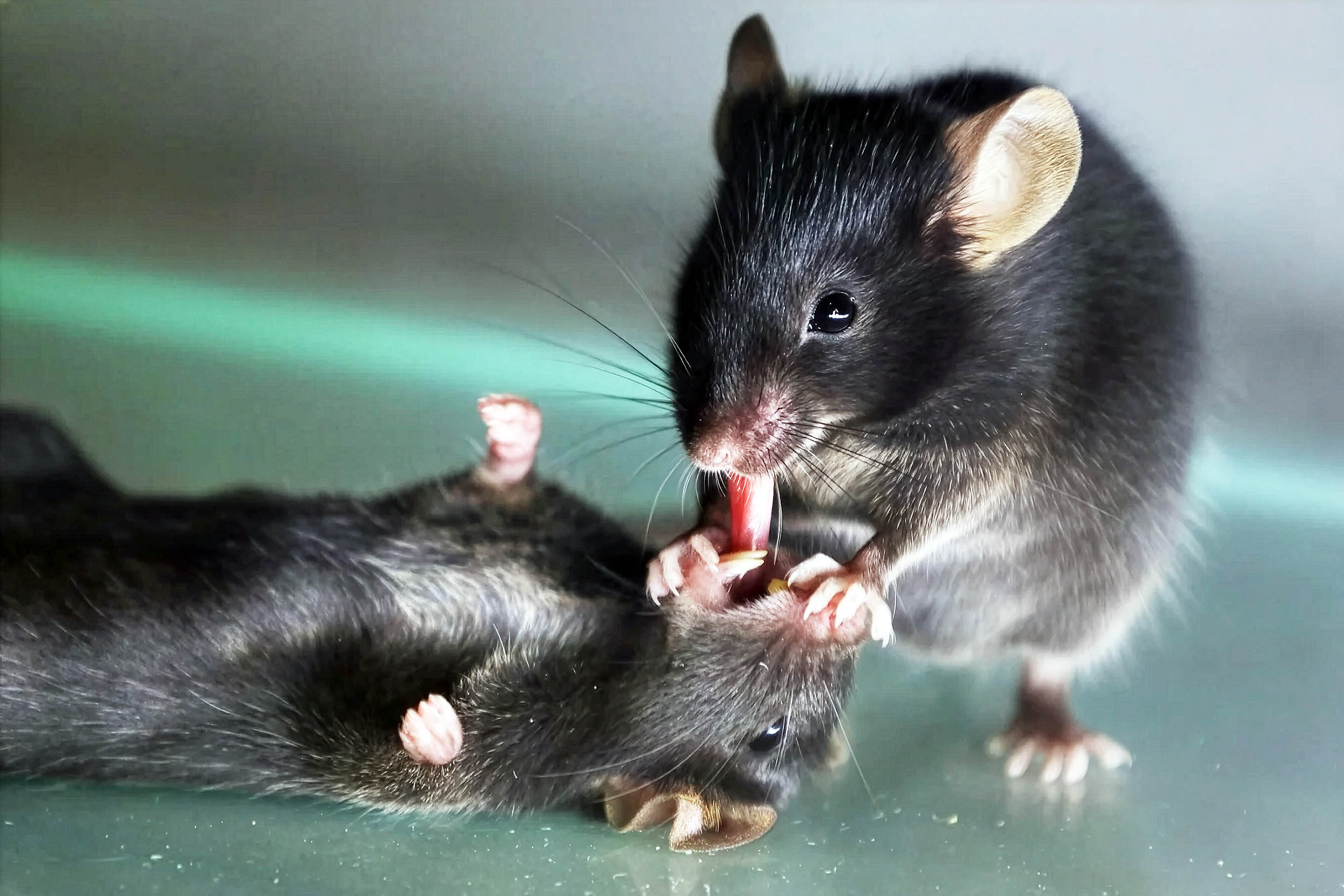
When a mouse spots another mouse lying still, it may paw at its friend, chew on its snout, or even yank its limp tongue aside in what closely resembles an attempt at first aid. Is this behavior the same as what we humans call CPR?
Li Zhang at the University of Southern California (USC) and his colleagues have been looking into these interactions.
They kept one mouse awake in its home cage and briefly anesthetized its cage mate, so the partner stayed alive but could not respond.
Then they compared the awake mouse’s behavior around an unresponsive partner with its behavior around an active partner.
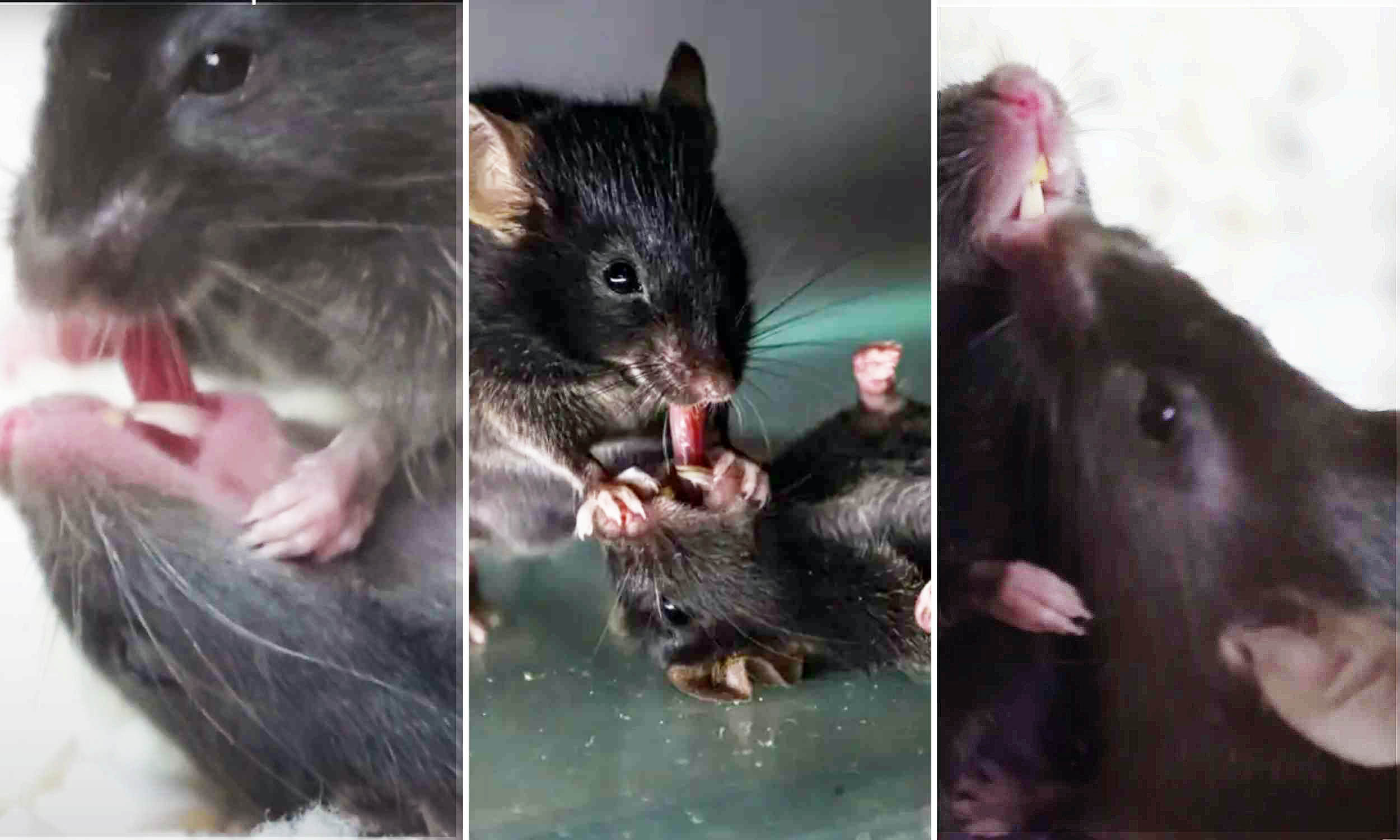
They captured footage of lab mice confronting a familiar cage mate that had been anesthetized and was unresponsive.
First aid behavior in mice
According to Li Zhang, their actions did not look random. “They start with sniffing, and then grooming, and then with a very intensive or physical interaction,” he related.
The awake mouse often began with “checking” actions such as sniffing. Many mice then moved into grooming. If the partner stayed unresponsive, the awake mouse often switched into stronger, more focused actions aimed at the face, especially the mouth and tongue.
Close-up video let the team tell apart mouth biting, tongue biting, tongue pulling, and licking near the eyes.
As the anesthetized mouse began to wake and move again, the intense mouth-and-face actions dropped quickly and stopped when the partner fully regained responsiveness.
Triggers for mouse CPR behavior
The team tested what actually triggered this response. A sleeping mouse can still respond when another mouse nudges it. In that situation, the awake mouse did not continue the behavior for long.
With a dead cage mate, the awake mouse showed some of the same face-directed actions seen with anesthesia. These comparisons point to unresponsiveness as a key cue, not just stillness.
Social ties also shaped the reaction. Mice responded much more strongly to their own cage mates than to strangers, which matches a common pattern in mammals: familiar group members are treated differently from strangers.
This distinction suggests that familiarity plays a role in prompting these rescue-like behaviors.
Insight from other animals
Large mammals such as chimpanzees, dolphins, and elephants have been recorded aiding group members that are in trouble.
Some dolphins have guided a distressed pod mate to the surface so it could breathe, which has long intrigued scientists who study social behaviors in marine animals.
Elephants have also been known to support injured relatives. These examples suggest that lending a helping hand isn’t always limited to humans.
Rodents, however, can be trickier to monitor in the wild. Mice prefer concealed spaces and often scatter at the slightest hint of danger. That makes it challenging to film them tending to an ailing group member outside the lab.
Oxytocin and mouse CPR
These rescue-like gestures appear linked to the presence of oxytocin, a hormone that influences bonding in many species. The new study detected active oxytocin-releasing neurons in the amygdala and hypothalamus.
These brain regions, known to handle emotion and social behavior, lit up when mice recognized a cage mate in distress.
“If we extended the observation window, maybe the success rate could be even higher,” said team member Huizhong Tao, also from USC.
Additional evidence showed that turning off these neuron signals or blocking their ability to dispatch oxytocin reduced the mice’s apparent attempts to help.
Activating the same neurons produced more grooming and nibbling.
The link between this hormone and nurturing conduct has come up in past research, supporting the view that many mammals share some wiring for caring.
Importance for group survival
Scientists think these behaviors might help keep social groups together and improve survival. Young mice that responded to a motionless mate saw that partner bounce back to normal sooner than those left alone.
That small difference might affect how groups function in their natural habitats, where every second can be a matter of life or death.
Some researchers say caution is needed when drawing big conclusions. Animals often do things that look human-like, but motives can be complicated.
Still, these lab findings give hints that even small creatures might care more about their companions than we once believed.
What does it all mean?
This study does not turn mice into tiny emergency responders, and it cannot cover every real-life situation. Still, it gives researchers a way to study how social brains react when a group member suddenly goes quiet.
Many animals rely on social bonds for carrying out different activities, from defense to nurturing infants.
This study raises the possibility that more species have built-in behaviors that benefit the whole community.
Researchers suspect that similar patterns might exist in other species but remain unnoticed because of how tough it is to observe these moments in the wild.
Oxytocin is a hormone found in many vertebrate species and the researchers suggest that it could underpin an innate emergency response to assist an unresponsive group member.
This revival behavior may thus be widely present, particularly among social animals.
The discovery that mice act as tiny caregivers prompts new questions. Scientists plan to test if there are variations among different strains of mice.
Some want to see if environmental factors, such as stress or crowding, affect how likely mice are to step up for a comatose mate.
The study is published in Science.
—–
Like what you read? Subscribe to our newsletter for engaging articles, exclusive content, and the latest updates.
Check us out on EarthSnap, a free app brought to you by Eric Ralls and Earth.com.
—–
First Appeared on
Source link





Leave feedback about this