

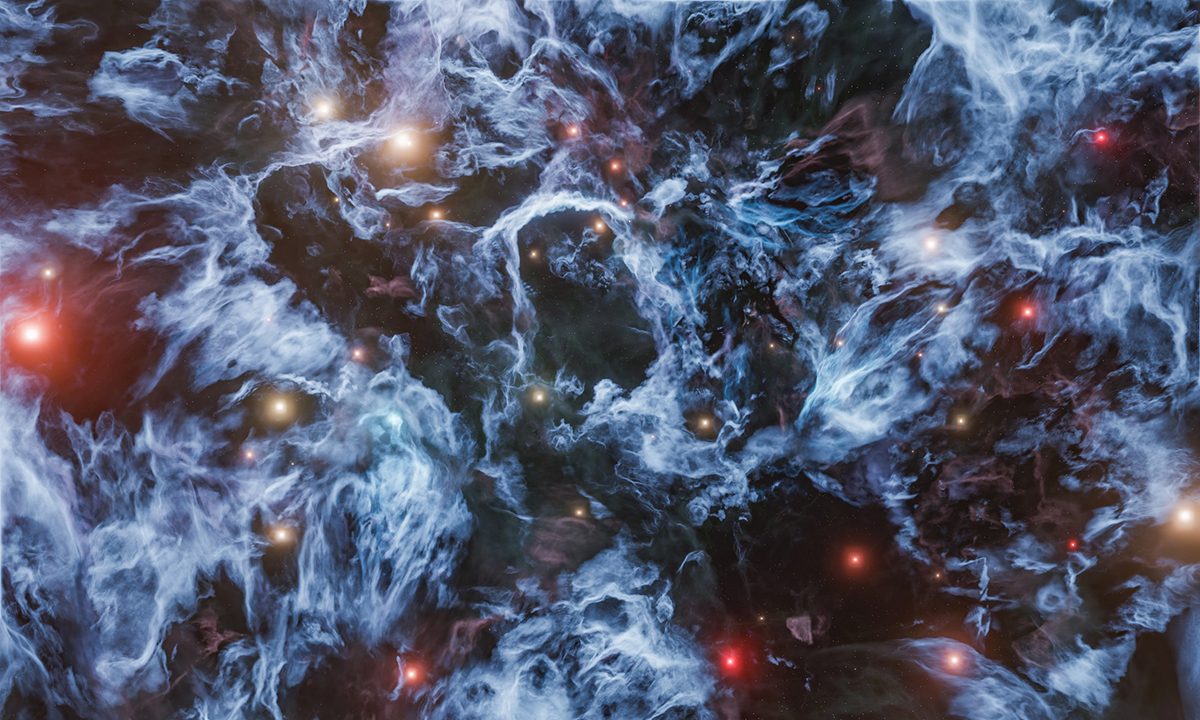
A team of astronomers say they may have worked out the source of three mysterious signals known to be coming from the heart of our Galaxy.
The team say the source could be a particular kind of dark matter and, if true, the discovery could be one step closer to solving the riddle of the dark Universe once and for all.
Dark matter explained
Dark matter makes up 85% of all the matter in the Universe.
While it’s never been directly observed, the existence of dark matter is used to explain a key mystery in physics that relates to how galaxies are able to hold themselves together.
When astronomers observe enormous spiral galaxies in deep space, there doesn’t appear to be enough matter to generate the gravitational pull required to hold the galaxy together.
As galaxies rapidly rotate, they should be ripping themselves apart, but they aren’t.
That means there must be some extra kind of matter within galaxies that’s providing the gravitational glue to hold them together.
This invisible substance is known as dark matter, and it’s one of the biggest mysteries in the Universe.

Excited dark matter
Astronomers observe dark matter indirectly by searching for signs of how it might behave in space.
That includes unexplained signals that are known to be coming from the centre of our Milky Way galaxy.
Previous research has suggested one of these signals could be from a type of dark matter known as ‘excited dark matter’.
This signal is a sharp spike in gamma rays at a specific energy known as the 511-keV emission line.
In this new study, astronomers were able, for the first time, to link excited dark matter to three unexplained signals coming from the centre of our galaxy simultaneously.
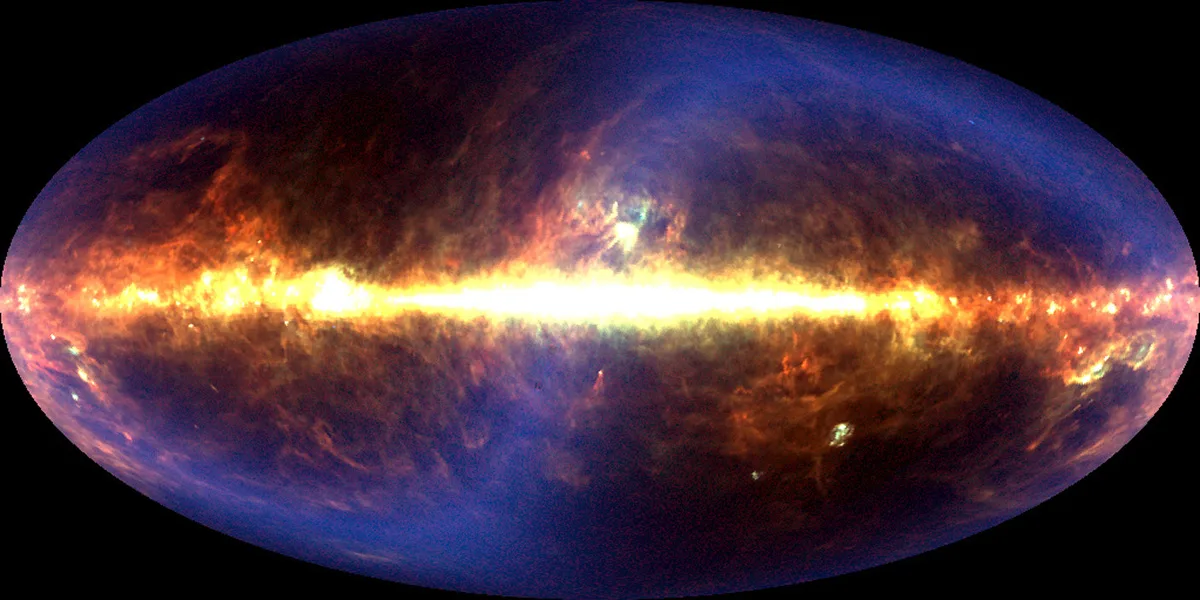
Dr Shyam Balaji, Postdoctoral Research Fellow at King’s College London and one of the lead authors of the study, says: “When we look at well-known astrophysical events, like star explosions, they haven’t been able to provide a full explanation for mysteries like the specific energy and shape we’ve observed coming from the centre of the Milky Way.
“Now, we’ve shown how one excited dark matter model could account for at least two – possibly even three – of these kind of unexplained signals at once.”
So what is excited dark matter? The team say it’s thought to be generated by particles of dark matter bumping into each other, briefly storing extra energy in an excited state and then releasing it.
When that energy is eventually released, it produces positively-charged electrons called positrons.
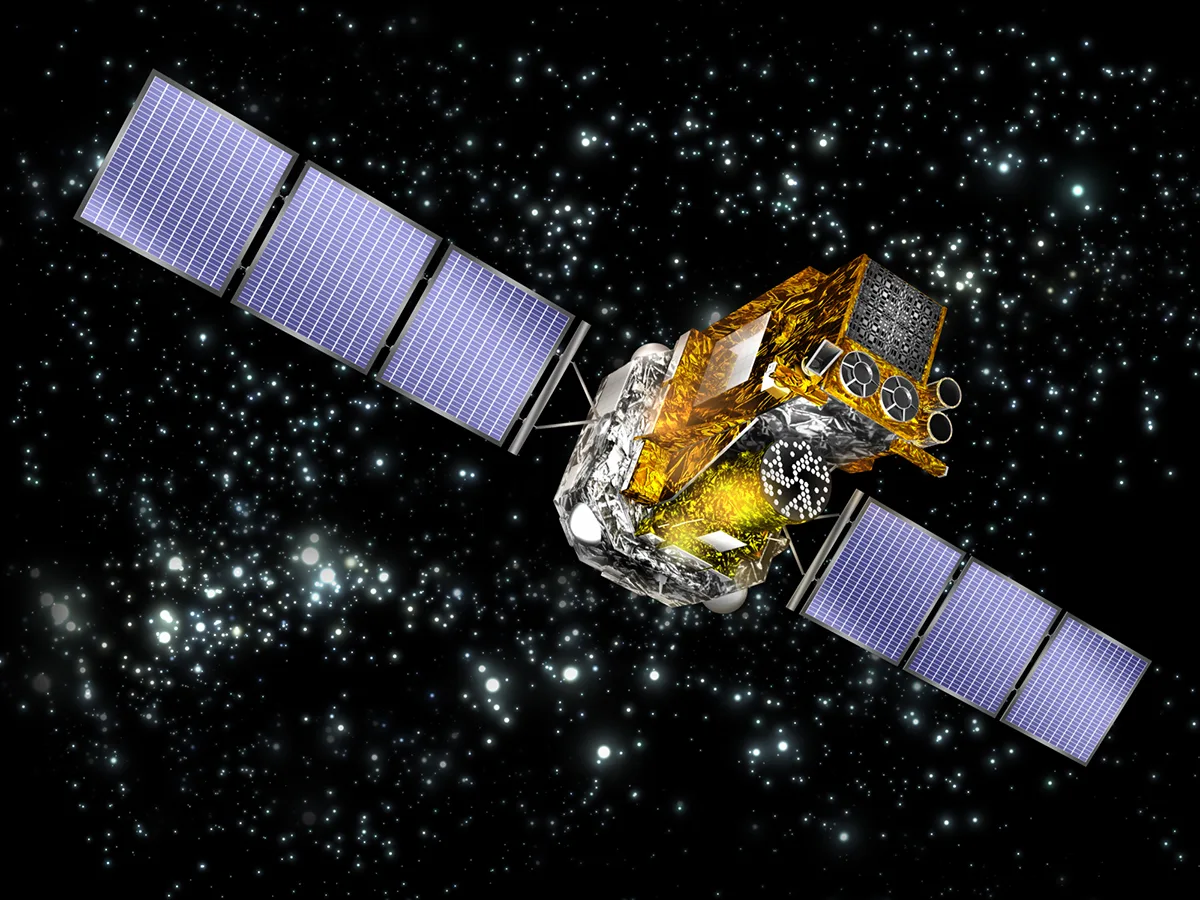
These positrons can be observed indirectly by space telescopes like the European Space Agency’s now-retired Integral missing.
Using these observations, the team modelled how positrons travel through the Milky Way and found that the excited dark matter scenario could explain the 511 keV signal, as well as a high-energy light coming from the centre of our galaxy, known as the 2 MeV gamma-ray continuum.
And they say it could explain a third strange signal, which is an unusually high ionisation in gas in the Central Molecular Zone (CMZ) at the centre of our galaxy.
The team say sources such as cosmic rays have failed to provide an explanation for the ionisation process.
Their model suggests dark matter could be the answer, and that future space missions primed to detect low-energy gamma rays would be able to test their predictions.
The results could give scientists valuable information about what dark matter is and how it behaves.
“If one mechanism could account for several long-standing unexplained observations in space, it gives a much clearer direction for future research,” says Damon Cleaver, PhD Candidate in the Theoretical Particle Physics and Cosmology Group and co-author of the study.
“Within the next generation of space missions, we may finally be able to test the theory of whether dark matter is behind some of the Milky Way’s most persistent mysteries and learn more about the mysterious substance itself in the process.”
Read the full paper in the Astrophysical Journal Letters
First Appeared on
Source link






Leave feedback about this