

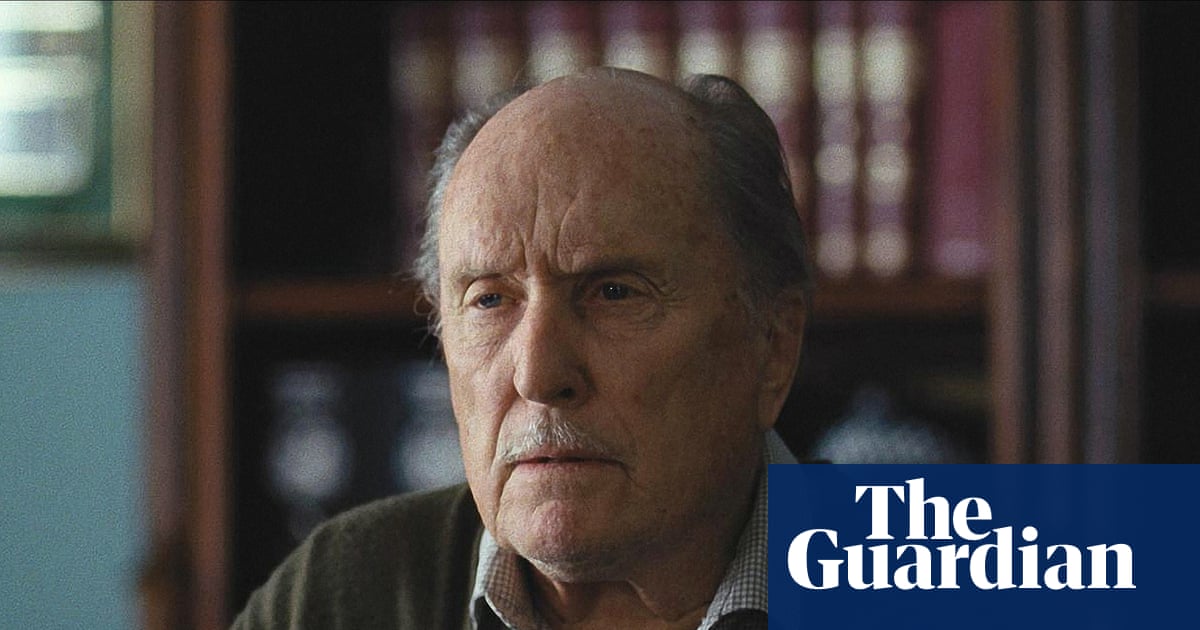
He must have been 88 or 89 when he did Widows. He came on the set – this icon – and we got talking, about London. He started telling me about Michael Caine and all these cockney phrases that Michael must have told him. We’re getting on all right – and then all of a sudden, he gets a bit annoyed. It got to a point where I didn’t really understand what was going on, as we’d been having a good time. It turned out he was nervous. He was as nervous as Cynthia Erivo was, whose first ever film role it was. And I was gobsmacked – he’s been doing this for I don’t know how long, back to the 1960s, and then I realised that, for him, it’s brand new every time.
That’s a sign of a great artist: he doesn’t rely on what he’s done before he’s going into it. He was a veteran, a legend, and yet he was nervous. And then, you know, we got into the groove and then it was fine. It’s just like what I imagine a football player goes through: you’re thinking about the match, getting wound up, and once you’re on the field, well, it’s, let’s get on with it. And that was Robert. Once the engines were warmed up, he was away.
There were some great stories from the set. We had a scene with Elizabeth Debicki where she gets shot by him, and she falls on top of him. We had to hold the shot at that point, with them in position. He’s holding her up, they are like face to face – and then he starts to sing “Getting to know you, getting to know all about you” from The King and I. Amazing.
Another time his wife came in, lovely lady. We were shooting in the kitchen area of a very big building and she sets herself up in a corner. She has a briefcase with her and I’m thinking, what’s going on here? She opens up this briefcase, it’s almost like a spy movie, and then she gets out a telephone headpiece with a microphone and starts talking into it. I realised Bob had an earpiece and she’s reading him his lines – they’re doing a Brando! That made me laugh.
What was so great about him as an actor is that, basically, he’s on the surface. Everything is on the surface so it can be manipulated in the scene to get the best out of it. He puts everything out there, for the film. That’s the thing about Bob: he was a proper artist. He’s willing to go there. If you watch The Apostle, the movie he wrote and directed, you can see how he can conjure things up. The congregation in the movie are with him because he can stir the pot in the way that the character does. He could do that because he’s a great actor, and not everyone’s a great actor.
I think what made him what he was, was that in the telling of any story he was the rock. He brought gravity. Everything would have flown away if he wasn’t pulling it together. He was so skilled; without him, there is no Pacino, there’s no De Niro. You need those rocks. And don’t forget who his father was, a rear admiral in the US navy. He brought that military stuff with him: he knew that guy in Apocalypse Now. And now we know that guy too. Robert was no fool.
Look at his range: an actor, writer, director. He bet on himself. When he said he wasn’t going to do Godfather III, he knew himself. He wrote the songs in Tender Mercies. He did a tango movie. He had autonomy as an artist. And that’s the thing about Duvall. He always bet on himself. And because of that he died happy.
First Appeared on
Source link


Leave feedback about this