

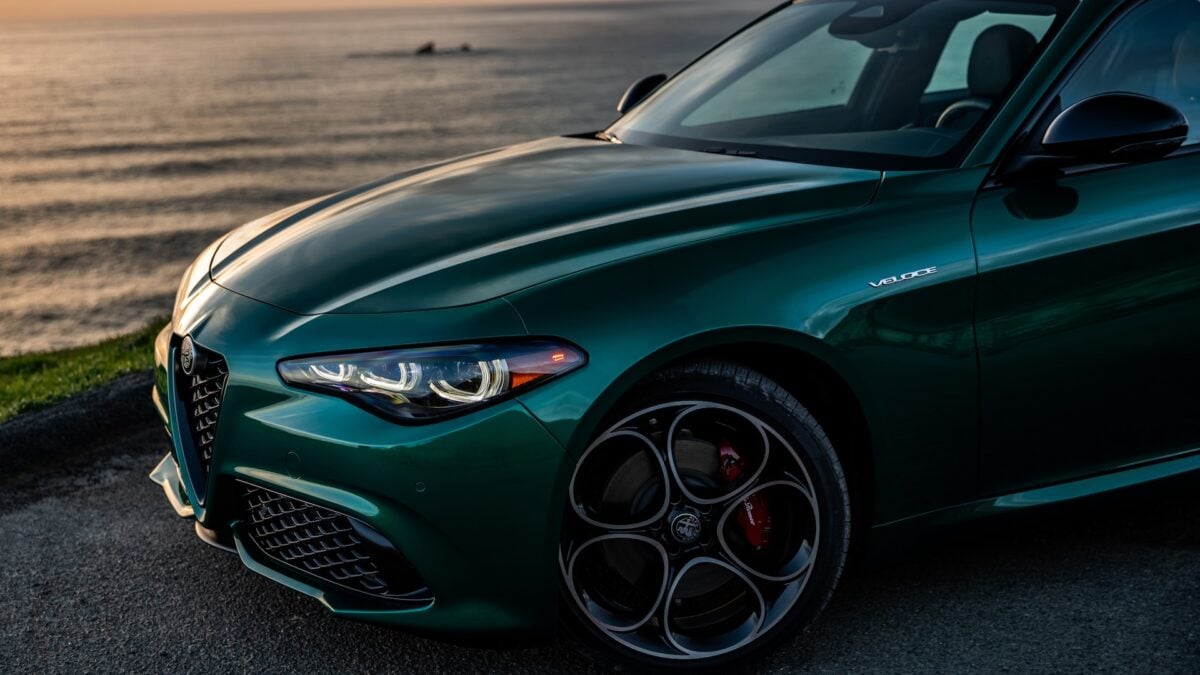
The parent company of brands like Jeep, Ram, and Alfa Romeo already reported it would spend billions to reboot its electric vehicle strategy amid dismal sales and a new regulatory environment. Now, however, it’s reporting just how much that transition weighed down the company last year.
Stellantis reported on Thursday a net loss of $26.3 billion (€22.3 billion) for 2025, attributing that to a $29.9 billion (€25.4 billion) of what it called “unusual charges.” Net revenues were down 2% from 2024 to $180.8 billion (€153.5 billion).
“Our 2025 full year results reflect the cost of over-estimating the pace of the energy transition and of the need to reset our business around our customers’ freedom to choose from the full range of electric, hybrid and internal combustion technologies,” CEO Antonio Filosa said in the news release.
Filosa became Stellantis CEO in June 2025, replacing Carlos Tavares, who became CEO when PSA Group of France merged with FCA Group, itself a merger of Fiat and Chrysler. Tavares aggressively pushed an EV strategy across all 14 Stellantis brands that was already starting with small cars in Europe and, later, China. The company urgently prepared platforms and components for large sedans and SUVs, such as an electric replacement for the V8-powered Dodge Charger.
The strategy hasn’t been successful. U.S. sales overall dipped 3% in 2025, lifted mostly by increased demand for gas-powered minivans, trucks, and SUVs in the second half of the year. The all-electric Jeep Wagoneer S posted sales just under 11,000 compared to 210,000 Grand Cherokees. Worse, only 7,400 electric Dodge Chargers were sold on top of 2,100 gas-powered Chargers that were last built in 2023. The tiny, imported Fiat 500e managed 1,100 sales.
Last month, The Drive reported that none of the Chrysler or Jeep plug-in hybrids would return for 2026, which consisted of the Jeep Wrangler 4xe, Grand Cherokee 4xe, and Chrysler Pacifica Hybrid minivan, the latter being the only model of its type in the U.S. The Alfa Romeo Tonale PHEV, imported from Italy and subjected to tariffs, was dropped in favor of a gas-only version, and the related Dodge Hornet was discontinued altogether.
At the other end, the redesigned 2025 Ram 1500 pickup truck, which debuted with a turbocharged six-cylinder option instead of a V8, gained the missing eight-cylinder option for 2026. The beleaguered Charger lineup added a turbocharged six-cylinder gasoline engine, too.
Last September, Stellantis announced the two-year-old all-electric Ram pickup truck was dead and would be replaced by a version that used a gasoline engine acting as a generator to power its electric motors. That technology will be added to the 2026 Jeep Grand Wagoneer this year and is reported to go to other large Stellantis vehicles in North America.
In Europe, hybrids have been added to many previously EV-only small cars, and Stellantis will reintroduce diesel engines to many vehicles in the wake of customer demand and the European Union’s decision to pull back its 2035 EV mandate, Reuters reported earlier this month.
Stellantis is far from the only company washing its hands of going all-in on EVs, as Ford and General Motors have written down similarly large amounts on the engineering and will pivot to some form of internal combustion engines. The all-electric Ford F-150 Lightning died last year and will return with a gas engine powering the electric motors, for example. No company as large as Stellantis, however, is going back to things presumed consigned to history a few years ago—V8s and diesels. While there are many reasons that America is clinging to gas-powered vehicles, the expiration of the EV tax credit late last year has taken most of the blame.
And for its work, Stellantis reported today it predicts a “mid-single-digit percent” bump in net revenues for all of 2026.
First Appeared on
Source link






Leave feedback about this