

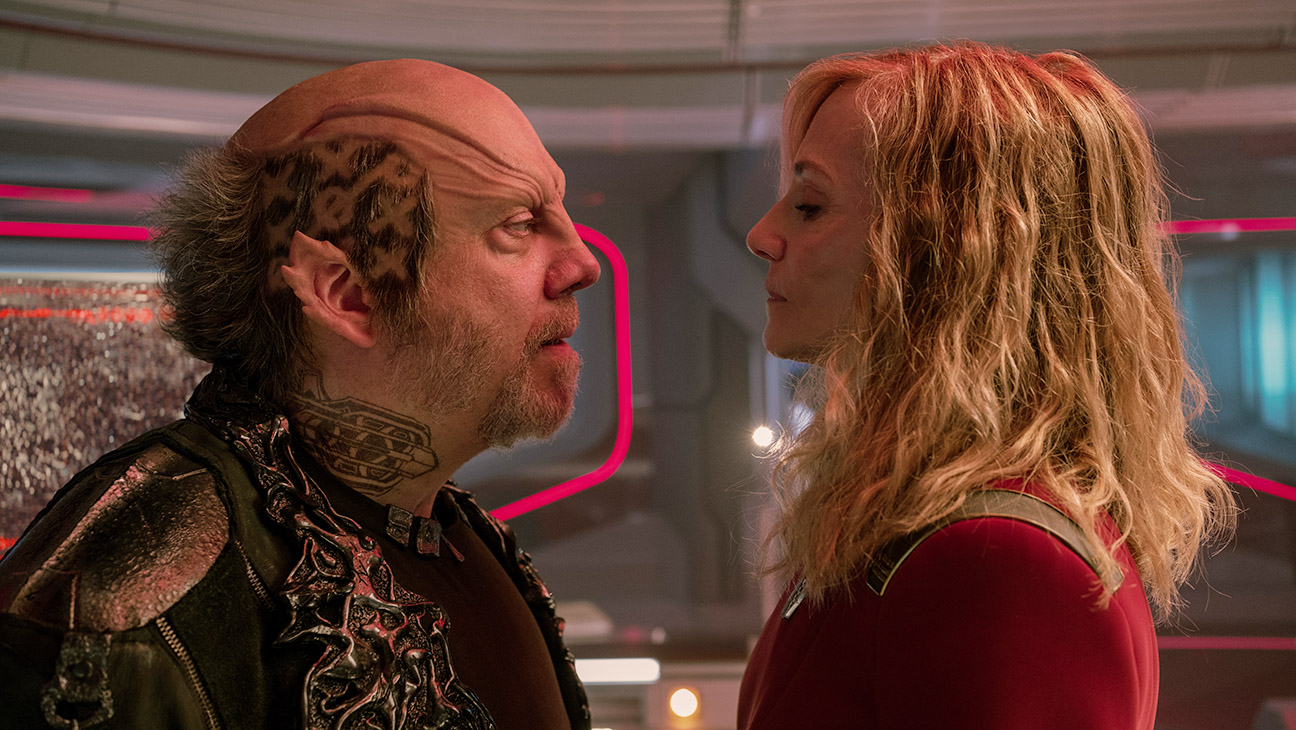
So much for Paramount+‘s Gen Z Star Trek show.
The streamer has decided to end Star Trek: Starfleet Academy after season two.
Starfleet Academy had recently finished airing its debut season. Paramount+ had (rather optimistically, as it turned out) already ordered a second season, which recently wrapped production.
Starfleet Academy has been a polarizing entry in the Trek canon. Many critics have celebrated the show for focusing on a younger generation and its coming-of-age themes. On social media, the show has been a frequent target of mockery from those who claim the show is too “woke.”
On Rotten Tomatoes, the show had an 87 percent positive critics score, but a dismal 51 percent audience score.
The show also never managed to chart among Nielsen’s weekly top 10 streaming lists for viewership.
The news comes at a time when there are no longer any Star Trek TV shows in production, though there are two previously filmed seasons of Strange New Worlds that have yet to air.
There has also been speculation about the future of Star Trek executive producer Alex Kurtzman, who has guided the franchise’s TV revival across several shows. Kurtzman’s deal goes through the end of 2026. Paramount+ is currently in talks with Kurtzman and his Secret Hideout production company about renewing or extending his deal, though it’s not clear if that deal will still include oversight of Trek (Kurtzman has produced other titles for the company, including Hawaii Five-O, Scorpion and Salvation).
On the film side, Paramount Pictures remains in early development on Star Trek projects.
CBS Studios and Paramount+ released this statement: “We’re incredibly proud of the ambition, passion, and creativity that went into bringing Star Trek: Starfleet Academy to life. The series introduced audiences to a bold new group of characters, welcomed familiar faces, and expanded the Star Trek universe in exciting new ways. We’re grateful to [EPs] Alex Kurtzman, Noga Landau, Gaia Violo, and the entire cast and crew who pushed storytelling boundaries in the spirit of Gene Roddenberry’s vision. We look forward to sharing the upcoming second and final season with everyone, and continuing to celebrate the cast, crew, and all that was accomplished with this series.”
In addition, Kurtzman, Landau and Violo released a lengthy open letter about the cancelation — and addressed some of the criticism surrounding the show. Here is the letter in full:
“It’s been my and Noga’s joy and privilege to help carry Gene Roddenberry’s extraordinary vision forward with Starfleet Academy, thanks to the hundreds of hardworking humans who pour every ounce of their talents into the work daily with imagination and reverence. We are in post-production now on what will be the second and final season. We’re so proud of what we’ve accomplished together on this show, and the world will get to see the work of these extraordinary artists when season two airs. We will finish strong.
Whether you’re working on Star Trek or part of the marvel that is Star Trek fandom — its very heart, soul, and conscience —the joy comes from adventuring across boundaries of time, space, and the humanly possible in service to Roddenberry’s transformative vision of the future. That incomparable vision was fueled by an inexhaustible optimism. Star Trek places its bet on the best in human nature. It dares to imagine a society of ‘infinite diversity in infinite combinations,’ free of war, hate, poverty, disease, and repression, and dedicated to the spirit of scientific inquiry and respect for all life, whether carbon or silicon-based, green-skinned or blue.
But make no mistake: Gene Roddenberry wasn’t some starry-eyed dreamer. He was a decorated Army bomber pilot in the Pacific Theater. He had seen first-hand the grim consequences of the worst of human nature. And his vision of the future wasn’t just a promise of hope. It was also a warning. In a fraught, frightening time of intolerance and violence, Star Trek said: Look! We made it! But just barely. First, we had to put all those ancient scourges behind us. It said that what makes us glorious as a species, and gives us hope for the future and the galaxy is inextricably linked to what makes us dangerous to each other, to this one world we presently inhabit, and to ourselves. That dual message—of hope and of warning—isn’t just a pretty dream but a call to action, to think about who we are in a different way.
Please don’t take our word for it. Take Gene’s:
‘Star Trek was an attempt to say that humanity will reach maturity and wisdom on the day that it begins not just to tolerate, but take a special delight in differences in ideas and differences in life forms. […] If we cannot learn to actually enjoy those small differences, to take a positive delight in those small differences between our own kind, here on this planet, then we do not deserve to go out into space and meet the diversity that is almost certainly out there.’
With enduring hope that his vision of the future is possible, for our children, their children, and every future cadet in Starfleet Academy:
Live Long and Prosper.”
First Appeared on
Source link




Leave feedback about this