

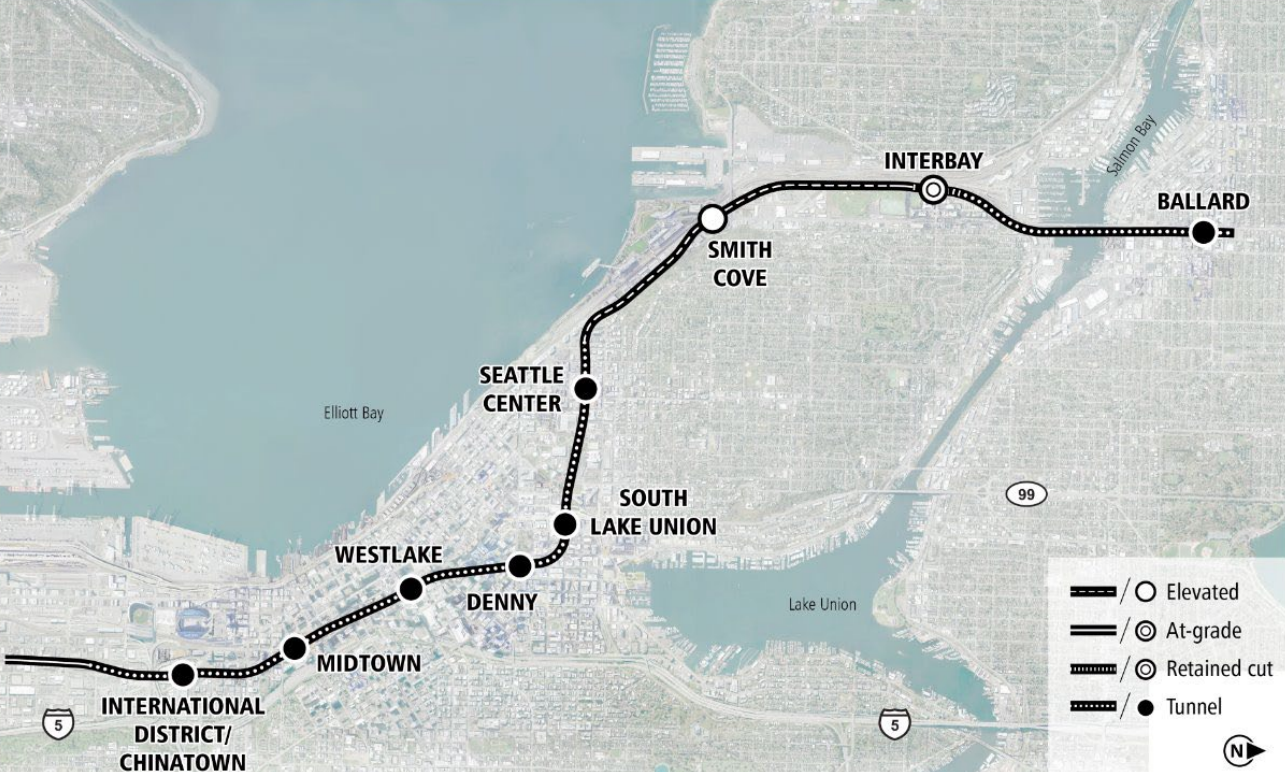
The Sound Transit board got its first look Wednesday at three potential scenarios geared at getting the overbudget Sound Transit 3 (ST3) measure back into financial alignment – with all three options stopping well short of delivering light rail to 15th and Market Street in Ballard, as promised to voters in 2016.
The different paths were put on the table at an all-day retreat held in Tacoma, the latest attempt to push board members to grapple with what it means to plug an agencywide $34.5 billion funding shortfall through 2046. Not intended to be menu options in-and-of themselves, the three approaches all represent different types of tradeoffs, and were a jumping-off point for discussions that will stretch over the coming weeks. The current goal is to adopt a new ST3 plan at a board meeting in May, a timeline that may ultimately slip.
“The approaches you’ll see today are meant to be starting points, not solutions,” CEO Dow Constantine said in introducing the proposals. “The approaches are meant to be illustrative, they’re meant to provide meaningful contrasts for the board’s deliberations as you weigh how to update the Sound Transit 3 system plan.”
Among the decisions foregrounded by the differing approaches: whether to defer the West Seattle Link Extension, a project that had already been given the green light by the federal government to move forward, or instead defer a line planned between South Kirkland and Issaquah, which hasn’t even entered the planning phase yet. Defering a Sounder extension to the furthest reaches of the Sound Transit Taxing District in DuPont, infill stations along the 1 Line in Seattle and Tukwila, and a streetcar extension in Tacoma are also all likely to be on the table.
While one option would cause Sound Transit to fall short of the goal of completing the regional “spine” to Downtown Everett and Tacoma Dome, those projects are much less likely to be on the chopping block, due to the considerable support they have from board delegations in Snohomish and Pierce Counties.
But the fact that all three scenarios would phase Ballard Link, stopping at either Seattle Center or Smith Cove, is a reflection of the project’s massive scale and scope compared to the other ST3 light rail projects. Even with the implementation of cost-saving measures, Ballard Link could cost more than $17 billion, more than twice as much as other extensions like Tacoma Dome or Everett Link.
But Ballard Link is also the highest ridership line planned as part of ST3, by far, with 90,000 to 147,000 daily riders expected to jump on trains between International District and Market Street by 2046. While many of those boardings would be in the downtown segment and involve transfers to other lines, lopping off a powerful ridership magnet could be a major blow.
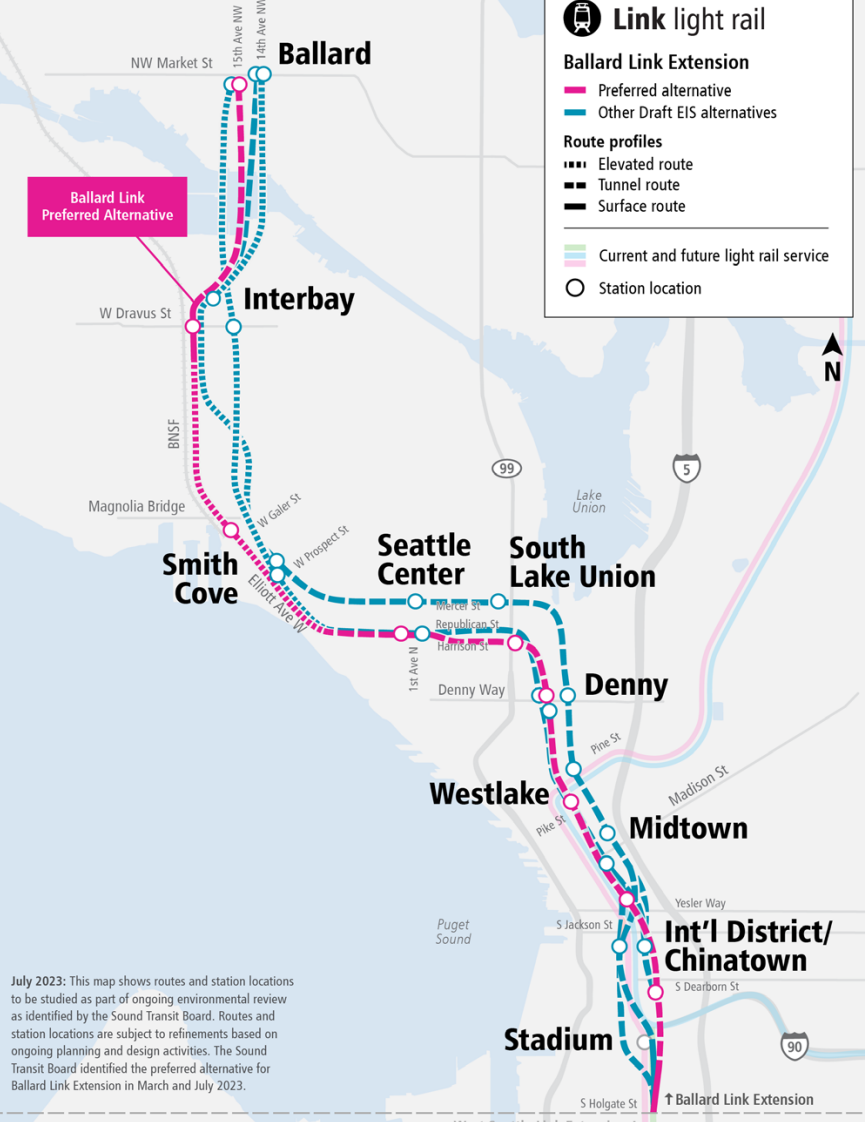
If this is an exercise in looking at tradeoffs, why not consider an option that gets to Ballard, and put that on the table for board members to consider?
“There are many ways you can put these pieces together. The charge from the board chair was plausible and affordable,” Alex Krieg, Sound Transit’s Deputy Executive Director for Enterprise Planning, told reporters at a briefing held ahead of the retreat. “Getting to Ballard does require really doing a lot less of the rest of the program that, in staff’s opinion, made it not seem plausible to bring forward. And I think the I think another commitment, certainly of staff and I think the agency more broadly, is the value of continuing to advance these projects through their, at least, planning phase means we still have time to try to solve for delivering the full project.”
Deferred projects would lose their estimated completion date, but they would still be advanced to a 30% design, ready to be picked back up if the agency’s financial situation changes. By advancing projects to that level of sophistication, Sound Transit can often discover major opportunities to cut costs, as the board saw last week when it comes to West Seattle Link where costs have dropped from nearly $8 billion 18 months ago to around $5 billion at last estimate.
“This exercise is really [about] what can we afford based on the circumstances we know now, not: what can we ever deliver, period,” Krieg said.
Approach 1: keep active light rail projects moving
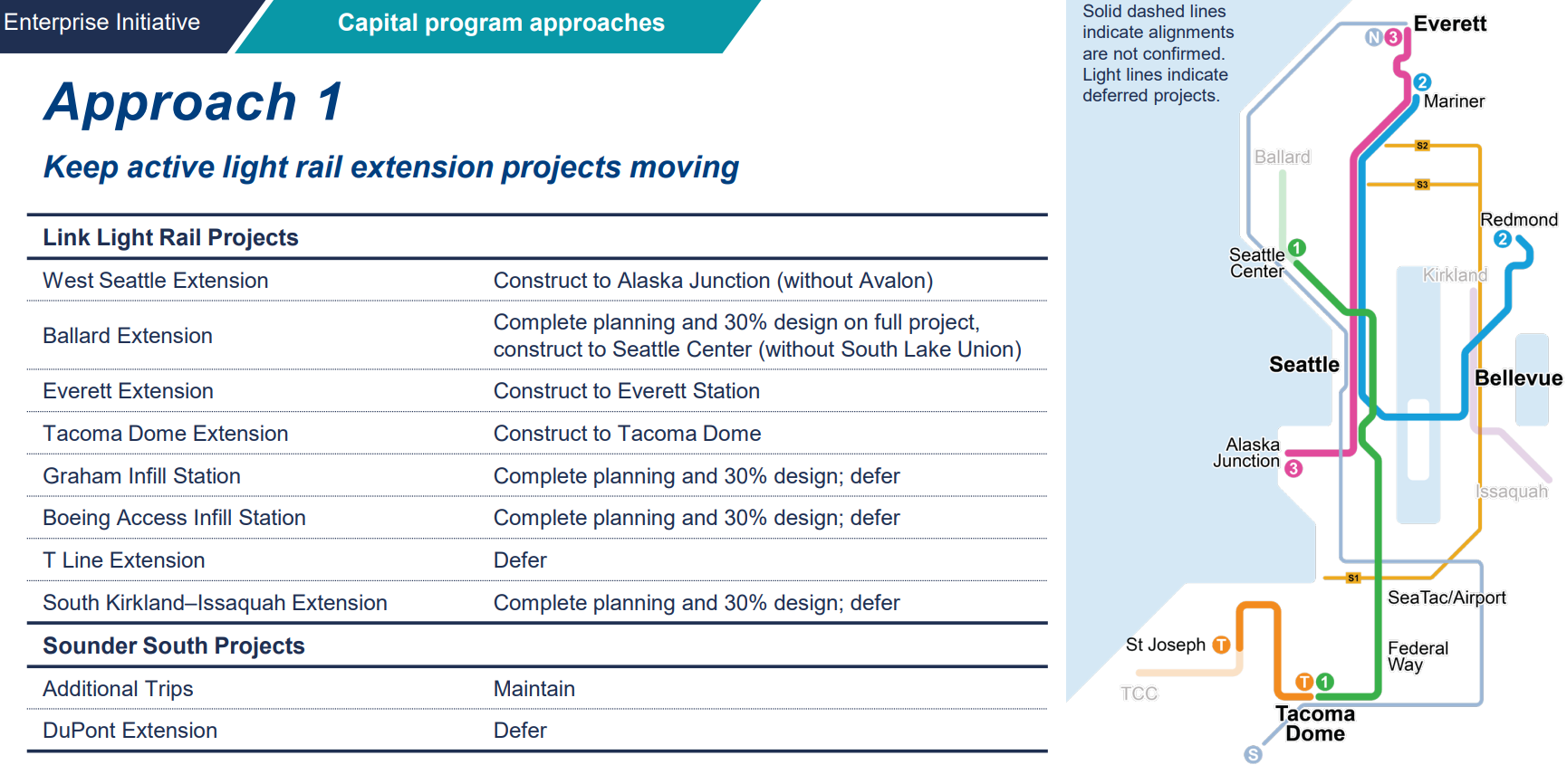
The first scenario presented to board members would prioritize completing projects currently in active design, deferring further off projects like the 4 Line (the light rail line planned between South Kirkland and Issaquah) and an extension of Tacoma’s T Line streetcar to Tacoma Community College.
Ballard Link would terminate at Seattle Center, a hard pill for the City of Seattle to swallow when it comes to impacts to some of the city’s most important civic institutions – Sound Transit would have to come back and complete the rest of a tunnel to Interbay, doubling up disruptions. In addition, two stations planned in South Lake Union would be consolidated into one, a move that shifts the station at Denny Way away from the busy roadway and provides Sound Transit with significant savings. What’s lost: a major transfer point for bus riders along Aurora Avenue, home to the state’s busiest bus line.
Infill stations along the 1 Line, at Seattle’s Graham Street and Tukwila’s Boeing Access Road, would be deferred.
Approach 2: prioritize “regional connectivity”
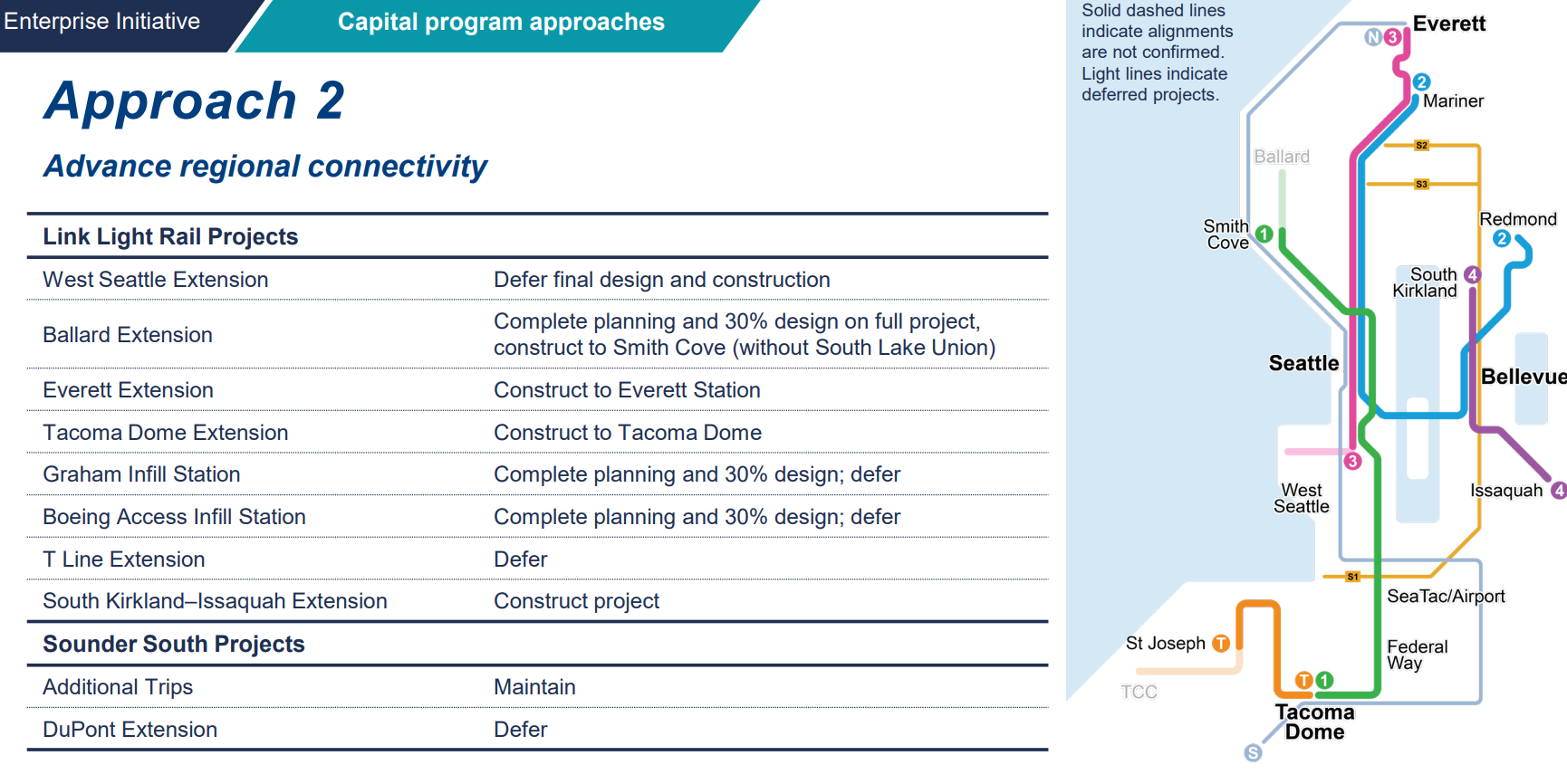
The second option disregards which projects are in active planning, deferring the entirety of West Seattle Link, but keeping the 4 Line on track. Graham Street and Boeing Access Road would also be deferred, along with the T Line and Sounder extensions in Pierce County. Ballard Link would terminate at Smith Cove under scenario 2.
Approach 3: phase all projects
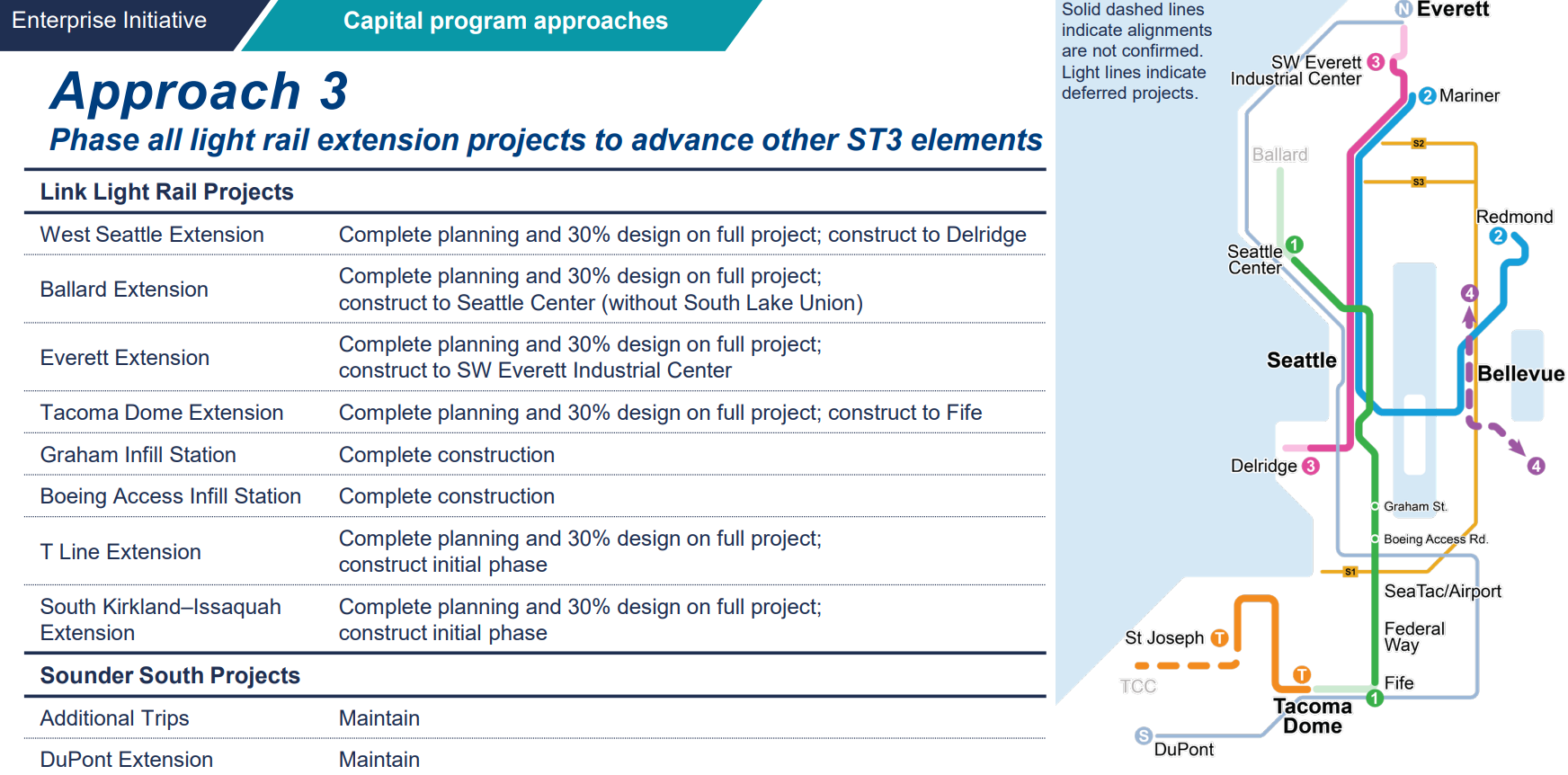
The third option put in front of the board is really more of a planning exercise: what would it look like to phase every project. Ballard Link would stop at Seattle Center, Tacoma Dome would only make it to Fife, West Seattle Link would be a stub line to Delridge Way, and Everett Link would only make it to Southwest Everett Industrial Center.
That move would unlock funding to pay for Graham Street and Boeing Access Road, get Sounder to DuPont, and pay for a slew of parking garages that have long been put on ice. Ultimately, this option is unlikely to be used for anything except as a comparison.
Path forward still unclear
If Sound Transit staff were hoping that board members would coalesce around one of the three approaches at Wednesday’s hourslong meeting, that didn’t really happen. There were many requests for more information – on ridership, on demographics, on costs for design – but few members planting their flag in any direction.
Seattle Councilmember Dan Strauss, whose district includes Ballard, did implore agency staff to come back with an option that did include getting to Market Street.
“I say that it is unacceptable that we do not have a plan to get to Ballard. We have three approaches, none of these approaches maximize ridership.” Strauss said. “When I look at Ballard, by the time that we complete our enterprise work, in May, we will have rezoned Ballard three times since ST3 was passed. So the ridership projections that we’re discussing today are outdated by a decade.”
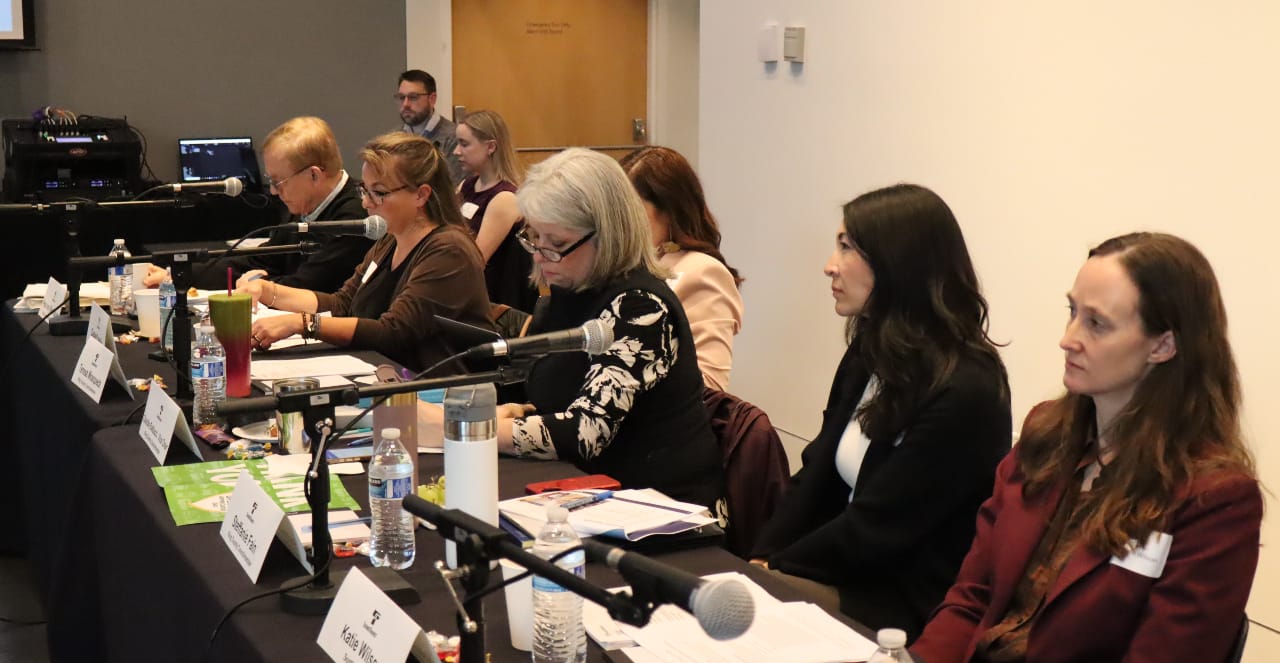
Strauss also noted that “when ST3 was approved by voters a decade ago, some of the strongest support came from Ballard voters,” citing “some of those precincts adopted ST3 with nearly 90% of the vote.”
Meanwhile King County Councilmember Claudia Balducci, one of the board’s longest-serving members, referenced past decision points just like this one, and a need to break out of the pattern of promising projects to voters and then having to recalibrate on what it can deliver. Most recently that occurred in 2021, when the board ultimately delayed a number of light rail projects due to a financial shortfall stemming from the Covid-19 pandemic.
“We keep cycling back to this place of crisis,” Balducci said. “And we have to figure out why, so that we don’t keep doing that. So that ourselves or our successors are not sitting here 10 years from now doing this again, and so that we can deliver more transit more quickly than we have been able to do in the past. So I think that looking beyond the Enterprise Initiative has got to continue to be part of our mission.”
Sound Transit ‘Building Blocks’ Set Stage for Major Decisions this Spring » The Urbanist
# Hoping to avoid simply delaying projects or shortening lines, Sound Transit has been looking high and low for potential cost savings. Those options are set to be contemplated at a March 18 board retreat that will set the stage for major decisions in the months ahead.
Sound Transit Reveals New Cost-Saving Measures for West Seattle Link
Thanks to newly revealed cost-saving measures, the cost to bring rail to Alaska Junction is now just $700 million to $1.1 billion over the amount baked into Sound Transit’s financial plan, a major change compared to where things stood just 18 months ago.
First Appeared on
Source link




Leave feedback about this