

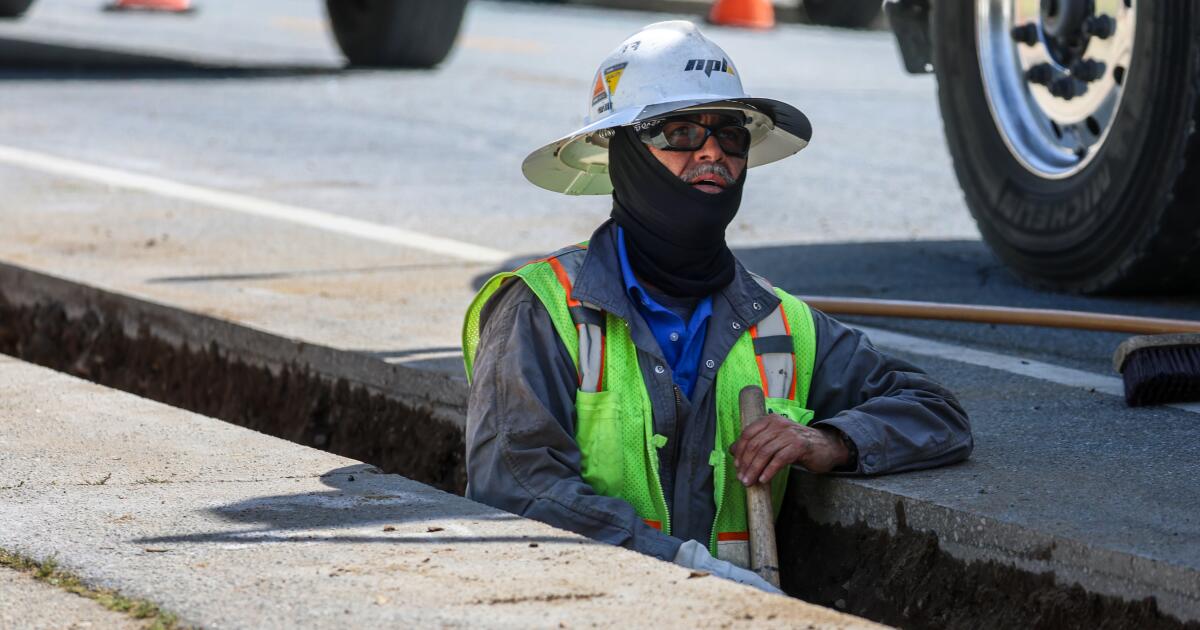
It was another day of record-breaking temperatures as a heat wave that is not expected to break until the weekend continued to grip Los Angeles and the Southwest.
Burbank, Woodland Hills and Paso Robles set heat records for the day on Thursday as temperatures hit the high 90s, conditions uncommon for March.
North Shore, a tiny community by the Salton Sea, hit 108 degrees Wednesday, tying the all-time national temperature record for March. On Thursday, a small Arizona desert town hit 110 degrees, reaching a new March high temperature, according to the Associated Press.
“We’re breaking so many records, it’s definitely pretty clear that it’s one of the warmest Marches we’ve ever had,” National Weather Service meteorologist Bryan Lewis told The Times on Wednesday. “It’s more similar to the heat waves we see in the summer.”
An extreme heat warning remains in place for most inland areas — and a heat advisory for coastal regions — through Friday, with officials urging people to be on guard for signs of heat-related illness.
Staying cool in the heat may have been a challenge for hundreds of Southern California Edison customers on Wednesday, after they lost power at 6 a.m. and didn’t have it restored the entire day.
“Dangerously hot temperatures will continue all week,” the National Weather Service’s Oxnard office wrote in its Thursday morning forecast.
Moderate relief is in sight this weekend, however, when forecasters predict the powerful high-pressure system will start to flatten out, bringing a gradual drop in temperatures.
The weather is expected to cool 5 to 10 degrees by Saturday and even more by Sunday, before warming up again on Monday and Tuesday, according to the weather service. It’s expected to be in the 80s and 90s near downtown Los Angeles and in the mid-90s in the valleys next week.
After a wet winter spawned new grass, it could all be drying out faster than usual due to the heat wave, said National Weather Service meteorologist Mike Wofford. The state so far this year has received above-normal rainfall from a few big storms, but if California doesn’t get additional rain next month, the drier grasses could feed some early-season fires.
“There may be small grass fires if there’s an ignition,” Wofford said. “There’s nothing significant in the short term, but if we don’t get precipitation, there could be additional issues as we go into summer.”
There’s also snowmelt in the mountains that could pose an issue for the state’s reservoirs, because they might not get as much water later on in the summer, he said.
First Appeared on
Source link




Leave feedback about this