

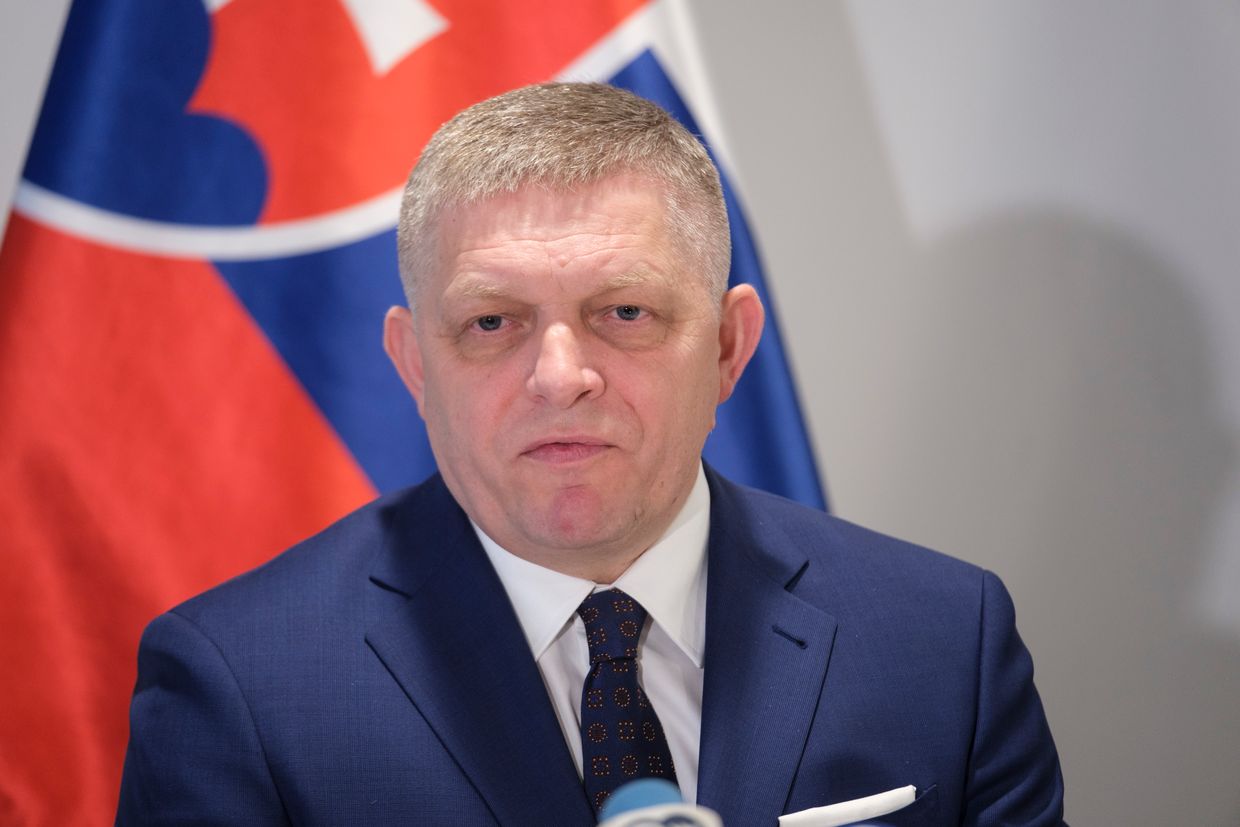
Slovak Prime Minister Robert Fico on March 4 claimed he has satellite imagery proving that the Druzhba oil pipeline, which previously transited Russian oil, is not damaged.
“With the exception of one small storage tank, the main route of the Druzhba oil pipeline is not damaged. So President (Volodymyr) Zelensky is demonstrably lying,” Fico claimed, according to the Slovakian outlet Aktuality.
“He thought that this would be how he would blackmail Slovakia and Hungary, although I don’t know what he wants to achieve from us,” Fico said.
The Slovak leader could not provide the imagery to the media, claiming that the photos are classified and could not be shared.
The pipeline runs through Ukraine, previously transiting Russian oil to Hungary and Slovakia, even as Russia’s full-scale war against Ukraine raged on for nearly four years before the pipeline went offline.
The oil route went offline in January after Kyiv said it was damaged in a Russian attack in western Ukraine.
Fico on Feb. 27 claimed that Slovak intelligence “confirms that the pipeline is not damaged and nothing prevents the transit of oil.”
Slovakia and Hungary have not provided evidence to back up their claims that Ukraine intentionally halted the transit of Russian oil.
In response to the accusations, Zelensky’s advisor, Dmytro Lytvyn, said Ukraine has invited Fico to discuss these “serious issues” in person rather than communicate via social media.
Slovakia has said that it will cut emergency electricity supplies to Ukraine in response to halted oil deliveries, prompting criticism from Kyiv.
“Ukraine purchases the electricity and does not receive it for free. So the Fico government will simply deprive Slovak companies of earnings, while Ukraine will receive this electricity from other sources,” Ukraine’s Foreign Ministry spokesperson Heorhiy Tykhyi told the Kyiv Independent.
Hungary and Slovakia have also halted diesel exports to Ukraine.
Authorities in Slovakia and Hungary are widely seen as the most Kremlin-friendly governments in the EU.
As the EU aims to move away from Russian oil, Slovakian and Hungarian officials have opposed the measure.
Meanwhile, Hungarian Foreign Minister Peter Szijjarto met with Russian President Vladimir Putin in Moscow on March 4.
Szijjarto secured the release of two Ukrainian prisoners of war who supposedly also hold Hungarian citizenship.
First Appeared on
Source link

Leave feedback about this