

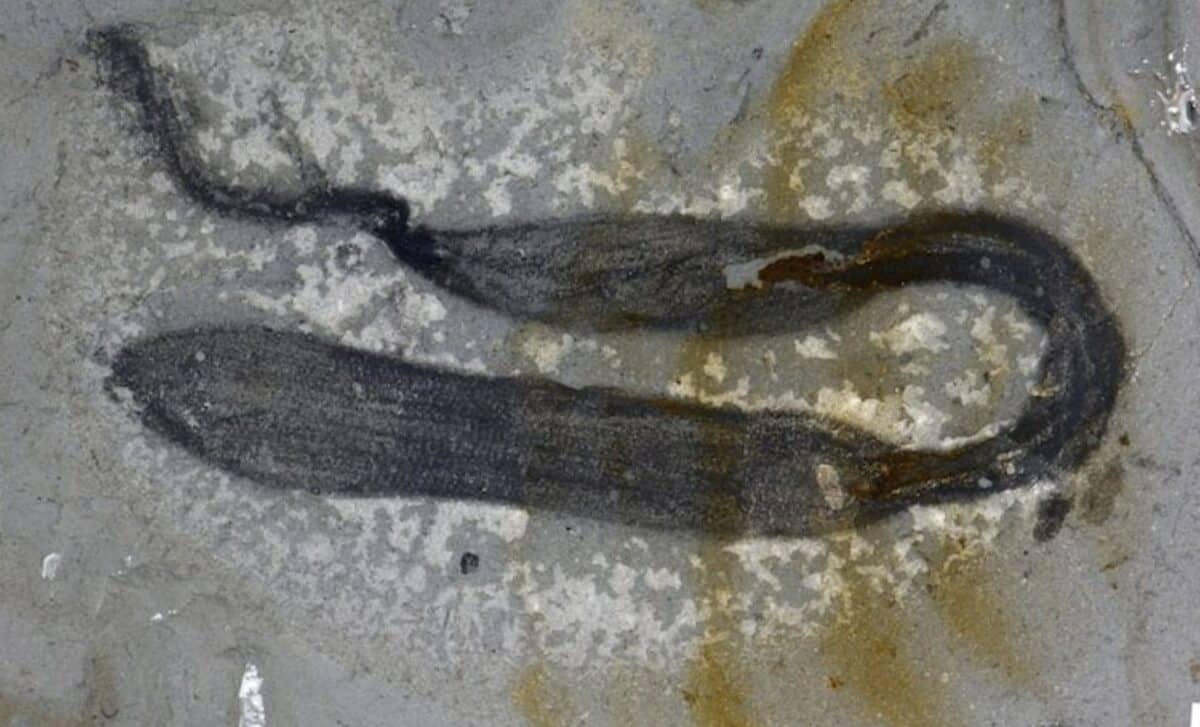
Han Zeng stood in a quarry in Hunan province and looked at mudstone that had lain undisturbed for more than half a billion years. The paleontologist from the Nanjing Institute of Geology and Palaeontology was standing on a piece of ground that had once been deep ocean, at the edge of a continental shelf.
Between 2021 and 2024, his team pulled more than 50,000 fossil specimens from that single location. What they found inside the rock changed what scientists thought they knew about the years following the first mass extinction in the history of animal life.
A Fossil Deposit That Preserves Guts and Gills
The quarry sits in Huayuan county, and the collection of organisms preserved there now carries that name. The Huayuan biota contains 153 distinct animal species from 16 major groups. According to the study published in Nature, ninety one of those species had never been seen before. The fossils date to roughly 512 million years ago, placing them in the middle of the Cambrian Period, when nearly all major animal groups first appeared in the oceans.
The preservation is exceptional. Soft tissue that normally rots away or dissolves before it can fossilize remains intact in these rocks. Legs. Gills. Digestive tracts. Eyes. Nerves. All visible under magnification, sometimes down to the cellular level. Deposits like these are called Konservat Lagerstätten in geology, preservation deposits that capture complete organisms rather than just the hard parts that survive normal fossilization.
Life Directly After the First Mass Extinction
The Huayuan biota sits at a specific moment in geologic time. About 513.5 million years ago, the Sinsk event killed off between 41 and 49 percent of marine species. Rapid global warming driven by massive volcanic eruptions lowered dissolved oxygen in the oceans. Shallow water communities took the worst of it. Deep water environments, including the one preserved in the Huayuan quarry, appear to have suffered less damage.
Until now, no one had a clear picture of what happened in the oceans immediately after that extinction. The famous Burgess Shale in the Canadian Rockies dates to about 508 million years ago, five million years too late. The Chengjiang biota in China predates the event entirely. The Huayuan biota fills the gap, offering a detailed look at marine animals thriving half a billion years ago as reported by Reuters.
Zeng and his colleagues, including senior author Maoyan Zhu, also of the Nanjing Institute, published their findings on January 28, 2026. The paper describes an ecosystem that had already recovered its complexity within about one and a half million years of the extinction. Animals filled the water column and the sediment. They swam, crawled, filtered, and hunted.
Apex Predators and Cactus Like Creatures
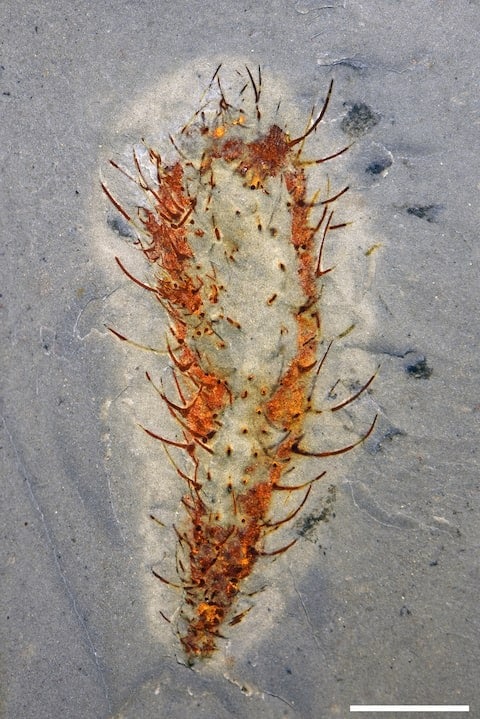
The top predators were radiodonts, primitive arthropods with grasping appendages built for seizing prey while swimming. Several species of these animals appear in the Huayuan biota, along with abundant sponges, cnidarians related to modern jellyfish and anemones, and diverse arthropods that would eventually give rise to insects, spiders, and crustaceans. One fossil looks vaguely like a cactus covered in spines. Another, a type of tunicate, represents some of the closest relatives vertebrates have in the invertebrate world.
What surprised the researchers most was not the diversity inside the quarry, but the connections outside it. The Huayuan biota shares multiple species with the much younger Burgess Shale, separated by thousands of kilometers of ocean and millions of years of time. Arthropods called Helmetia and Surusicaris had previously been found only in Canada. Now they appear in southern China. Coverage from Newsweek noted that these finds suggest Cambrian life was dispersed long distances across oceans by currents and sea level changes.
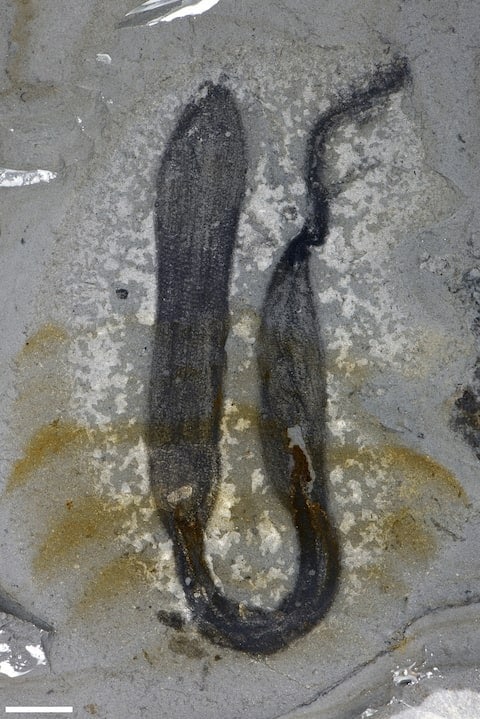
Zeng said the most plausible explanation involves ocean currents. Modern marine invertebrates commonly produce larvae that drift for weeks or months before settling. The shared species in these two deposits suggest the same strategy worked half a billion years ago. Larvae crossed oceans, established new populations on distant shores, and left their descendants in the rock record on two continents.
The Huayuan biota also clarifies what the Sinsk event actually did. Shallow water faunas took heavy losses. Deep water communities like this one kept more of their diversity intact and may have served as refuges where evolutionary innovation continued while conditions remained difficult elsewhere. The researchers examined a sample of 8,681 specimens to identify the 153 species they have named so far. Thousands more remain in the collection, waiting for someone to break them out of the stone and figure out what they are.
First Appeared on
Source link






Leave feedback about this