

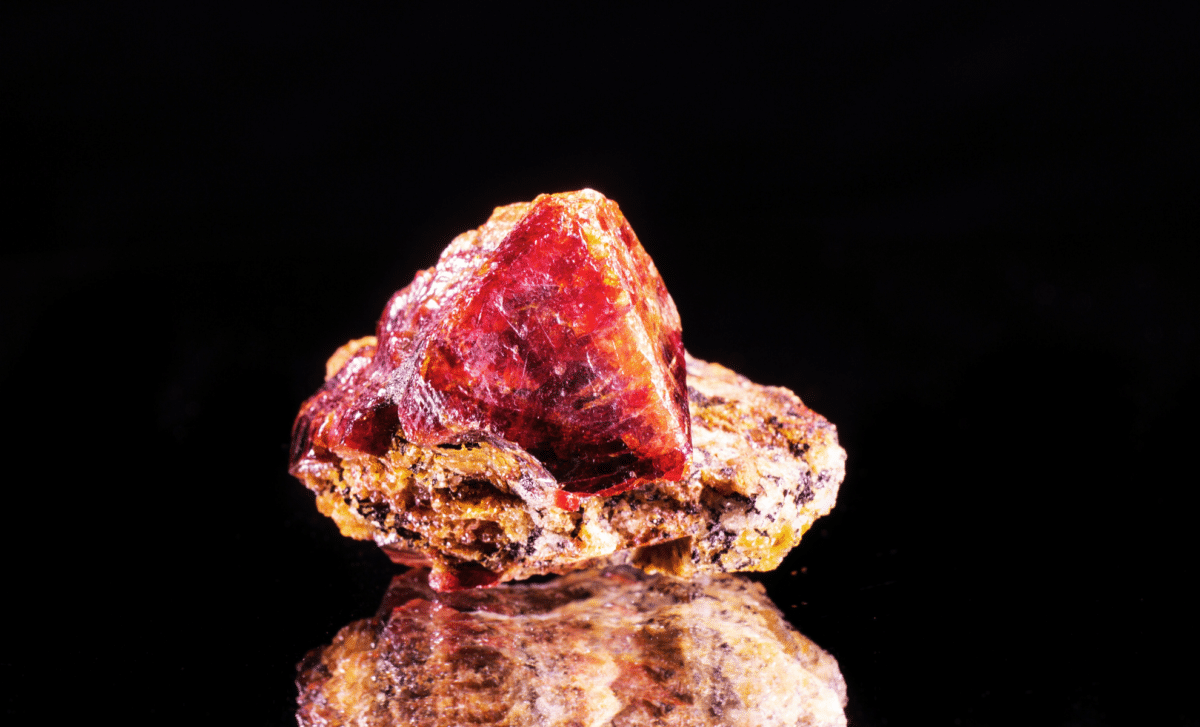
The Earth’s true age has long been a topic of debate, with some ancient estimates placing it just a few thousand years old. However, scientific advancements have revealed much older ages for the planet, thanks in large part to the study of minerals like zircon. A recent study published in American Chemical Society (ACS), discusses the remarkable role zircon plays in geochronology, a field that dates the age of the Earth using radioactive decay. This study highlights how uranium, as a parent isotope, transforms into lead, which ultimately allows scientists to measure the Earth’s age with astounding accuracy. By examining the decay process of uranium in ancient zircon crystals, scientists have unlocked valuable insights into the Earth’s true age, nearly 4.54 billion years old.
The Science Behind Uranium’s Radioactive Decay
To understand the immense age of the Earth, it’s essential to grasp the science behind the decay of radioactive elements. As highlighted by ILFScience, Uranium-238, an isotope found in many minerals, undergoes a process of radioactive decay, eventually becoming stable lead-206. As geologist Rudy Molinek explains,
“Uranium, which scientists call a parent isotope, radioactively decays to lead by ejecting protons and neutrons from the atom’s nucleus. Once it gets to be lead, the atom is stable and not radioactive anymore.”
This means that, over billions of years, uranium isotopes break down into lead, creating a predictable timeline that scientists can use to date rocks and minerals accurately.
For decades, scientists have relied on this principle to unlock the mysteries of the Earth’s age. What makes zircon particularly useful in this process is that it forms under specific conditions that lock in uranium but exclude lead. As a result, zircon crystals serve as a time capsule, preserving the original uranium isotopes at the time of their formation. The careful study of zircon’s structure and its uranium-to-lead ratio gives geologists a precise window into the Earth’s history, revealing a time scale that far exceeds the few thousand years suggested by early estimates.
Zircon: The Time Capsule of Earth’s History
Zircon crystals, often found in ancient rocks, have become one of the most important tools in dating the Earth’s age. These tiny, durable crystals contain traces of uranium that have been slowly decaying for billions of years. When uranium atoms decay into lead, the lead atoms are trapped within the zircon’s crystal structure, providing an excellent record of the decay process. As Molinek further notes,
“But, importantly, lead doesn’t fit in the zircon’s crystal structure when it first forms, so any lead contained in a zircon crystal would have had to come from that initial uranium breaking down.”
This unique property makes zircon an ideal candidate for radiometric dating, as the amount of lead present directly correlates to how much time has passed since the zircon was formed.
In addition to dating Earth’s oldest rocks, zircon has been critical in understanding the formation of the planet itself. The oldest zircon crystals found in the Acasta Gneiss of Canada, estimated to be about 4.02 billion years old, provide an invaluable record of the early conditions on Earth. These findings, published in the American Chemical Society (ACS),have helped push the known age of the planet to approximately 4.54 billion years, far older than any religious or historical estimates.
Credit: Michael Ackerson.
Using Zircon to Date Ancient Rocks
When scientists use zircon to date ancient rocks, they rely on the fact that these minerals crystallize in a way that preserves the uranium and lead isotopes within them. By measuring the amount of uranium that has decayed into lead, geologists can calculate the age of the zircon crystal with remarkable precision. This method, known as U-Pb dating, involves analyzing the ratio of uranium to lead in zircon and other minerals. Since uranium decays at a consistent rate, scientists can apply this ratio to determine when the mineral crystallized, offering a direct link to the Earth’s distant past.
The process of dating zircon has had a profound impact on our understanding of Earth’s early history. For example, by studying zircon crystals from meteorites and rocks collected from the Moon, scientists have been able to further refine their estimates of the planet’s age. The use of zircon has allowed geologists to build a more accurate timeline, dating the planet’s formation to approximately 4.54 billion years ago.
The Importance of Geochronology in Earth Sciences
Geochronology, the science of dating rocks, is crucial for understanding the Earth’s history. The discovery of the ancient age of Earth has had a profound impact on many fields, including geology, biology, and astronomy. By dating zircon crystals, scientists have been able to piece together the puzzle of Earth’s early environment, the formation of its crust, and the conditions that led to the development of life. Without techniques like U-Pb dating, much of this information would remain elusive.
Additionally, geochronology has helped refine our understanding of plate tectonics and the movement of Earth’s lithospheric plates over millions of years. As new rocks are dated using zircons, geologists gain insights into the long-term processes that have shaped the Earth’s surface and its evolution as a habitable planet.
First Appeared on
Source link






Leave feedback about this