

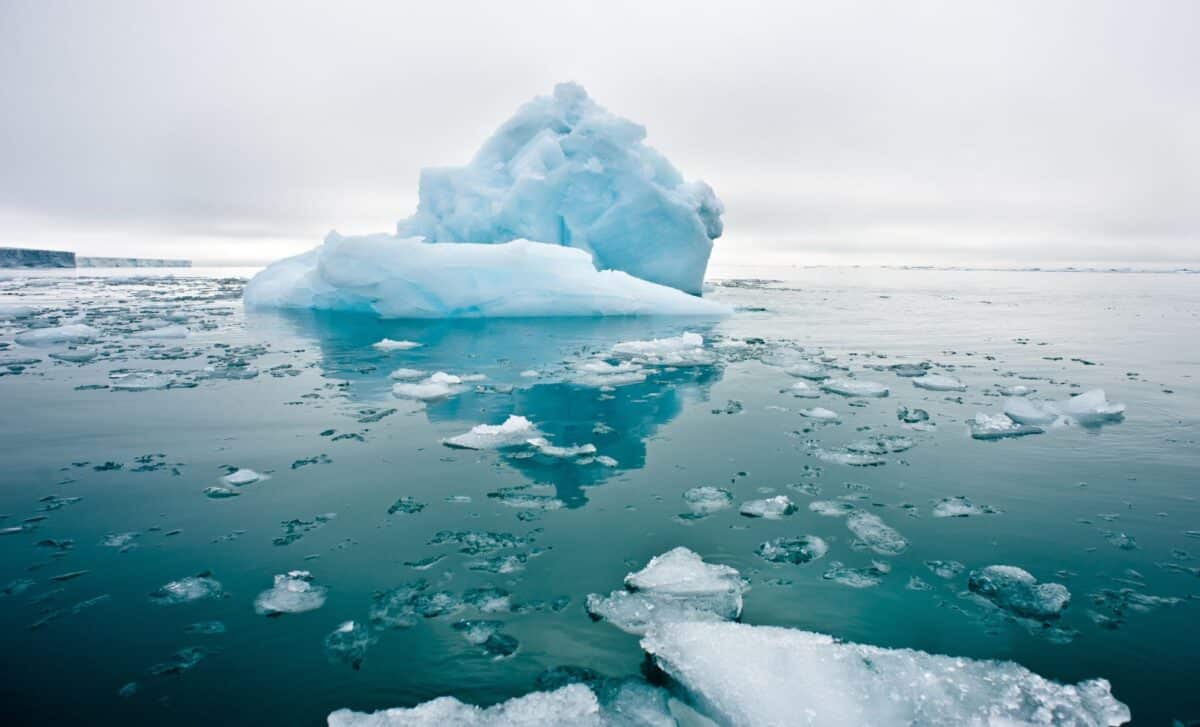
Massive underwater waves triggered by falling icebergs are playing a bigger role in Greenland’s ice loss than scientists once thought. These invisible movements, detected thanks to fiber-optic technology, keep warm water circulating against glacier fronts. That process speeds up melting in ways that had gone largely unnoticed.
Glacier calving, when large chunks of ice break off and crash into the sea, is already known as a major driver of ice loss in Greenland. It’s a dramatic process, easy to spot from the surface. What happens below the water, though, has remained much harder to track.
That’s where a team from University of Zurich and University of Washington comes in. By installing instruments directly on the seafloor, they managed to capture what was previously hidden.
A Cable On The Seafloor Picks Up Every Movement
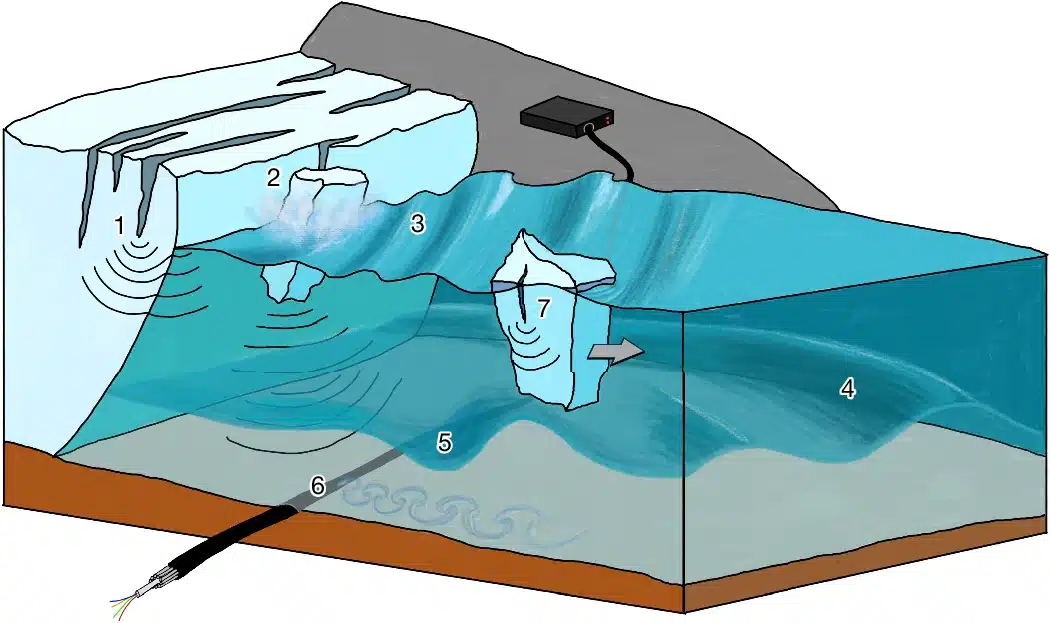
To study the phenomenon, researchers laid a 10-kilometer fiber-optic cable along the seabed near the Eqalorutsit Kangilliit Sermia glacier. As the team explained, this one releases around 3.6 cubic kilometers of ice each year, making it one of the most active in the region. The system uses Distributed Acoustic Sensing (DAS), a method that detects tiny vibrations along the cable. Lead author Dominik Gräff reported:
“The fiber-optic cable allowed us to measure this incredible calving multiplier effect, which wasn’t possible before.” he added, “this enables us to measure the many different types of waves that are generated after icebergs break off.”
In simple terms, it lets scientists “listen” to the glacier and the ocean at the same time, a feat impossible for satellites, which are limited to observing surface activity.
Unseen Waves Keep Greenland Melting
When an iceberg breaks off, it creates surface waves that ripple through the fjord. These are sometimes called calving-induced tsunamis, and they mix the upper layers of water right away. But that’s only part of the story.
According to the researchers, internal waves continue moving underwater long after the surface looks calm again. These waves travel between layers of different density and can grow to the size of skyscrapers.
Because the seawater in these fjords is warmer and denser than the meltwater, it sinks. The underwater waves then keep pushing that warmer water back toward the glacier’s base, maintaining contact that slowly eats away at the ice.
A Chain Reaction That Feeds On Itself
This leads to what scientists call a “calving multiplier effect.” Andreas Vieli, a professor at UZH’s Department of Geography and study co-author, makes this clear:
“The warmer water increases seawater-induced melt erosion and eats away at the base of the vertical wall of ice at the glacier’s edge. This, in turn, amplifies glacier calving and the associated mass loss from ice sheets.”
Once that base is eroded, more ice is likely to break off, triggering new waves, more mixing, and even more melting. As mentioned in the study, pubslished in Nature, this cycle had never been directly measured before, mainly because conditions in these fjords make observations difficult.
The stakes are high. The Greenland ice sheet holds enough ice to raise global sea levels by about seven meters. Meltwater from these glaciers can also affect ocean circulation, including the Gulf Stream, and even disrupt local ecosystems in Greenland’s fjords.
First Appeared on
Source link






Leave feedback about this