

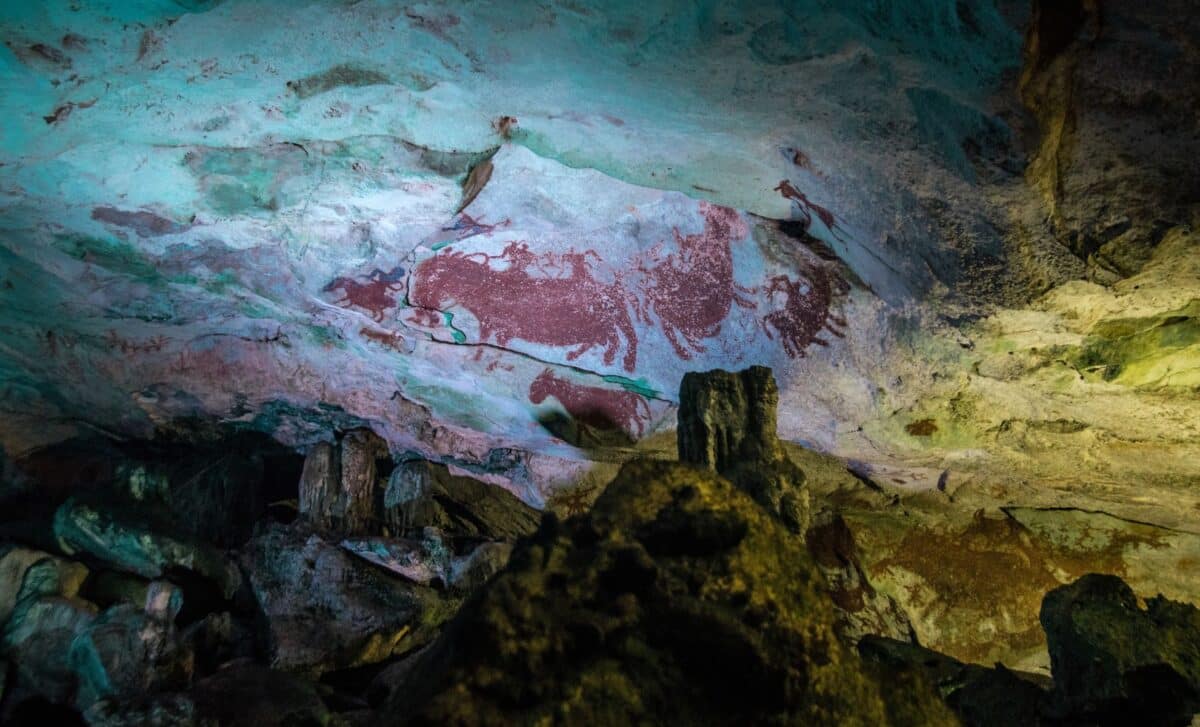
A mysterious rock painting in South Africa’s cave could be the first-ever artwork of an animal that disappeared 250 million years ago. The San people’s “Horned Serpent Panel” features a strange creature with tusks and a long body, even though this animal never lived anywhere near there. The discovery has scientists asking if ancient rock art could actually record prehistoric creatures long before scientists did.
Painted between 1821 and 1835, the panel includes common animals found in the area. But one creature stands out, looking very different from the others. For years, scientists were puzzled by its appearance. Now, researchers suggest that the San people may have drawn inspiration from the fossilized remains of an extinct species, the dicynodont, which roamed the Earth millions of years ago.
The San People’s Connection to Nature
The San people, indigenous to Southern Africa, have a long tradition of creating rock art. Their paintings often depict animals,human figures, and mythical beings. One of the more puzzling figures on the “Horned Serpent Panel” is the creature with tusks and a strange, elongated body.
This particular creature, though depicted as a spiritual being, has baffled scientists for years. According to Julien Benoit, a researcher at the University of the Witwatersrand the fossilized remains of long-extinct species were common in this area.
He suggested that these ancient bones could have shaped the San’s mythology, leading them to represent creatures that once roamed the Earth long before humans existed.
An Exceptional Fossil Site
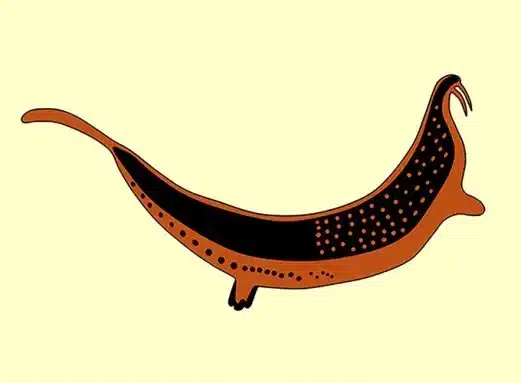
The Karoo Basin is one of the richest fossil sites in the world, full of ancient remains from creatures that lived hundreds of millions of years ago. A study, published in PLOS ONE noted that among these fossils are dicynodonts, a group of plant-eating reptiles, with features almost identical to those of the creature depicted by the San.
“I came across the Stow and Bleek book about San rock art and when I saw their beautiful reproduction of that tusked animal, I immediately thought that this could well be a dicynodont,” he recalled.
He added that the fossils of dicynodonts are particularly common in the area around the rock art site.
“This finding is extraordinary. It suggests that the San people were engaging in palaeontology long before Western scientists even knew these creatures existed,” he noted in a statement from the University of the Witwatersrand.
Myths, Folklore, and Prehistoric Life
This connection between myths and fossils isn’t new, but the San’s rock art offers an extraordinary example of how ancient cultures might have recorded extinct species through their stories. While the San likely saw the creature as a spiritual being, their artwork may actually be the earliest known depiction of an animal that no longer existed by the time humans arrived.
“The dicynodont may have been depicted as a ‘rain-animal,’ a mythical creature in San cosmology. They might have held special significance in San paintings.”
As Benoit explained, studying how these ancient stories and rock paintings tie into real prehistoric creatures could reveal more about how early humans understood the world around them.
“This painting provides compelling evidence that they not only discovered these fossils but also attempted to reconstruct the living animal in their art.”
First Appeared on
Source link





Leave feedback about this