

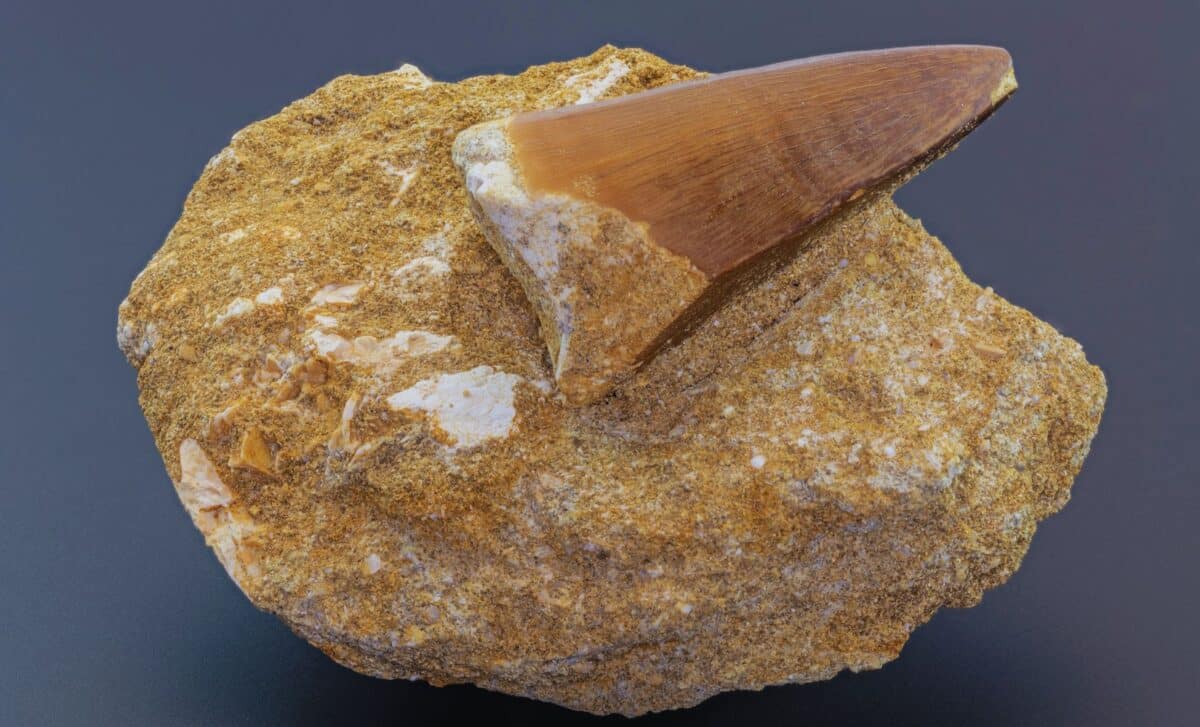
A fossil found in Alabama captures a sudden, violent encounter between two massive marine predators. A broken tooth, still lodged in bone after 80 million years, reveals a strike that likely killed instantly.
The fossil belongs to a Polycotylus, a long-necked marine reptile that lived in the Western Interior Seaway. It had been sitting in a drawer at the Field Museum of Natural History in Chicago before anyone noticed what made it unusual.
A Surprising Detail Hidden In Plain Sight
The discovery began almost by chance. According to Christopher Brochu from the University of Iowa, he noticed the unusual vertebra while looking through specimens for teaching material.
“I sometimes look at other material to see if there’s anything I can show in my classes, and that’s when I saw the bitten vertebra,” reported Brochu.
As explained in the study, published in the Journal of Vertebrate Paleontology, a large tooth was found lodged inside the neck bone. It had broken at both ends, likely from the force of the bite and the long fossilization process. One look at its position made it clear this was no minor injury.
Technology Helps Identify The Attacker
To figure out where the tooth came from, researchers turned to CT scanning. The scans allowed students Miles Mayhall and Emma Stalker at the University of Tennessee to build a 3D model of the tooth.
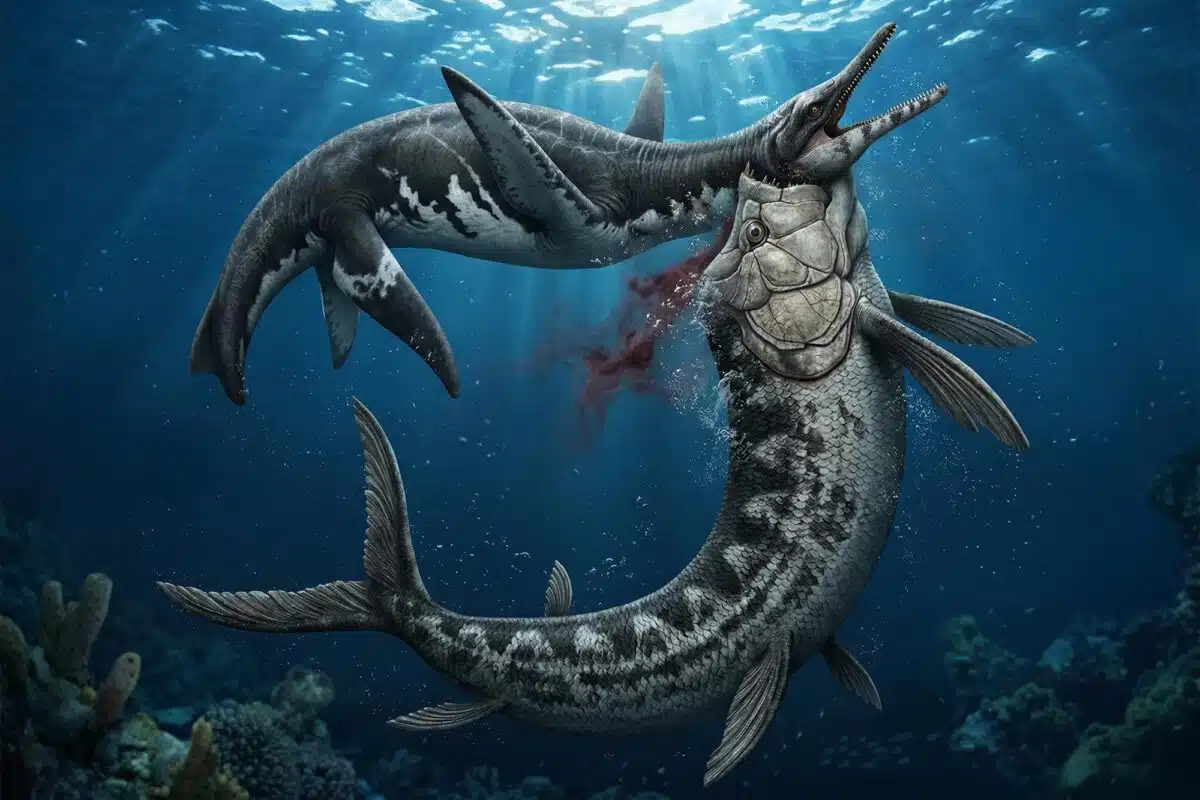
The result pointed to Xiphactinus, a large predatory fish known from the same environment. This species is often found in fossils where it swallowed prey whole, sometimes leaving “fish-within-a-fish” remains. Here, the evidence shows something different. This was a direct strike, not a feeding trace.
An Ecosystem Where No Predator Was Safe
The location of the bite says a lot. Stephanie Drumheller, the study’s lead author and paleontologist, said the find challenges simple ideas about who sits at the top of the food chain.
“We sometimes get these fixed ideas in our heads about who the top predator in any given environment is and who might rest a rung or two down on the food chain.” She added, “This fossil is a good reminder that nature is rarely that cut and dry.”
The tooth is embedded in the neck, an area packed with vital structures. Robin O’Keefe from Marshall University explained that a bite there would have damaged arteries, nerves, and the esophagus, making survival unlikely. Fossils from the Mooreville Chalk often show bite marks from sharks, fish, and marine reptiles.
First Appeared on
Source link





Leave feedback about this