

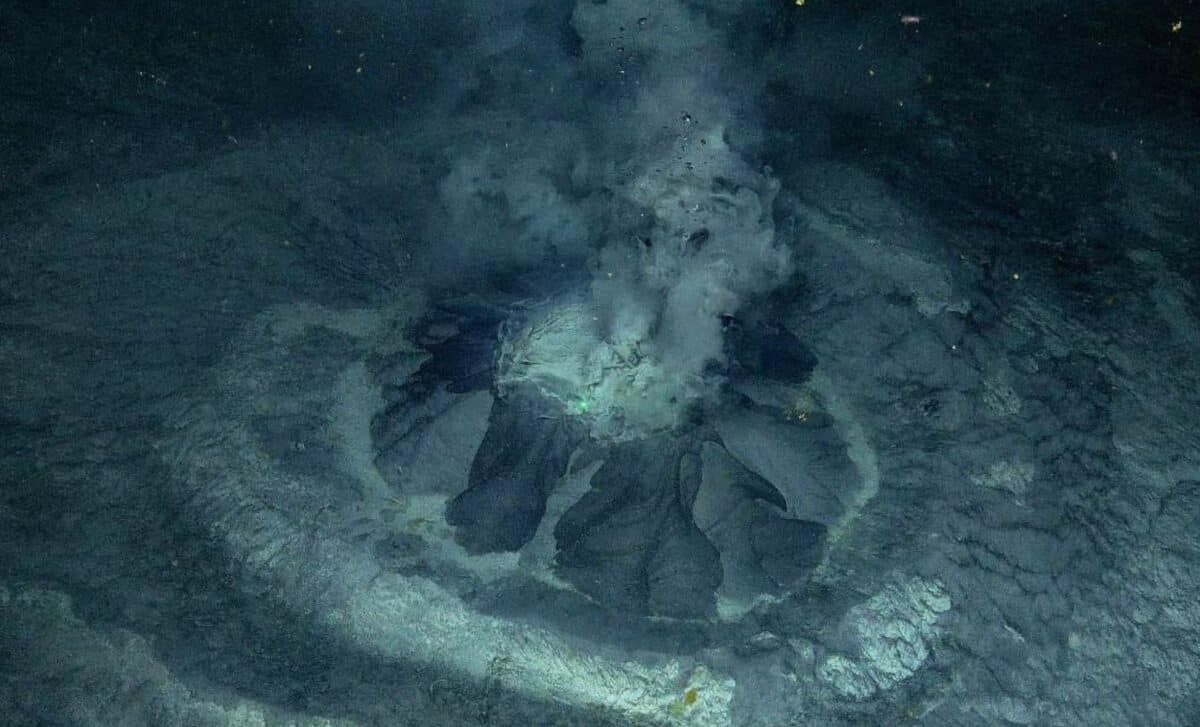
A scientific expedition in the Barents Sea has revealed a remarkable geological structure hidden beneath the Arctic waters: an active mud volcano formed after the end of the last Ice Age. The formation, named the Borealis Mud Volcano, sits about 400 meters below the ocean surface, roughly 70 miles south of Bear Island, Norway, where it continues to release mud, fluids, and methane from deep underground.
A Crater Born From A Massive Methane Blowout
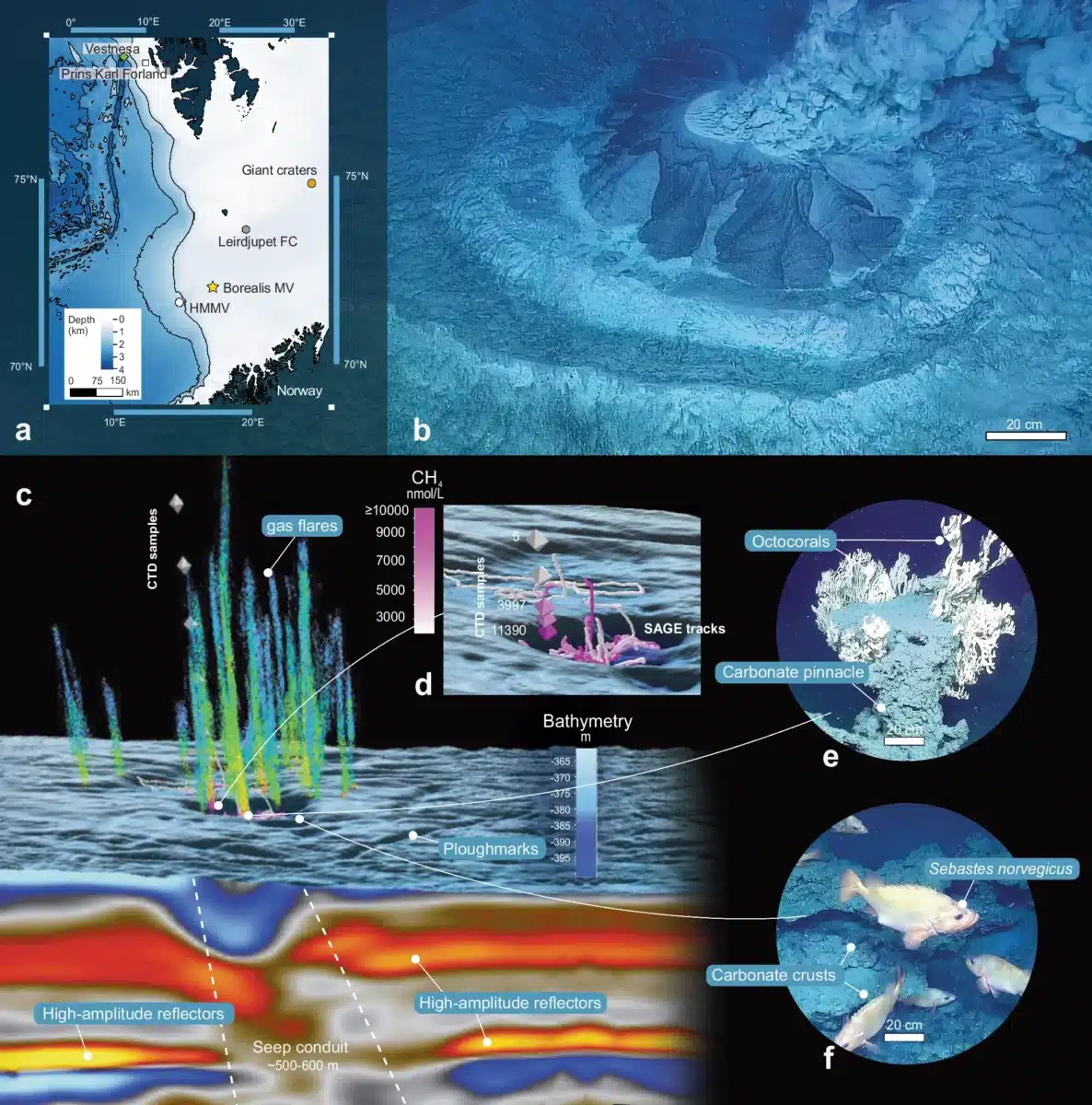
The discovery was made during a seabed exploration mission led by researchers from UiT The Arctic University of Norway. As reported in a university statement, scientists detected a large circular crater about 300 meters wide and 25 meters deep while mapping the ocean floor.
Geologists link the formation of this crater to dramatic changes at the end of the Ice Age around 18,000 years ago. As massive glaciers retreated from the region, pressure on methane-rich sediments beneath the seabed shifted. That instability likely triggered a sudden methane blowout, blasting material upward and carving the crater that now hosts the mud volcano.
At its center, the Borealis Mud Volcano remains active, pushing mud and methane from reservoirs located hundreds of meters to several kilometers beneath the seabed.
Why Mud Volcanoes Fascinate Scientists?
Unlike classic eruptive formation that erupt molten rock, mud volcanoes release sediment, water, and gases from deep geological layers. These systems act as natural conduits between the deep subsurface and the ocean floor.
According to Stefan Buenz of UiT, each methane seep discovered on the seabed reveals new information about Earth’s hidden geological systems. The chemical composition of the fluids and gases escaping from these ones helps scientists reconstruct ancient environments and geological processes.
“Every time we go down to the seabed, we get the feeling that we have just begun to understand the great and incredible diversity of such systems,” Buenz added.
These sites also hold value for climate research. Methane released from natural sources beneath the seafloor plays a role in the global methane cycle, and studying these emissions helps researchers refine models of greenhouse gas movement within Earth’s systems.
An Unexpected Refuge For Deep-sea Life
The crater surrounding the volcano hosts a surprisingly rich ecosystem built around chemical energy rather than sunlight. Researchers documented sea anemones, corals, sponges, starfish, sea spiders, crustaceans, and dense bacterial mats living across the steep walls of the crater. These communities rely on chemosynthetic bacteria that feed on methane and other chemical compounds rising from the seabed. These communities rely on chemosynthetic bacteria that feed on methane and other chemical compounds rising from the seabed.
According to Alex Rogers of REV Ocean, these formations may also function as natural shelters for fragile deep-sea species. Professor Giuliana Panieri, who previously conducted a study published in Nature Communications at the same site, agrees that the site must be protected.
“Borealis is an oasis where different species can thrive and flourish. Thus, preserving ecosystems such as the Borealis Mud Volcano is essential for maintaining biodiversity and understanding the interactions between geology, geochemistry and biology in marine environments.”
Mud volcanoes remain extremely uncommon in this part of the Arctic Ocean. Before this discovery, only one such structure had been identified in the region: the Håkon Mosby Mud Volcano, discovered in 1995 south of Svalbard at a depth of 1,250 meters.
First Appeared on
Source link




Leave feedback about this