

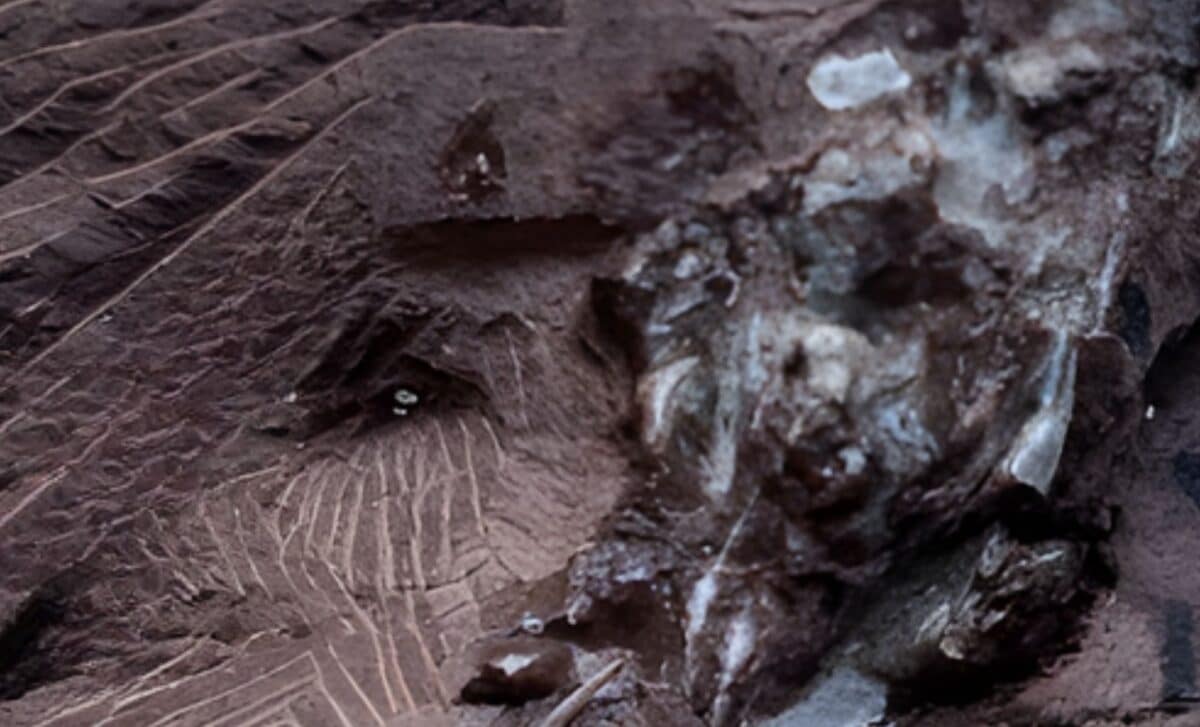
A remarkable discovery in Germany has uncovered fossilized vomit, or regurgitalite, dating back 290 million years, older than the dinosaurs themselves. Found at the Bromacker site, this rare specimen provides a snapshot of life during the Permian period.
While fossilized vomit may seem like an odd subject of study, it is a valuable find in paleontology. This regurgitalite is the oldest known specimen from a terrestrial ecosystem. By examining the contents of such fossils, scientists can better understand the behavior and diets of prehistoric animals, and this recent discovery is no exception.
What Early Predators Really Ate?
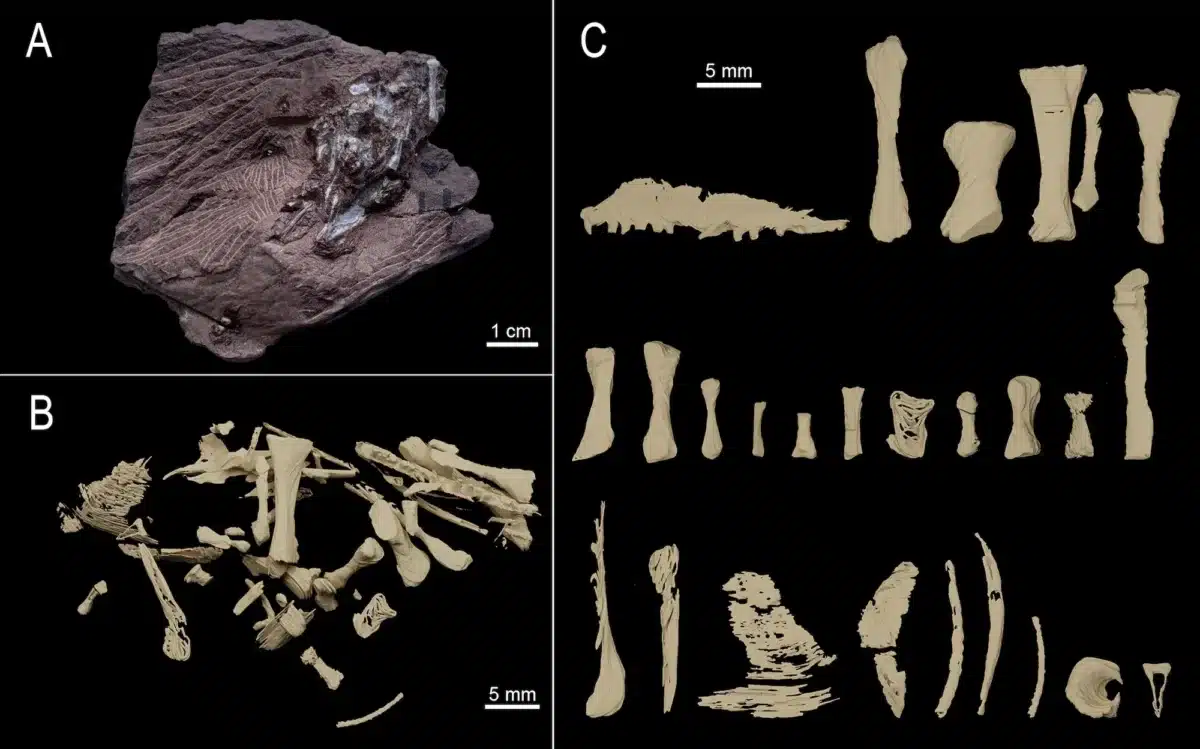
The fossilized vomit found at Bromacker contained 41 small bones from three different species of reptiles. According to Arnaud Rebillard, a Ph.D. candidate at the Natural History Museum of Berlin, the bones’ preservation suggests they were expelled from an animal’s stomach before undergoing digestion. The low phosphorus content around the bones indicated that the remains were vomited, rather than defecated, as is the case with coprolites (fossilized feces). Rebillard remarked:
“This was clearly something that was eaten and then ejected from an animal,” underscoring the vomit’s significance.
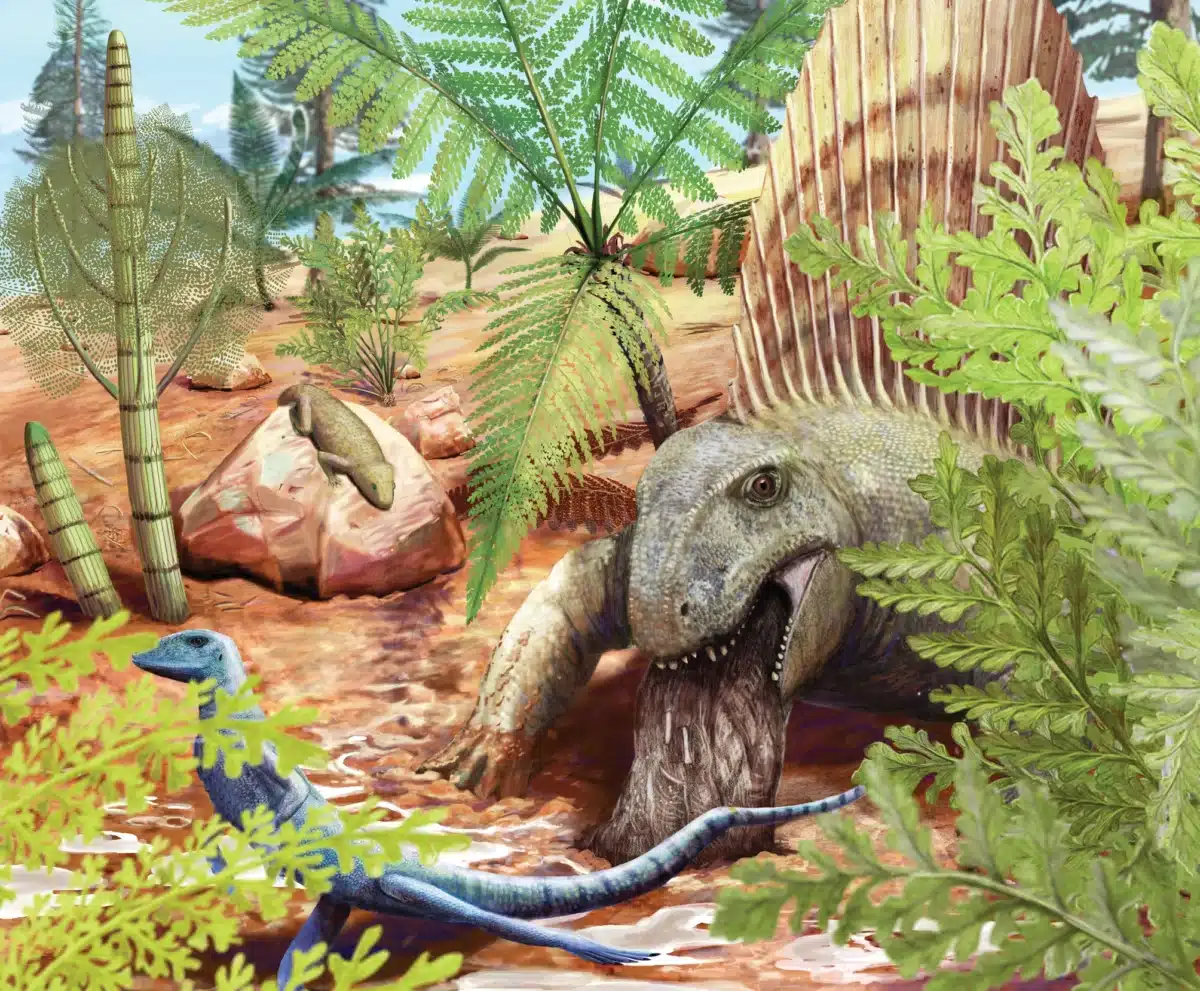
The regurgitalite provides key evidence of the eating habits of early predators like Dimetrodon teutonis and Tambacarnifex unguifalcatus, two synapsid species from the Bromacker site. These creatures likely consumed a variety of smaller reptiles, as indicated by the bones present in the vomit. Similar to modern-day animals such as owls and Komodo dragons, these early predators could expel undigestible materials after consuming their prey.
Modern Tech in Fossil Analysis
While the fossilized vomit was initially overlooked during excavation, modern technology has proven crucial in revealing its true significance. The fossil underwent a cleaning process followed by computed tomography (CT) scans, which allowed scientists to view the bones more clearly. The CT scans helped to digitally separate the bones from the surrounding material, offering an in-depth look at the remains and confirming that they belonged to three distinct species. The detailed imaging, according to Rebillard, “digitally extracted a cluster of 41 small bones,” enabling a more accurate identification of the species involved.
As stated in the study published in Scientific Reports, this use of CT scanning represents a breakthrough in paleontological research, allowing scientists to study fossils with unprecedented precision. The digital models produced by the scans help researchers reconstruct the anatomy of ancient species, and they enhance our understanding of the interactions between different organisms in prehistoric ecosystems.
What Prehistoric Predators Were Really Up To!
The vomit fossil also provides a glimpse into the complex relationships between predators and prey in ancient ecosystems.As mentioned in the research, the discovery of bones from three different species suggests that predators of the time, such as Dimetrodon teutonis, had a varied diet. The authors explained that:
“This specimen represents the geologically oldest terrestrial regurgitalite and reveals novel insights into the feeding behaviors and the trophic network in a late Palaeozoic continental ecosystem.”
The discovery raises intriguing questions about the behaviors of these early predators. The close proximity of the prey species in the vomit suggests that they may have lived and died together, potentially within the same short period. For Rebillard, this finding confirms that early land-dwelling predators had varied diets and may have been more opportunistic than previously thought.
First Appeared on
Source link






Leave feedback about this