

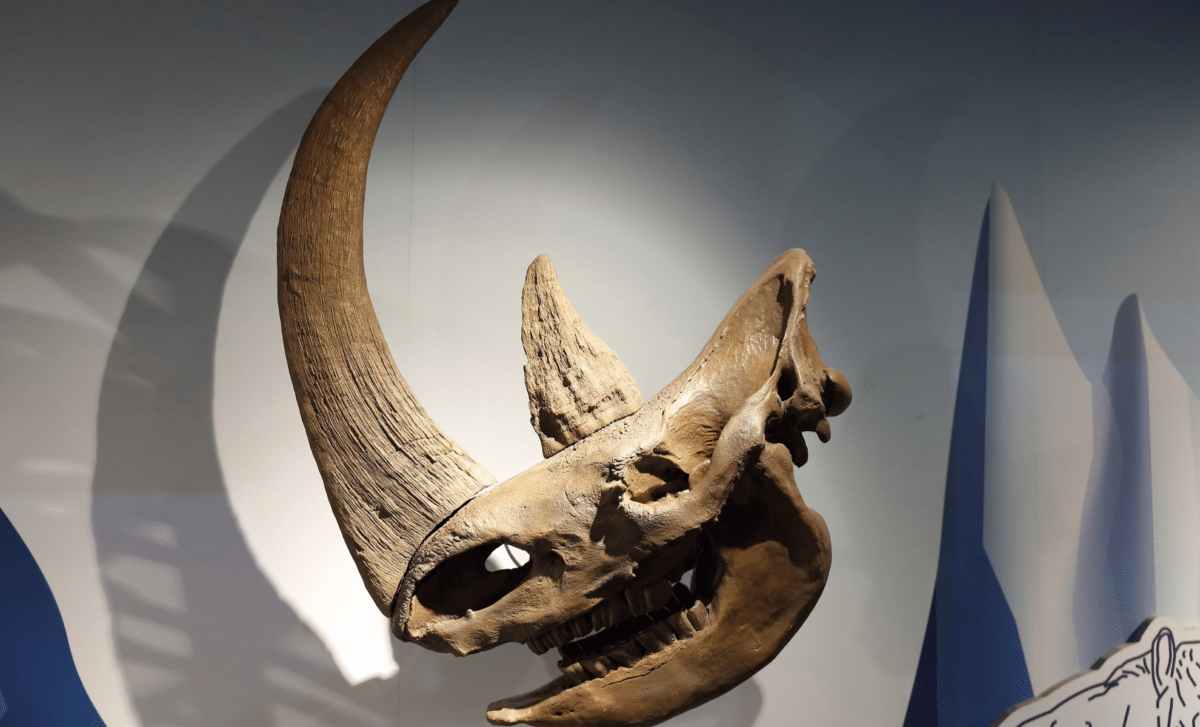
Beneath the frozen landscapes of Canada’s High Arctic, a stunning prehistoric discovery has emerged, challenging everything we thought we knew about ancient wildlife. Hidden for millions of years under ice and snow, the remains of a hornless rhino, Epiaceratherium itjilik, have been uncovered, offering a rare glimpse into a world where creatures once roamed what is now a frozen wasteland. This 23-million-year-old rhino, previously thought to have never existed so far north, could rewrite our understanding of both animal migration and climate change.
The Discovery of Epiaceratherium Itjilik: A Glimpse into the Past
In a remarkable find, detailed in in the journal Nature Ecology & Evolution, scientists unearthed the remains of Epiaceratherium itjilik from the frozen ground of Haughton Crater on Devon Island. The site, which is part of the Canadian Arctic, is now a silent, icy expanse, but millions of years ago, it supported temperate forests, lakes, and diverse life. The fossils were incredibly well-preserved, with about 75% of the skeleton recovered.
“What’s remarkable about the Arctic rhino is that the fossil bones are in excellent condition,” said Marisa Gilbert, a senior research assistant at the Canadian Museum of Nature. “They are three-dimensionally preserved and have only been partially replaced by minerals, which is incredibly complete for a fossil.”
This stunning preservation offers scientists rare insights into the anatomy and environment of ancient species. The discovery is not only significant for its completeness but also for its implications about rhino adaptation and the ancient ecosystems that once existed in the Arctic region. The species, named Epiaceratherium itjilik, meaning “frosty rhino,” underscores how much of the Earth’s past remains hidden beneath layers of ice and snow.
Image credit: Pierre Poirier
Credit: Canadian Museum of Nature
What Makes Epiaceratherium Itjilik Special: Evolutionary Insights
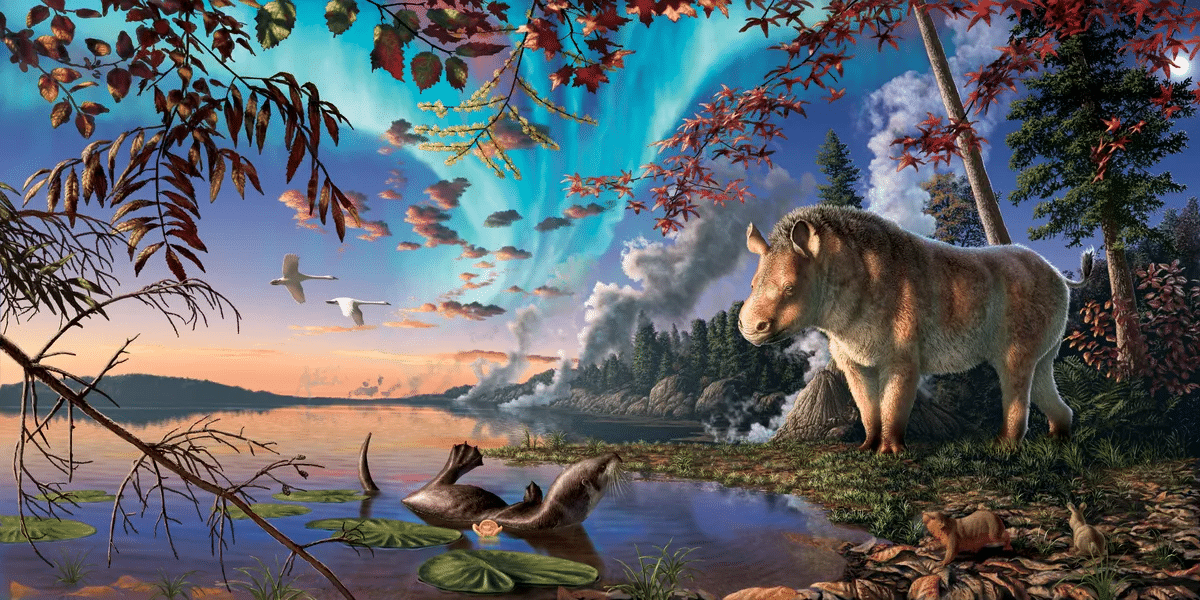
The Epiaceratherium itjilik is far smaller and more slender than today’s African rhinos, lacking the horn that most modern species are known for. Its physical appearance bears a closer resemblance to the Indian rhinoceros, offering scientists a glimpse into the diversity of ancient rhino species.
“The addition of this Arctic species to the rhino family tree now offers new insights into our understanding of their evolutionary history,” said Dr. Danielle Fraser.
This discovery challenges previous assumptions about the adaptability and migration patterns of ancient rhinos, providing evidence that these animals once inhabited far more varied climates than those of Africa and Asia today.
The presence of rhinos in the Arctic at this time also suggests that these creatures were able to survive in environments far colder than the warm habitats they are typically associated with. This raises intriguing questions about the climatic conditions of the Miocene Epoch, a period in Earth’s history when the Arctic was likely much warmer and supported lush forests.
An Unexpected Journey: How Rhinos Reached the Arctic
One of the most surprising revelations from the discovery of Epiaceratherium itjilik is how the species reached the Arctic. Using fossil evidence and advanced modeling techniques, researchers now believe that rhinos migrated from Europe to North America via a land bridge that connected Greenland to what is now North America. Dr. Fraser’s team found that this migration route, long believed to have disappeared 56 million years ago, likely remained active much longer than originally thought. The North Atlantic Land Bridge, which once spanned across what is now the North Atlantic Ocean, remained a viable passage for species well into the Miocene period.
This finding has major implications for our understanding of mammalian migration patterns. It rewrites part of the history of how animals moved across continents, suggesting that the Arctic was a far more interconnected region than previously imagined. The North Atlantic’s role in these migrations also highlights how environmental conditions, including climate changes, shaped the spread of species over vast distances.
The Fossils and What They Tell Us About Ancient Arctic Life
The remarkable preservation of the Epiaceratherium itjilik skeleton opens up new possibilities for studying ancient life in the Arctic. Fossilized plant material found alongside the rhino remains indicates that this part of the Arctic was once home to birch and larch trees, along with a variety of other plant life that would have supported an entire ecosystem. The region’s environment was far more temperate than the icy wilderness it is today. These plants, along with the animal fossils found in the area, paint a picture of a lush, thriving ecosystem that has long since disappeared.
Cryoturbation, the process in which frozen ground repeatedly freezes and thaws, helped push these ancient bones to the surface. This natural occurrence not only preserves fossils but also creates a unique opportunity to study the effects of climate change on ancient ecosystems. With every discovery, scientists gain a deeper understanding of the ways life once adapted to environmental challenges in a rapidly changing world.
Proteins in the Fossils: A Breakthrough Discovery
A recent breakthrough has pushed the boundaries of what scientists can learn from ancient fossils. In 2025, a team of researchers extracted partial proteins from the tooth enamel of Epiaceratherium itjilik, an achievement that was previously thought impossible for fossils of such an age. This remarkable discovery opens a new chapter in the study of ancient mammals.
“It’s always exciting and informative to describe a new species,” said Dr. Fraser. “But there is more that comes from the identification of Epiaceratherium itjilik, as our reconstructions of rhino evolution show that the North Atlantic played a much more important role in their evolution than previously thought.”
The extraction of proteins from ancient fossils is a groundbreaking achievement that promises to extend the timeline for studying evolutionary proteins. This innovation could lead to more discoveries about how ancient species adapted to their environments, offering insights into the broader patterns of mammalian evolution.
First Appeared on
Source link






Leave feedback about this