


In Andy Weir’s bestselling novel The Martian, foul-mouthed protagonist Mark Watney “sciences the shit” out of his circumstances to survive being stranded on Mars. The result is an engrossing work of science fiction, particularly captivating for its apparent realism. Watney ekes out an existence by eating potatoes sowed in Martian soil fertilized by his own feces. He shelters from the frigid conditions in his above-ground habitation unit, huddling around a repurposed, radiating nuclear battery.
Watney’s survivalist experience isn’t exactly an advertisement from the Red Planet’s tourist board, but it does romanticize space settlement, showcasing humanity’s ability to heroically persist beyond our “blue marble.” Readers are left with the sense that living on Mars is not just possible, but probable.
In reality, Watney’s experience would have been far, far more uncomfortable.
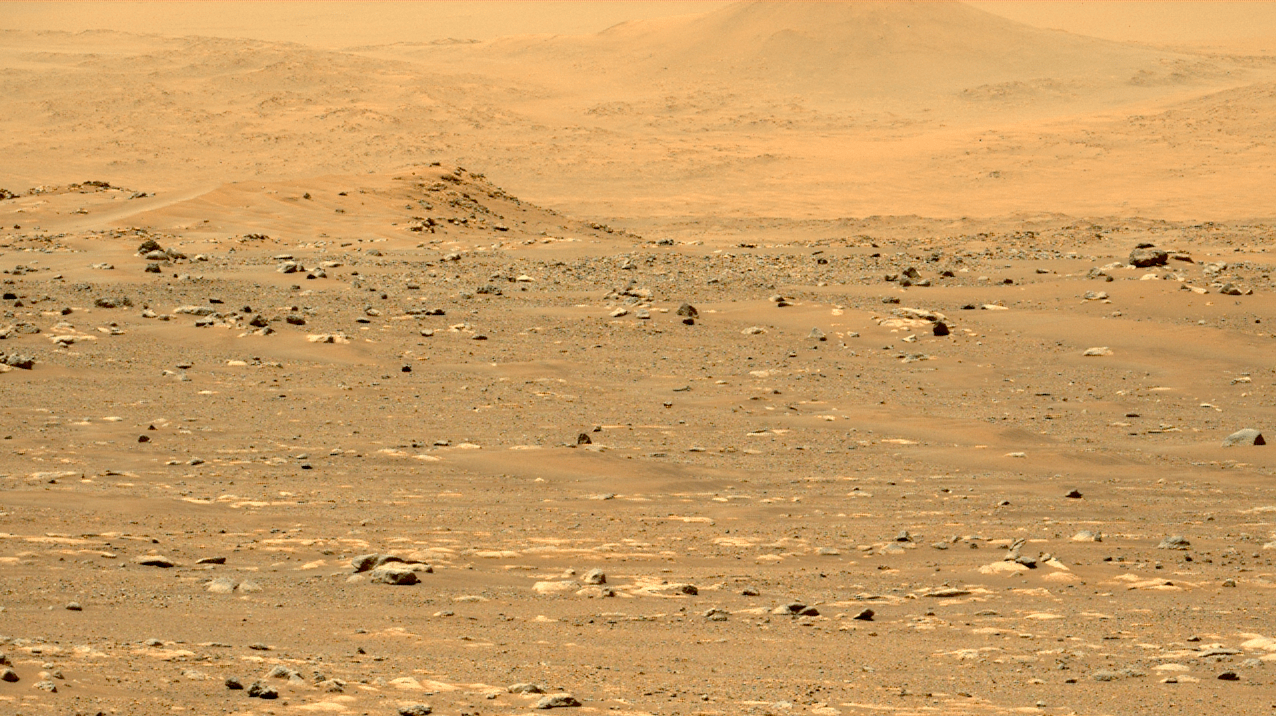
We now know a “toxic cocktail” of oxidants, iron oxides, and perchlorates permeate the Martian soil and would make growing plants exceedingly difficult. Watney might have been able to harvest a few stunted potatoes, but they would hardly be nourishing, likely leaving him weakened and emaciated. Moreover, his habitat should have been built below ground rather than above it. With no functional magnetosphere, Mars’ surface radiation is nearly as intense as in deep space, and the paper-thin atmosphere provides little protection from even minuscule meteorites. Watney would have been forced to live like an ant.
These blunt truths about dwelling on Mars are a few of the many fascinating buzzkills about space settlement that biologist, professor, and science communicator Scott Solomon provides in his new book, Becoming Martian: How Living in Space Will Change Our Bodies and Minds.
As Solomon observes, humanity is tantalizingly close to becoming an interplanetary species. Tech titans like Elon Musk and Jeff Bezos are staking vast fortunes on making it happen within our lifetimes. But before humans step out into the Solar System with plans to stay, it’s vital that we understand what awaits us. Solomon has spent years striving to fill that knowledge gap, making his book both timely and important. It also clashes with the public perception of space settlement built through more than a century of science fiction.

Blinded by science fiction
Depictions of space settlement have evolved in step with scientific and popular knowledge of the cosmos. Edgar Rice Burroughs’ A Princess of Mars (1912) tells the story of John Carter, a Civil War soldier mysteriously transported to a Mars inhabited by aliens who dwell along the desert world’s life-giving canals. At the time, much of the public misperceived early astronomical observations of grooves on Mars as Martian-built canals and assumed a great civilization had built them.
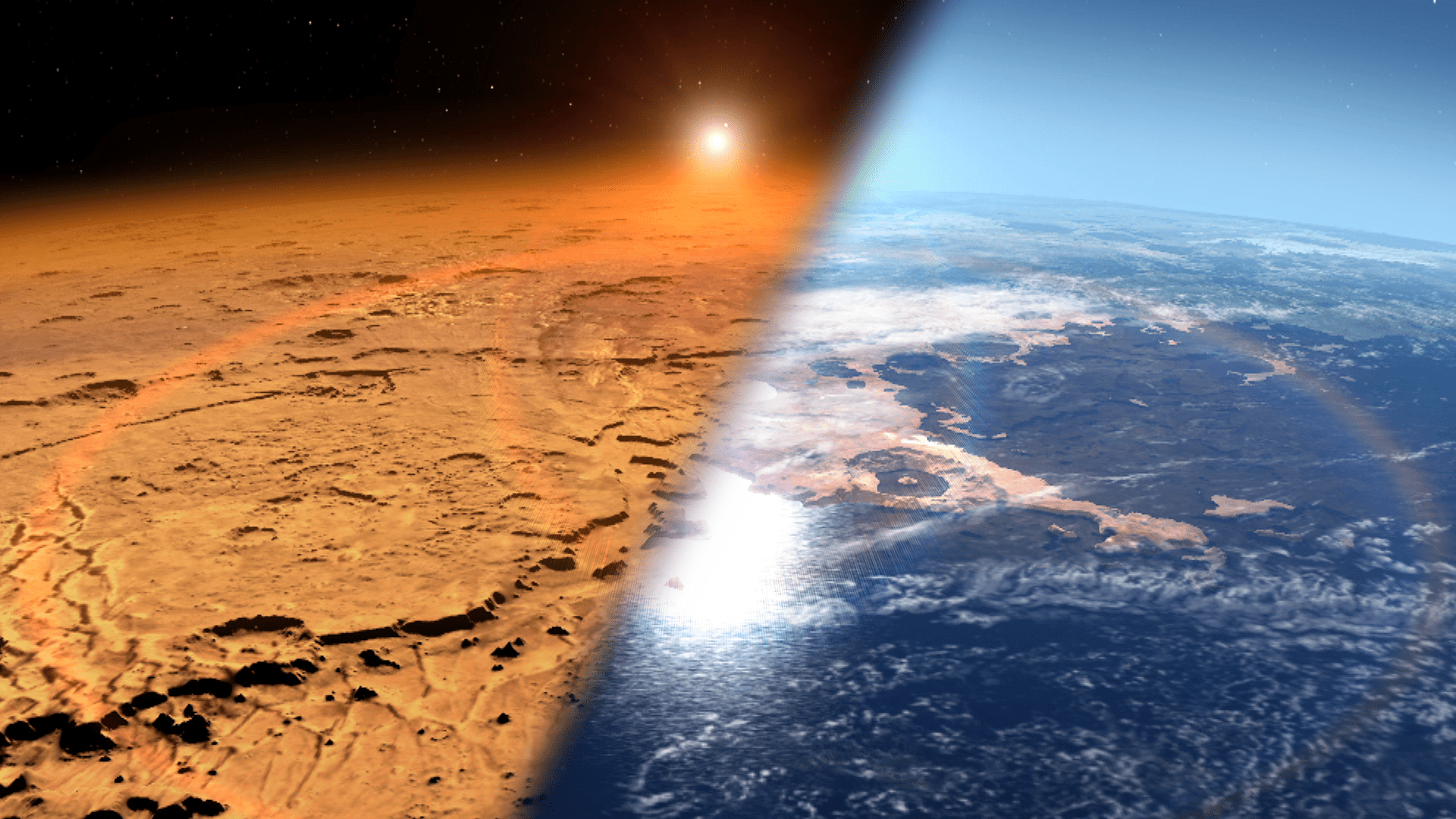
Eighty years later, Kim Stanley Robinson’s Mars trilogy (1992–96) chronicled the settlement and terraforming of the fourth planet from the Sun by space colonists — the fictional events of which begin this year. Terraforming — the process of modifying a planet’s atmosphere, temperature, surface, and ecology to be habitable — is looking less and less feasible the more scientists research it. Barring some unforeseen technological leap, to terraform Mars, we’d need to nuke the planet hundreds if not thousands of times to trigger a greenhouse effect and build up an atmosphere. Oh, and we’d have to repeatedly bombard it even as we live there because solar winds would continually leech away the atmosphere.
More recently, James S.A. Corey’s The Expanse series (2011) introduced readers to a future set in the 24th century where humanity has expanded throughout the Solar System, and Mars is an independent, militaristic power. One unrealistic aspect of this fictional universe is that the humans spread across the Solar System are too similar. Though they are depicted as morphologically adapting to their disparate living circumstances, Solomon, an expert in evolutionary biology, estimates that if humans truly branched out like that, we would “evolve, adapt, and speciate everywhere we go,” perhaps in relatively short order.
“I estimate we could see noticeable evolutionary changes after as little as four or five generations, with more significant changes occurring after ten or more,” Solomon writes. “We’re still talking hundreds of years, which may seem slow in the context of a human lifetime. But for evolution, that’s the blink of an eye.”
Reality check: Settling space would suck
Broadly, science fiction has shown that settlement of space will be easier and more glamorous than how it will play out in reality. The genre, Solomon notes, often employs highly-implausible plot devices to avoid dealing with the annoying aspects of living in space. Shields protect us from radiation, which degrades pretty much every tissue in the human body. Artificial gravity wards against the dangers of microgravity, including bone loss, muscle wasting, heart weakening, and eye destabilization. Warp drives, hyperdrives, and other fantastical propulsion devices minimize the mind-boggling scale of space down to a morning commute. No need for months, years, or decades of tedious space travel; characters can visit a new planet every week!
Stories set on Mars have been particularly prone to flowery portrayals, Solomon tells Big Think: “As our understanding of what Mars is actually like has changed, depictions of Mars in science fiction have changed as well, but they’ve in some ways been slower to do so. We haven’t caught up with what a harsh place Mars really is.”
A few works of sci-fi do showcase the painful realities of colonizing space, Solomon points out. Somewhat counterintuitively, one is H.G. Wells’ classic The War of the Worlds (1898). While the invading Martians and their tall, terrifying, laser-toting tripods are undeniably fantasy, the fact that they were undone by Earth’s disease-causing microbes is not. As Solomon detailed in his book, future Martian colonists, separated by distance and generations, would almost certainly develop vastly different immune systems shaped by their native environment, leaving them extremely vulnerable to foreign pathogens. Even if they could travel back to Earth, the trip might prove to be deadly after they arrived.
Another prescient work is The Space Between Us (2017). Though panned by critics and ignored by the public, the movie shows the struggles of a boy born on Mars to one of the first colonists. As a teenager, he attempts to return to the planet of his parents; however, raised on a world with much lower gravity and atmospheric pressures, his skeleton and heart cannot withstand the conditions on Earth.
Technological hurdles, but also ethical
The immense hardships of space settlement and its potential pitfalls actually become more pressing as the technology advances. Solomon thinks we could have boots on the Martian ground within the next ten years and settlement efforts by the end of the century. But while many technological hurdles of living away from Earth long-term remain to be overcome — food production, health challenges, fuel systems, and so on — Solomon says the real roadblock isn’t technological. It’s ethical.
Knowing what we know about the hardships and how we’ve colonized lands in the past, are we ready to step out into the Solar System and stay there?
One of the biggest ethical concerns surrounds reproduction. We currently have no clue whether having children in space is biologically feasible. Microgravity could make childbirth even more hazardous than it already is, and radiation could mutate the sensitive cells of developing embryos. After birth, life will be no less unforgiving, and it may not be possible for families to seek haven on Earth. Is it right to subject the children of future space colonists to such conditions?
We haven’t caught up with what a harsh place Mars really is.
“It’s one thing for an adult to understand the risks and agree to take those on for themselves. It’s another thing to bring a child into the world in a situation that is potentially very dangerous,” Solomon says.
Another ethical dilemma is neatly encapsulated with a timeless science-fiction debate: Star Wars vs. Star Trek. Would space settlement play out more like Star Trek, where we venture out relatively mindfully, or like Star Wars, replete with conflict and totalitarianism?
“If we expand beyond Earth, do we expand in a peaceful way to better understand the cosmos or do we go out with an eye towards taking over and extracting resources and ultimately having lots of conflict?” Solomon asks.
If history is any guide, Solomon fears we will unfortunately follow the Star Wars path. Moreover, until we learn how to live with each other in peace on our own planet, he’s not sure we’re ready as a species to settle Mars — or anywhere else in the Solar System for that matter.
Given Solomon’s extensive research and ethical reservations about space settlement, we had to ask: If given the option to be one of the first humans to live on the Red Planet, would he? His answer was an unequivocal no.
“I would love to go to Mars,” he says, “but I am not ready to sign up for a one-way trip to Mars.”
First Appeared on
Source link







Leave feedback about this