

Beneath the dusty plains of outback Queensland, under towns that depend on a single reliable water source, lies a rock formation so old it predates the dinosaurs. For decades, it sat largely ignored, invisible at the surface and buried under other basins.
Now, scientists believe this hidden geology, the Adavale Basin, could help solve one of Australia’s most urgent clean energy dilemmas, i.e., where to store renewable power at a truly massive scale.
“The Adavale Basin is under-explored yet is known to contain resources that can contribute to Australia’s emissions reductions and modern energy needs,” a report from the Australian government notes.
Australia is producing more electricity from solar and wind than ever before, but there is a catch. Sunshine and wind are unpredictable. When supply is high, excess electricity can go to waste.
When supply drops, the grid needs backup. Lithium-ion batteries help, but they are expensive and limited in size. Storing energy for hours is possible. Storing it for days — or at the scale of millions of homes — is far more complicated.
Scientists think the answer may lie not in bigger surface batteries, but two to three kilometres underground.
A basin with a hidden treasure
The Adavale Basin was first identified in 1958. Even today, geologists describe it as under-explored. It is buried beneath the Eromanga Basin and the Galilee Basin, both of which form part of the vast Great Artesian Basin — one of the largest underground freshwater systems on Earth.
Unlike many geological formations, the Adavale Basin leaves no obvious trace at the surface. There are no dramatic cliffs or exposed rock layers marking its presence. To understand what lies below, scientists have to drill.
Recently, Geoscience Australia completed a $31 million drilling campaign to investigate the basin’s potential. In November, the team drilled a borehole about three kilometres deep, setting a depth record for the agency.
From that hole, they extracted a continuous 976-metre rock core, along with more than 500 rock chip samples and several groundwater samples.
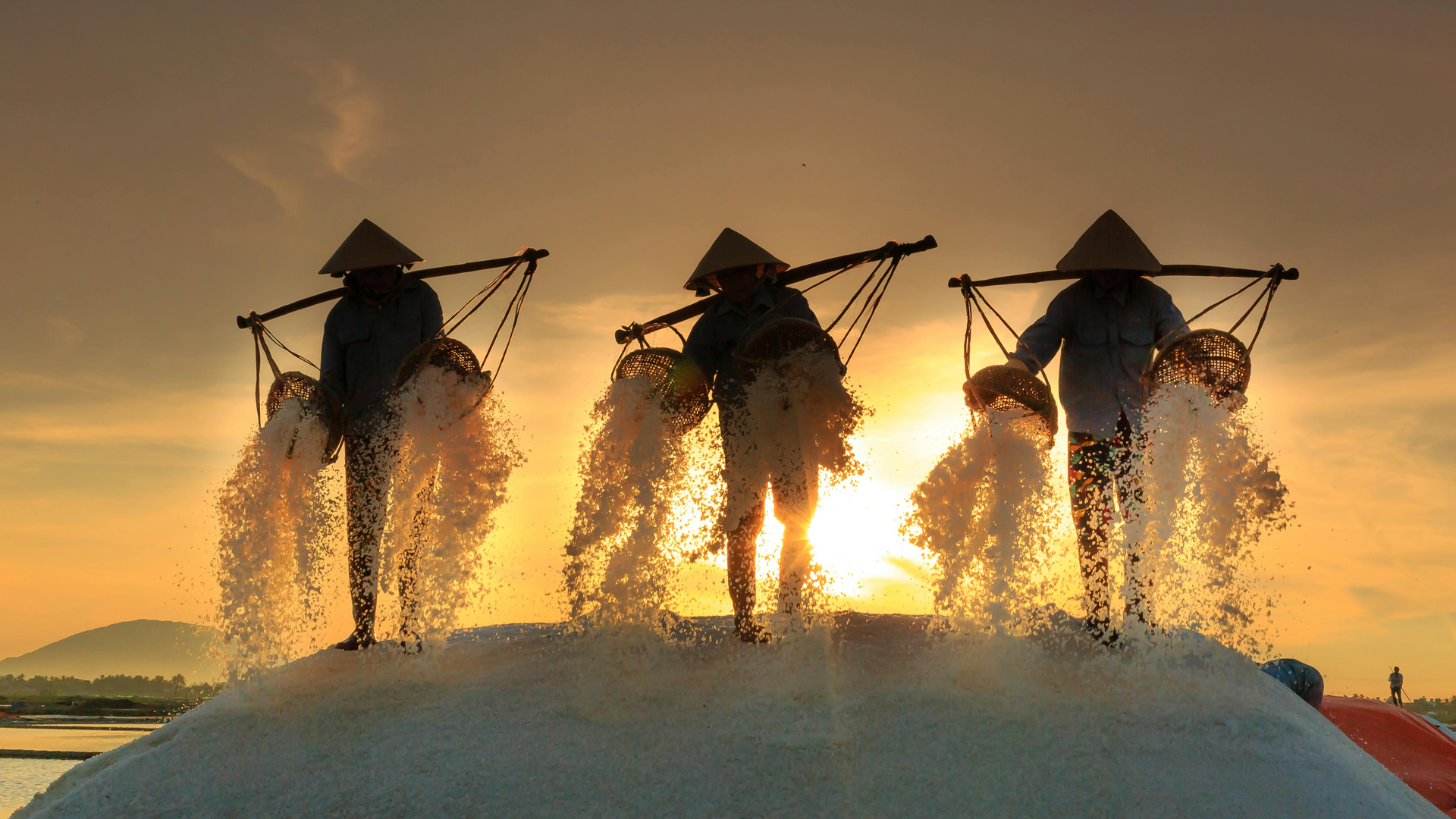
At the heart of their interest is a thick layer of rock salt known as the Boree Salt deposit. It is currently the only known salt layer in eastern Australia that appears thick enough to store hydrogen deep underground.
“You can dissolve that rock salt out, and you can store things within that dissolved cavern, like hydrogen gas or compressed air,” Mitchell Bouma, Director at Geoscience Australia, told ABC News. This concept sounds unusual, but it is well established overseas.
The science of storing hydrogen in salt caverns
Salt formations have a useful property. They can be dissolved using water to create large hollow spaces, called caverns. Engineers inject water to dissolve part of the salt, pump out the salty brine, and are left with an empty chamber underground. This chamber can then be used to store gases.
Hydrogen produced using renewable electricity could be pumped into these caverns when supply is abundant. Later, when electricity demand rises, the hydrogen could be brought back to the surface and used to generate power.
In short, the cavern becomes an underground energy reserve — a battery, but on a geological scale. For instance, a single cavern in the Adavale Basin could potentially store around 6,000 tonnes of hydrogen.
This is equivalent to roughly 100 gigawatt hours of energy — about the same as 50 of Australia’s largest grid-scale batteries combined. Some experts estimate that just a handful of such caverns could supply enough electricity to power around 20 million homes for a day, based on average household demand in Brisbane.
For comparison, large hydrogen storage facilities have operated overseas for decades. In the United States, a major project in Utah is building two salt caverns designed to hold 5,500 metric tonnes of hydrogen each.
First Appeared on
Source link





Leave feedback about this