

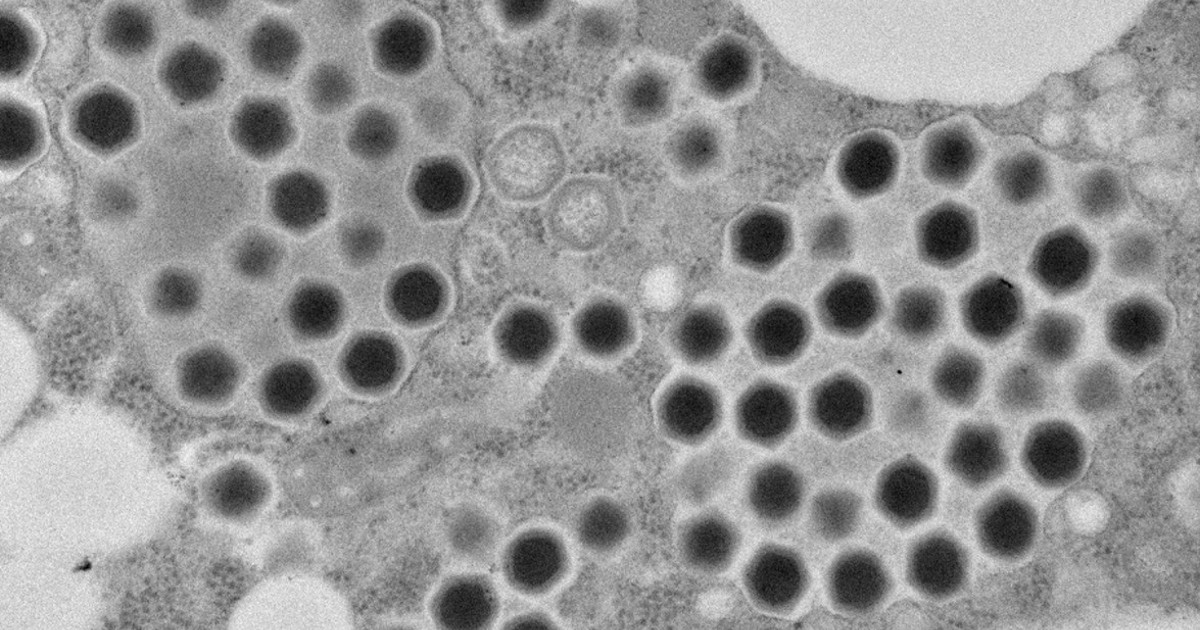
TSUKUBA, Ibaraki — A research team led by the Tokyo University of Science and the National Institutes of Natural Sciences has discovered a new species of giant virus in Ushiku-numa pond in Ryugasaki, Ibaraki Prefecture, northeast of the Japanese capital.
Named the ushikuvirus, the find could provide clues to solving long-standing mysteries about the evolution of eukaryotes — organisms whose cells contain nuclei, including humans, animals and plants.
Scientists are interested in giant viruses because some theories suggest that ancient primitive cells infected by such viruses gave rise to eukaryotes, the lifeforms whose DNA is contained within a cell nucleus. Since all fungi, plants and animals are eukaryotic, studying these viruses could help unravel the process of complex evolution.
Unlike typical viruses, which are too small to see without an electron microscope, some giant viruses are large enough to be visible under an optical microscope. They are believed to exist in bodies of water around the world, but many of their properties remain unclear.
A member of the research group, a graduate student from Ibaraki Prefecture, collected water samples from Ushiku-numa pond and identified the giant virus that would prove to be a new species. Measuring about 250 nanometers — 1 nanometer is one-billionth of a meter — the virus infects vermamoeba, a species of single-celled organisms, and replicates inside its nucleus. The team said the virus is harmless to humans and animals.
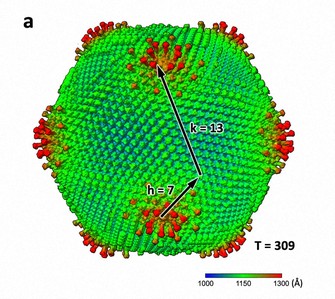
In 2019, the same research team discovered a new family of giant viruses in hot springs in Hokkaido, which they named the Mamonoviridae family. The ushikuvirus shares similar characteristics and is thought to be closely related to Mamonoviridae.
Professor Masaharu Takemura of the Tokyo University of Science said, “The Mamonoviridae family also replicates in the nuclei of living cells. By studying the properties of giant viruses like the ushikuvirus that are close to the Mamonoviridae family, we hope to clarify how cell nuclei originated.”
The findings were published in a U.S. international scientific journal dated Nov. 24, 2025.
(Japanese original by Yui Shuzo, Tsukuba Local Bureau)
First Appeared on
Source link





Leave feedback about this