

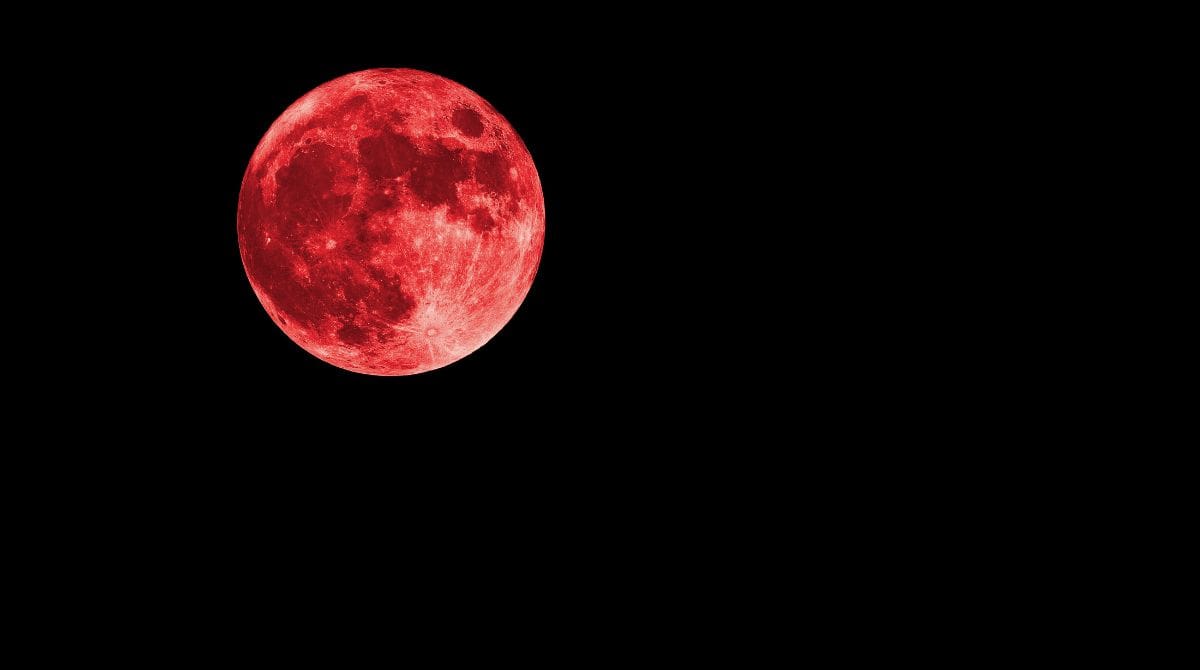
A total lunar eclipse will be visible across North America in the early hours of March 3, 2026, turning the full Moon a deep red during its peak totality — popularly known as a “Blood Moon.”
According to NASA, this will be the first total lunar eclipse visible in the Americas since March 2025.
What Is Blood Moon?
A total lunar eclipse occurs during a full Moon when Earth moves directly between the Sun and the Moon. As the Moon passes into Earth’s inner shadow, known as the umbra, sunlight is filtered through Earth’s atmosphere before reaching the lunar surface.
A “Blood Moon” occurs during a total lunar eclipse, when Earth moves directly between the Sun and a full Moon, casting its shadow across the lunar surface and filtering sunlight into red and orange tones.
Shorter blue wavelengths scatter easily in the atmosphere, while red and orange wavelengths pass through more directly, the same effect that makes sunsets appear red. During totality, this filtered light gives the Moon a coppery glow.
Blood Moon in Santa Barbara
The eclipse will be visible throughout California, including Santa Barbara. However, the visibility will depend on weather conditions.
The penumbral phase begins at 12:44 a.m. PST, with the eclipse concluding at 6:23 a.m. PST, according to NASA. The eclipse is safe to be viewed with the naked eye and does not require special equipment or eye protection.
In Santa Barbara, the eclipse begins at 12:44 a.m., reaches totality at 3:04 a.m., peaks at 3:33 a.m., and ends at 6:23 a.m. The total phase, when the Moon appears deep red, will last approximately 58 minutes.
Blood Moon in California
Skywatchers across Californian cities including Fresno, Los Angeles, Oakland, Sacramento, San Bernardino, San Francisco, and San Jose will see the March 3, 2026 total lunar eclipse in full, with 100% obscuration of the Moon.
Totality, when the Moon appears fully red, will last just under an hour, while the umbral phase will span about 3 hours and 27 minutes.
Historical average cloud cover for early March ranges from about 51% in Los Angeles to 65% in Sacramento, meaning clear views will depend on local weather conditions, according to timeanddate.com.
The next total lunar eclipse will occur on December 31, 2028. That eclipse will be visible in Europe, Africa, Asia, Australia, and the Pacific, but not in North America. North America’s next total lunar eclipse will occur on June 26, 2029, NASA noted.
Where to Livestream The ‘Blood Moon’ Total Lunar Eclipse?
For those unable to watch outdoors, Griffith Observatory will host a livestream from 12:37 a.m. to 6:25 a.m. PST. The observatory will not conduct onsite public viewing, and Griffith Park will remain closed during the broadcast.
Apart from Griffith Observatory, timeanddate.com will also stream the eclipse live beginning at 12:44 a.m. PST on its YouTube channel.
The total lunar eclipse will conclude shortly after dawn in California, with the Moon gradually returning to its usual brightness.
First Appeared on
Source link





Leave feedback about this