

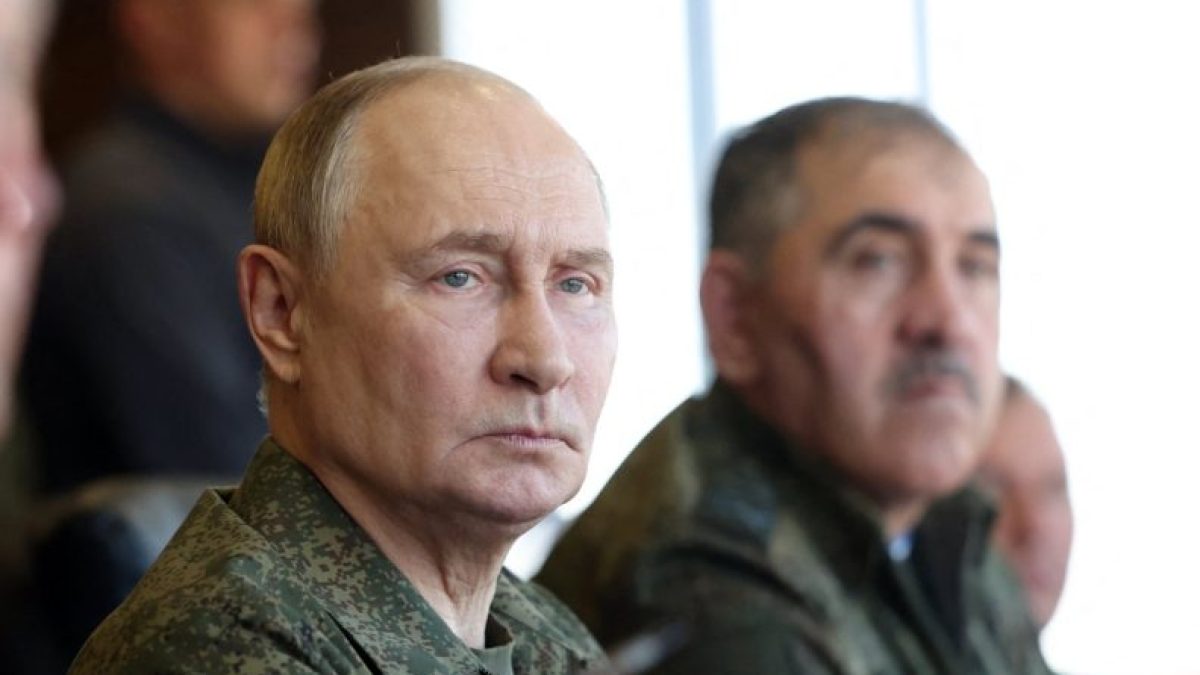
The Russian President’s fanaticism has led to constant mistakes regarding Ukraine
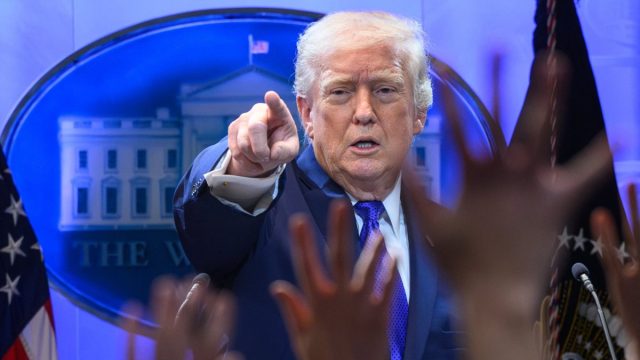
Donald Trump has caused uproar by suggesting that Ukraine should hand over huge expanses of its land to Moscow as a way to a peace settlement.
But even such a gift to Vladimir Putin would not repair the damage that has been wrought by the repeated blunders of the Russian President.
On Ukraine, for more than a decade, Putin has made one mistake after another, each the result of a strategic fanaticism that reflects his belief that Ukraine is an artificial country that should really be part of Russia.
Ukraine has suffered through its resistance to Russia but it has maintained its sovereignty and its determination to join the EU. This is the very situation that Putin, 13 years ago, was trying to prevent.
The strength of Ukrainian resistance has denied Putin his victory. Four gruelling years of war have left Russia weakened and with its original war aims still unmet. This represents not just a single strategic blunder by Putin, but a series of blunders. At a number of points, he had the opportunity to cut his losses – but none were taken.
What has been constant is Putin’s conviction that Ukraine is an artificial construct with an illegitimate government. His war aims, still reflected in his negotiating demands, are to complete the occupation of four Ukrainian provinces, along with Crimea, while leaving the rump of Ukraine in the hands of a compliant government, suitably “demilitarised” and “denazified”. His refusal to accept anything less has thwarted even the sympathetic Trump’s efforts to achieve a peace settlement.
Putin’s fixation with Ukraine has always been present but came to the fore almost as soon as he began his second stint as president in 2012. He took the view that Ukraine could only be allowed sovereignty so long as it was deferential to Russia’s wishes, accepting a degree of economic integration and staying clear of Western institutions. At the time, he had in Viktor Yanukovych as pro-Russian a Ukrainian president as he could expect. He had taken the question of Nato membership off the table, renewed Russia’s long-term lease on stationing the Black Sea Fleet in Crimea, and passed a new law on the status of the Russian language. But Yanukovich’s readiness to sign an association agreement with the EU in November 2013 led Putin to subject Ukraine to such severe economic coercion that he was obliged to abandon the idea. The result was the vast protests that eventually led Yanukovych to flee in February 2014.
Rather than try to work with the new government in Kyiv, Putin immediately concluded that Ukraine should be dismembered and punished. He might have been able to get away with just annexing Crimea, for the international response to this aggression was mild. But he also supported Russian-led “separatists” to establish enclaves in eastern Ukraine. When they were getting into trouble as Ukrainian forces began to push them back, Putin again escalated. He used the Russian army to help them survive. He did not go so far as to try to annex these territories then as well. Instead, he tried, through the Minsk agreements of September 2014 and February 2015, to use them to achieve a new constitutional arrangement in Ukraine, reflecting the priority he still gave to maintaining influence over Kyiv’s policies.
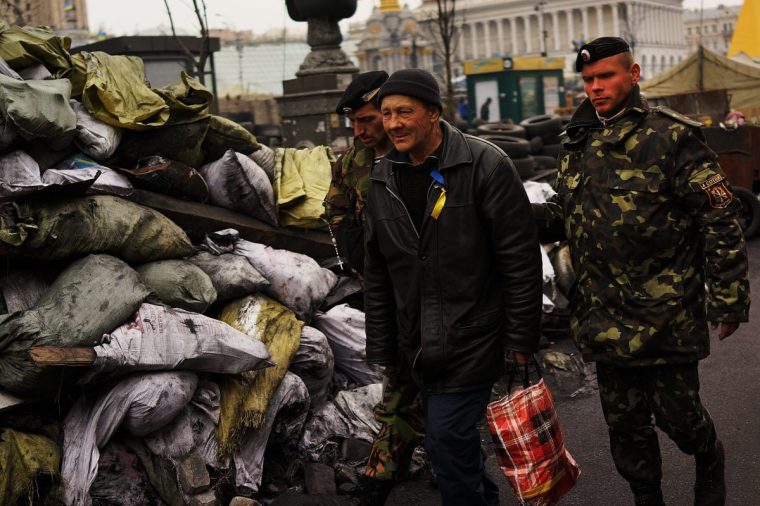
The agreements were never implemented. Frustrated by Kyiv’s continued refusal to subordinate Ukraine’s interests to Russia’s, he mulled the issue during the long months of Covid. He concluded that the only true solution was to reunite Ukraine with Russia and install by force a puppet government in Kyiv. All this was to be achieved in a matter of weeks. Russian forces, however, made the classic strategic error of underestimating the enemy. The ambitious military offensive soon stalled.
Even though his forces were obliged to retreat from the outskirts of the cities of Kyiv and Kharkiv, Putin could not bring himself to accept the failure of his historic project. Instead, he redoubled his efforts, now seeking to partition the country by annexing four Ukrainian provinces in addition to Crimea, even though they had not been fully occupied. They are still far from being fully occupied. And his basic problem remained.
Russia may end up acquiring a chunk of Ukraine, but the territory they have occupied has been ruined by the war. It is depopulated, economically inactive, full of unexploded ordnance, and with cities reduced to rubble. It will require heavy policing and will have a long border to defend against a hostile Ukraine. Over time, Ukraine will become steadily more integrated into Western institutions.
Your next read
This is exactly the situation he was trying to prevent in 2013, which provides the measure of Putin’s failure. Then the Ukrainian president was a Russophile. Now, Russia will be hated and distrusted by Ukrainians for generations to come. Successive moves by Putin have ensured that his ideal end state of a compliant government in Kyiv is now beyond his reach.
And this is before we bring into the equation the hundreds and thousands of dead, injured, and traumatised, the distortion of the economy and the impact on the well-being of the population, the break with the West and the loss of the European gas market, the dependence of China, and the need to ask favours from North Korea and Iran. In a democracy, a strategic blunder of this size would have been called out years ago. In autocracy, one man can have the power to keep this futile war going and not be called to account.
Adapted extract from Lawrence Freedman, On Strategists and Strategy: Collected Essays, 2014-2024 (Oxford University Press, published 2 March 2026). Freedman is an emeritus professor of war studies at King’s College London. With his son Sam, he publishes the Substack Comment is Freed.
First Appeared on
Source link


Leave feedback about this