

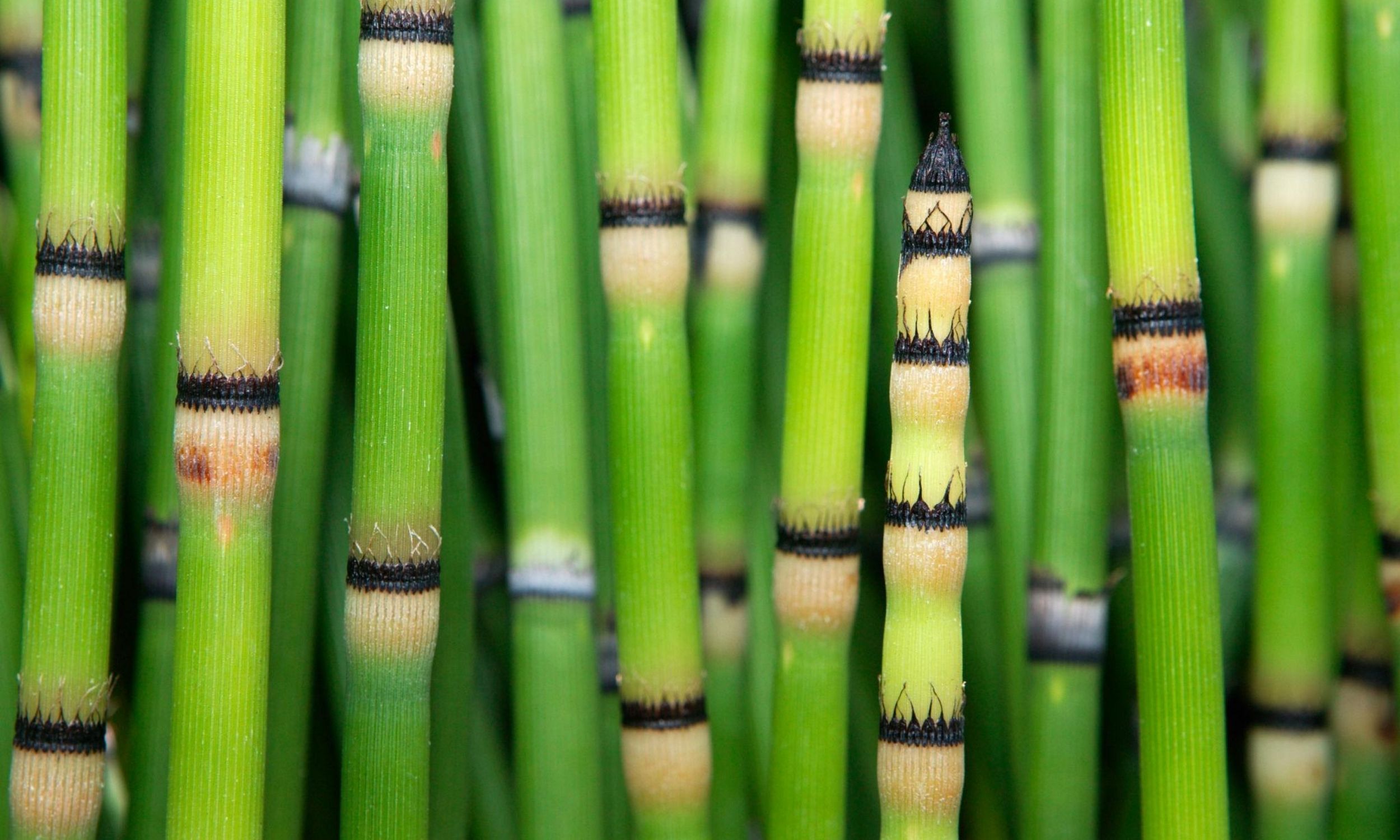
Water drawn through the hollow stem of a living Equisetum plant, horsetail, has registered the most extreme oxygen isotope signature ever measured in any terrestrial material.
That discovery stretches the known chemical limits of Earth’s water and forces scientists to reconsider how plants, fossils, and even desert climates record the passage of evaporation.
A stem-sized surprise
Along the smooth, jointed stem of a modern horsetail plant, water rises from the base and grows progressively stranger in its oxygen makeup.
By sampling water from the bottom to the tip, Zachary Sharp, Ph.D., at the University of New Mexico demonstrated that the stem itself steadily concentrates heavy oxygen as moisture escapes into dry air.
Values that began within a typical natural range at the base climbed to levels so enriched at the tip that they exceeded every prior terrestrial measurement.
Because that chemical transformation unfolds inside a single plant rather than in an extreme environment, the finding demands a closer look at how evaporation reshapes water long before it reaches a leaf.
Evaporation up the stem
Evaporation kept pulling water out of the stem as it rose, even before reaching any leafy branches.
As droplets escaped through the stem wall, lighter water molecules left first, so heavier oxygen stayed behind.
Each higher segment started with already-enriched water, then lost more to air, building an extreme gradient toward the tip.
Dry wind and heat can push that process harder, which helps explain odd oxygen data from desert plants.
Oxygen atoms as clues
Oxygen in water carries a chemical signature that scientists use to track where moisture came from and what happened next.
A water sample holds more than one kind of oxygen, and isotopes – atoms of one element with different weights – mark that mix.
When water dries, molecules with lighter oxygen escape first, and the leftover liquid keeps heavier oxygen through evaporation.
Without careful interpretation, that simple sorting can make a lake, a leaf, or a fossil look wetter or drier than it was.
Three oxygen signals
Three separate oxygen versions in the same water drop let scientists tell whether evaporation or source water drove a change.
Sharp’s group tracked three versions of oxygen at once, following how each one changed together in the water moving through the stem.
That extra layer matters because heavy oxygen is rare, and small biases can hide when only one ratio is measured.
With three signals at once, the team could test plant-water models in a way ordinary measurements cannot.
Beyond Earth’s range
Horsetails have a fossil record reaching to the Devonian, a period about 400 million years ago, which defines their long lineage.
In smooth horsetail stem water, the share of heavier oxygen climbed sharply from the base to the tip, reaching levels no one had measured before in a living plant.
“If I found this sample, I would say this is from a meteorite,” said Sharp.
By stretching the known oxygen range across Earth and the solar system fivefold, the results gave modelers a hard boundary.
Trapped water chemistry
Inside horsetail tissues, silica builds tiny glassy bodies that can survive long after the plant dies.
Researchers call these bodies phytoliths, tiny silica casts formed inside plants, and horsetails rank among the highest silica accumulators.
In Sharp’s data, the oxygen fingerprint in phytolith silica did not match the water moving through the stem.
That mismatch means fossil phytolith readings can point to the wrong humidity story, especially when researchers average the whole stem.
Fixing model assumptions
Models that predict plant water chemistry depend on a few constants, and one of them had been slightly off.
Using measurements from the entire stem, Sharp’s team adjusted a key number in evaporation models so it better matches how water vapor actually moves through dry air.
That updated number helped explain earlier puzzling oxygen readings in desert plants and animals that drink from strongly evaporated water.
Better constants will not fix every uncertainty, but they reduce the risk of blaming biology when physics drove the signal.
Fossils meet dry air
Scientists have tested fossil phytolith oxygen signals as a way to estimate past humidity.
Since moisture in the air affects how quickly water escapes from plants, the oxygen pattern left behind can reflect how dry the air was.
“We can now begin to reconstruct the humidity and climate conditions of environments going back to when dinosaurs roamed the Earth,” said Sharp.
Still, Sharp’s warning about mismatched phytolith signals sets limits on what those fossils can tell without extra context.
Horsetails, water, and oxygen isotopes
A summer course helped make the work possible, mixing field sampling with lab runs that trained students on real data.
Through a summer lab-field class, 14 students helped collect stems and measure oxygen fingerprints at UNM facilities.
Back in Albuquerque, New Mexico, the Center for Stable Isotopes ran the samples, and electron microscopes checked the silica growing in stems.
That hands-on path matters, because climate tools improve fastest when students and senior scientists test them against messy nature.
Extreme water fingerprints from a living horsetail give scientists a new way to stress-test climate models and fossil proxies.
Future work will need to map similar signals in other plants and environments, especially where drought pushes evaporation to the limit.
The study is published in Proceedings of the National Academy of Sciences.
—–
Like what you read? Subscribe to our newsletter for engaging articles, exclusive content, and the latest updates.
Check us out on EarthSnap, a free app brought to you by Eric Ralls and Earth.com.
—–
First Appeared on
Source link






Leave feedback about this