

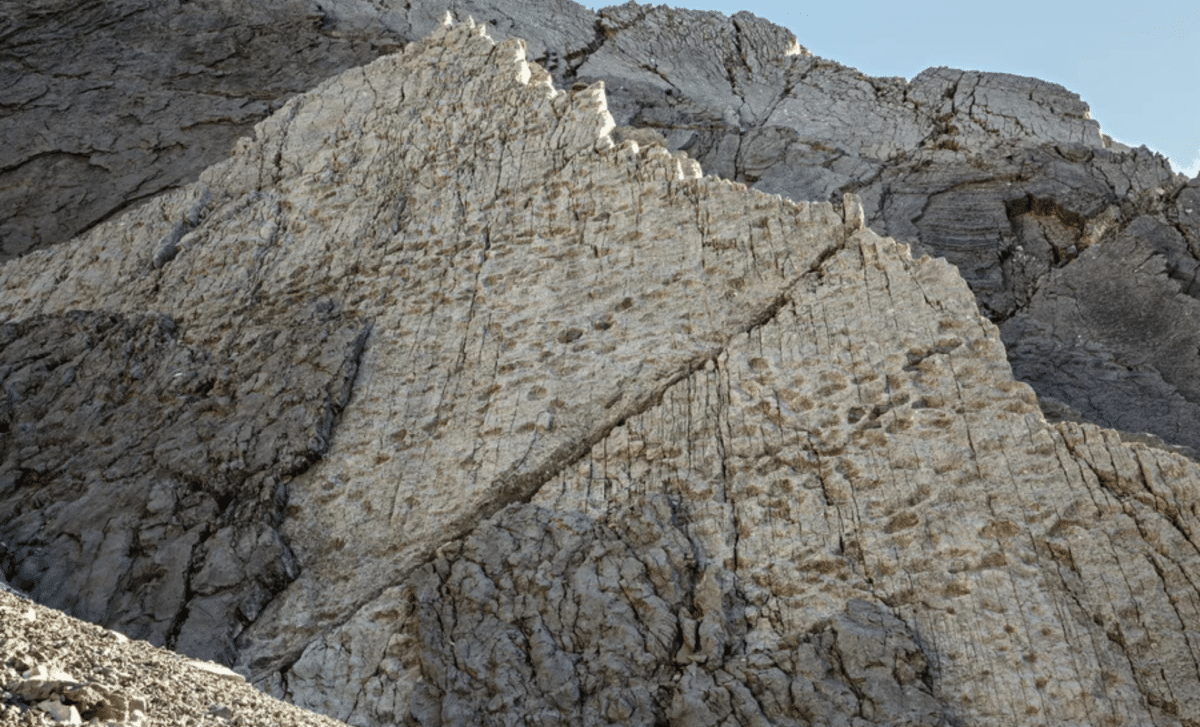
A vast field of prehistoric dinosaur footprints has been uncovered in northern Italy, reshaping scientists’ understanding of the region’s ancient past. Wildlife photographer Elio Della Ferrera stumbled upon one of the oldest and largest known collections of dinosaur footprints in Stelvio National Park in northern Italy. The remarkably well-preserved tracks date back to the Triassic Period, around 210 million years ago, offering rare insight into life on Earth long before the rise of the Alps as we know them today.
A Prehistoric Landscape Frozen In Time
The discovery was made in the Italian Alps, in an area better known today for ski slopes and preparations linked to upcoming international sporting events. Yet long before winter athletes carved lines into the snow, herds of dinosaurs were leaving their marks in soft sediment that would harden into stone for millions of years. The site contains hundreds of well-preserved footprints, forming trackways that allow researchers to reconstruct not only the presence of dinosaurs but their movement patterns and possible social behavior.
According to BBC, paleontologists have identified multiple track types, suggesting that different species once roamed the same environment. The sediment layers indicate that the area was once a coastal plain or lagoon system during the Mesozoic era. The footprints vary in size, with some impressions attributed to large herbivorous dinosaurs, while others point to smaller or juvenile individuals. The spacing and direction of the prints suggest coordinated movement rather than random wandering, offering rare insight into herd dynamics preserved in stone.
Credit: Fabio Manucci. PaleoStelvio Arch.
Scientists Describe A Remarkable Discovery
For researchers involved in analyzing the site, the discovery was both unexpected and deeply significant. “I never would have imagined I’d come across such a spectacular discovery in the region where I live,” said Milan-based paleontologist Cristiano Dal Sasso. His reaction underscores the rarity of finding such extensive and well-preserved dinosaur traces in a region not previously known as a major fossil hotspot.
Dal Sasso noted that the arrangement of the tracks reveals more than simple locomotion. The herds moved in harmony, he added, “and there are also traces of more complex behaviours, like groups of animals gathering in a circle, perhaps for the purposes of defence.” Such formations suggest social organization and collective responses to potential threats. Trackway analysis allows scientists to estimate speed, stride length, and even relative age groups within the herd. The implications extend beyond regional geology, contributing to broader debates about dinosaur behavior, sociality, and environmental adaptation during the age of reptiles.
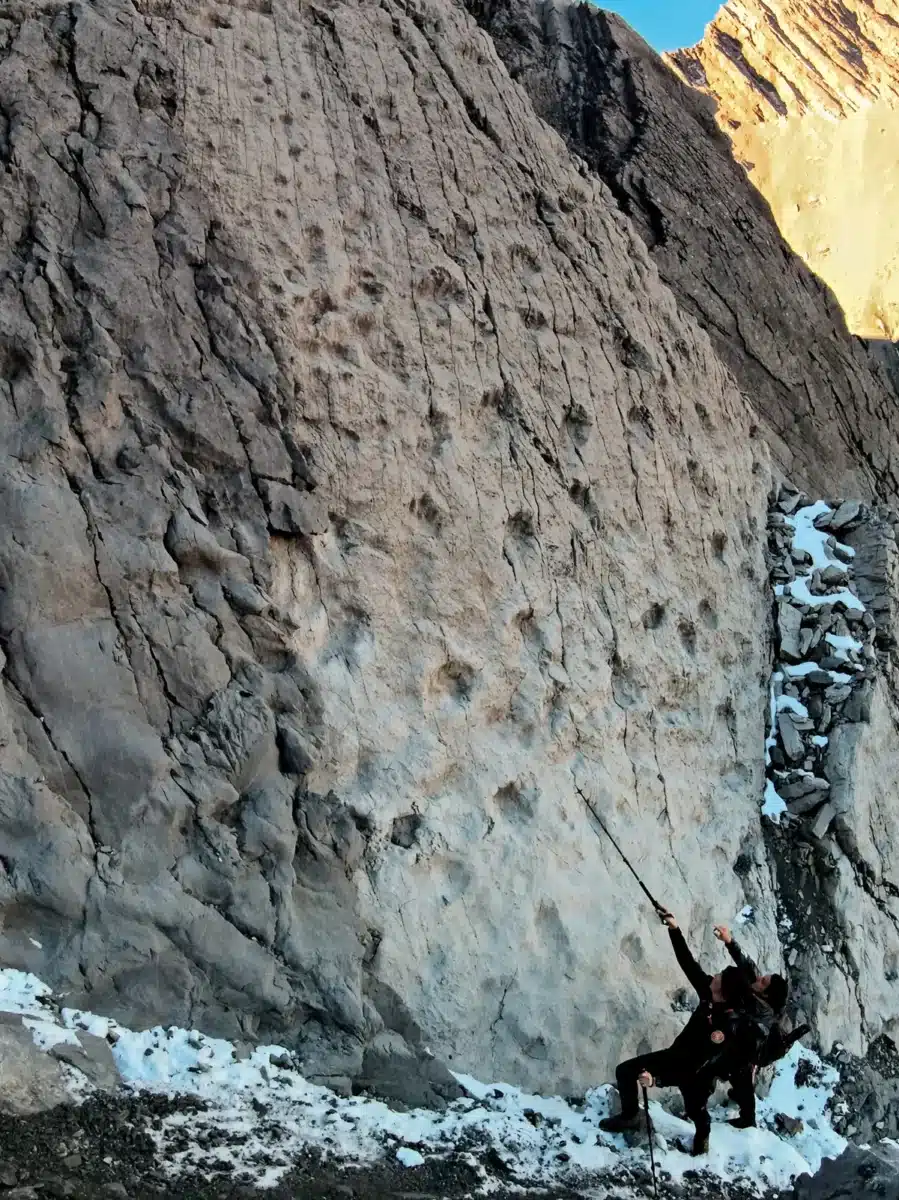
Image Credit: Elio Della Ferrera. PaleoStelvio Arch.
From A Photographer’s Eye To A Scientific Breakthrough
The site was first noticed by photographer Elio Della Ferrera, whose trained eye detected unusual patterns in exposed rock surfaces. What might have appeared to casual observers as random indentations were recognized as something far more significant. Della Ferrera alerted experts, leading to systematic surveys and documentation of the footprints.
Reflecting on the moment, he said he hoped the discovery would “spark reflection in all of us, highlighting how little we know about the places we live in: our home, our planet”. His statement captures a broader theme emerging from the find: that even in well-populated and frequently visited regions, profound traces of Earth’s deep history can remain hidden in plain sight. The collaboration between a local observer and professional scientists demonstrates how accidental discoveries can evolve into major scientific contributions. Detailed mapping, drone imaging, and sediment analysis are now being used to preserve and interpret the site before natural erosion alters the tracks.
A Symbolic Link Between Deep Time And Modern Sport
The discovery’s timing has also drawn attention because of its proximity to venues associated with a major global sporting event. Italy’s Ministry of Culture framed the find in symbolic terms, noting how ancient history and modern athletic achievement now intersect in the same landscape. “It’s as if history itself wanted to pay homage to the greatest global sporting event, combining past and present in a symbolic passing of the baton between nature and sport,” said the Italian Ministry of Culture.
The juxtaposition is striking: footprints left tens of millions of years ago now emerge as athletes prepare to leave their own marks in snow and ice. The site provides an opportunity for educational outreach, conservation awareness, and renewed appreciation of Italy’s geological heritage. Researchers emphasize that careful preservation will be essential to protect the prints from weathering and human interference. As studies continue, the Alpine slopes may soon be known not only for winter competition but also for one of the most evocative windows into Europe’s prehistoric ecosystems.
In the end, the discovery serves as a reminder that beneath familiar landscapes lie stories that predate humanity itself by unimaginable spans of time.
First Appeared on
Source link






Leave feedback about this