

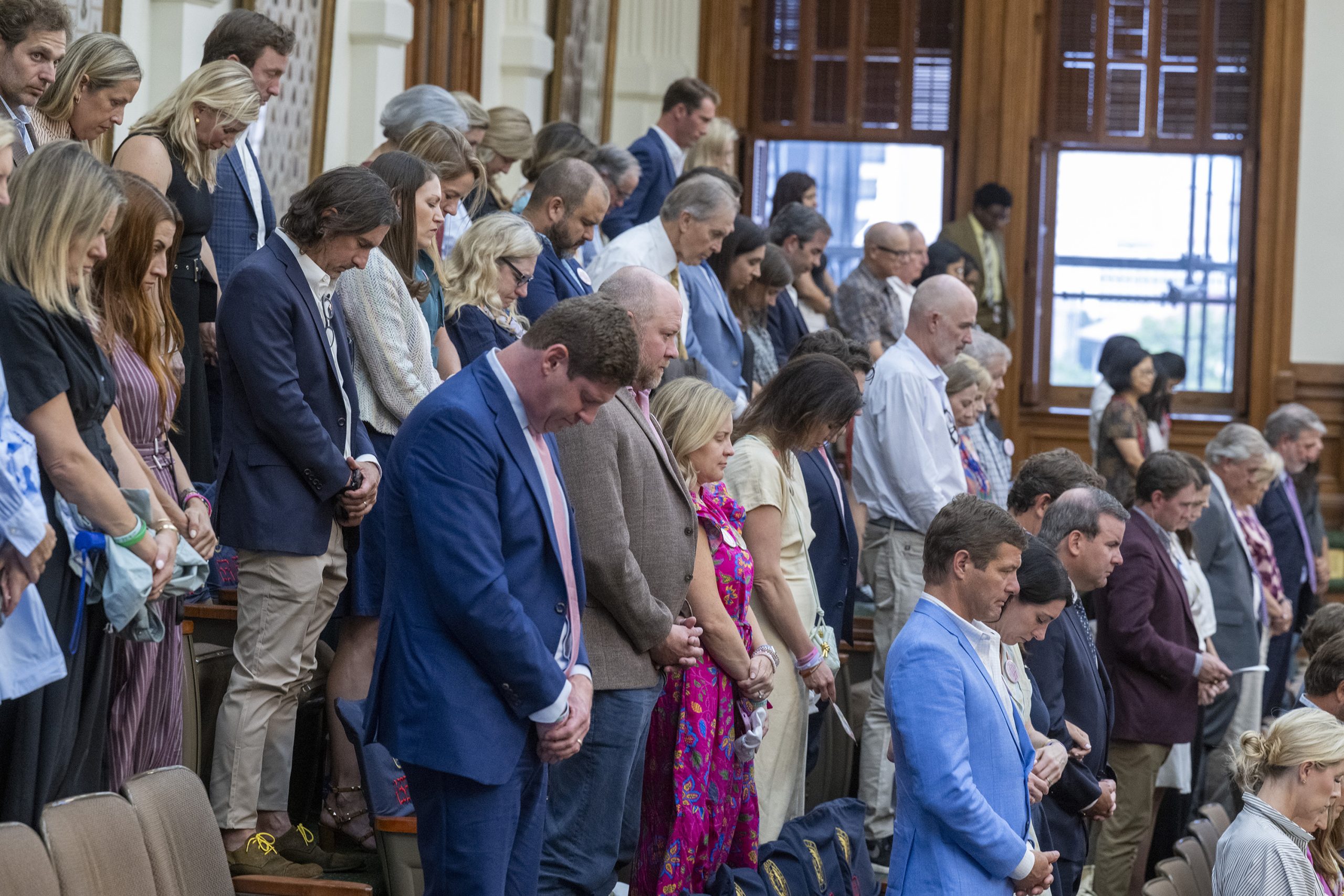
Texas should not renew the license for Camp Mystic for this summer until the deaths of 25 campers, two counselors and its executive director on July 4 are investigated and necessary changes are made to be sure lives aren’t lost in a flood there again, Lt. Gov. Dan Patrick urged the state health commissioner in a letter Monday.
“It would be naive to allow Camp Mystic to return to normal operations before all of the facts are known,” Patrick wrote to Department of State Health Services Commissioner Jennifer Shuford. “Camp Mystic should have decided on their own to suspend operations this coming summer, but it appears they are planning for camp in 2026 and will likely be seeking your approval to operate with a renewed license.”
Patrick posted a copy of the letter on X hours after parents of some of the Camp Mystic girls who died sued Shuford and other DSHS officials in federal court, alleging that the state failed to follow state law when they licensed the camp without making sure it had an evacuation plan.
Camp Mystic’s emergency instructions directed kids to stay in their cabins during floods, even though Texas rules require youth camps to have evacuation plans for disasters, the lawsuit states.
“Young campers and counselors were killed because the camp had no plan,” the lawsuit said. “The camp is responsible, but so are the state officials who helped create this inexcusable risk to life by directing and executing a policy of non-compliance with Texas law.”
A DSHS spokesperson said the agency does not comment on pending litigation.
The camp’s current license is valid until March 6, according to the suit. A DSHS spokesperson said Camp Mystic has until March 31 to apply for renewal with no late fee and to ensure their application would be reviewed in time for the camp to open.
Camp Mystic in the months following the flood announced plans to reopen its Cypress Lake property, which its website describes as independent from the older Guadalupe River portion where the girls died. The parents of Cile Steward, a camper whose body still has not been recovered, condemned the move at the time and more recently sued to prevent the camp’s reopening.
Mikal Watts, Camp Mystic’s attorney, wrote in an email to The Texas Tribune that the state doesn’t have a regulatory basis to deny a license for Camp Mystic Cypress Lake, which he said is in compliance with state law, on a separate property and was not significantly damaged in the flood. He said Patrick had not responded to an invitation from the camp to visit to understand better what happened.
Patrick, in his letter, said special legislative committees will meet this spring to gather more information about the Mystic deaths. He wrote that he expected the camp may need to make changes to ensure campers and counselors can be safe there. He wouldn’t feel comfortable taking his own grandkids there with important questions still unanswered, he wrote.
Patrick urged Commissioner Shuford not to renew the license until the legislative investigation was finished “and any necessary corrective actions are taken.”
State Rep. Wes Virdell, R-Brady, the representative for Camp Mystic’s region, pushed back on Patrick’s letter in a social media post Monday afternoon. During the passage of one of the two new state laws creating increased safety requirements for camps last year, Virdell expressed concerns about restrictions causing unnecessary camp closures and offered an amendment to Senate Bill 1 to address those fears, but it was tabled.
In his post on Monday, Virdell said the bill’s passage was designed to shutter Camp Mystic by “very strong political influencers behind the scenes” and that Patrick’s letter was “another route” from those same people to close the camp.
“I have strong concerns that the Kerrville area and camps won’t get a fair investigation if this is the position of the Lt. Governor,” Virdell wrote.
The families of nine Hill Country flooding victims filed the lawsuit in federal court on Monday, seeking damages and “all other relief that is equitable”. They are suing six DSHS officials, including Shuford, several others who oversee the youth camp program and the agency’s Camp Mystic inspector.
In the early morning of July 4, heavy rain sent the Guadalupe River surging into the historic Central Texas camp. Staff only managed to evacuate five of 11 cabins in an area called “the flats” even though there had been enough time to get everyone out, the lawsuit alleges. Most of the girls died in two cabins there, built near the river.
In all, 27 Camp Mystic campers and counselors died in the flood. Camp Owner and Executive Director Dick Eastland also died while trying to evacuate one of the cabins.
A year before the flood, DSHS inspector Maricela Zamarripa reported the camp had a written disaster plan, the suit said. She had been at the property again just two days prior to last year’s flood. In her report filed two days after the flood, she again stated the camp had the necessary plan.
“The DSHS officials responsible for licensing youth camps deliberately looked the other way,” the families’ attorney, Paul Yetter, said in a written statement. “While Camp Mystic bears responsibility and is also being sued, state officials knew the camp’s emergency plan lacked a required evacuation component and still licensed the camp as safe.”
Timothy Stevenson, DSHS deputy commissioner for the Consumer Protection Division, testified after the flood to state lawmakers that the agency made sure emergency plans existed but did not ensure that they included plans to evacuate, the suit said — an approach the families argued violated both state law and the agency’s duty to protect their children in flash flood alley.
The state laws that passed last year have further required camps to specify where to go in case of an evacuation, post evacuation routes in cabins and make sure those routes are illuminated at night. The agency meanwhile planned to raise its camp licensing fees.
Ayden Runnels contributed to this story.
Source link


Leave feedback about this