

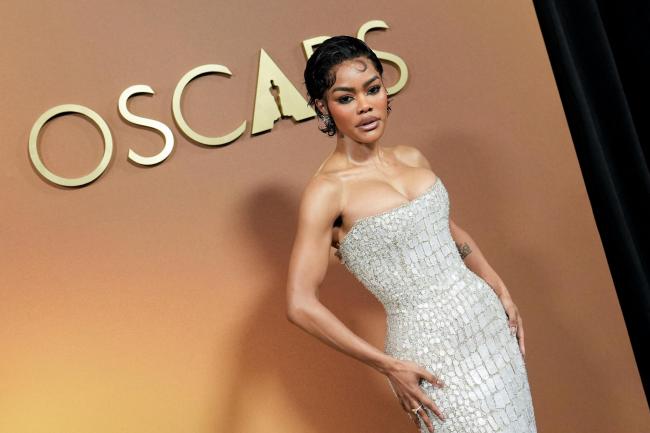
The last time IndieWire spoke with Teyana Taylor was about her breakthrough role in “A Thousand and One,” which earned her Gotham and Independent Spirit Awards nominations and put her on a dark-horse campaign for an Oscar nomination. “Being a part of the conversation is all I ever really wanted,” she said. “It’s all still a win, even the snub talk, I love that the most. Because it’s people in here that’s like, ‘I would love to see Teyana. I hope they keep Teyana in mind when it’s time for award season, when it is time for Oscars.’”
Only two years later, it actually happened. The multihyphenate, who just hit two decades in the entertainment business in just about every position — from Grammy-nominated musician, to director, dancer, choreographer, reality TV personality, creative director, you name it — is now an Academy Award nominee for Best Supporting Actress for her role as Perfidia Beverly Hills in Paul Thomas Anderson’s “One Battle After Another.”

“It’s so crazy because when I did ‘A Thousand and One,’ I felt in my heart that this was going to be the role that would make people really see me and take me seriously,” Taylor recently told IndieWire over Zoom, the morning after winning a Virtuosos Award at the Santa Barbara International Film Festival. “To know that Paul was a fan of ‘A Thousand and One,’ and that’s what made him reach out, I’m just like, ‘This is such a full circle moment.’” She added, “I have a thousand and one reasons to be grateful.”
Now in the second phase of awards campaigning with a film that earned 13 Oscar nominations, the recent Golden Globe winner particularly enjoys having more time and perspective to dive deeper into the motivations behind her controversial character — a revolutionary who becomes entangled with the film’s dictatorial antagonist until she escapes with reckless abandon. “It’s that 50-50 thing where you can’t live with her, can’t live without her. She’s human, and she’s raw. And it was hard for people to see and accept that because they expect us to wear capes 24/7, and she took hers off,” said Taylor.
Below, the Best Supporting Actress contender dives into why her role in “One Battle After Another” was the perfect follow-up to “A Thousand and One,” and why she is always happy to return to Perfidia Beverly Hills.
The following interview has been condensed for length and clarity.
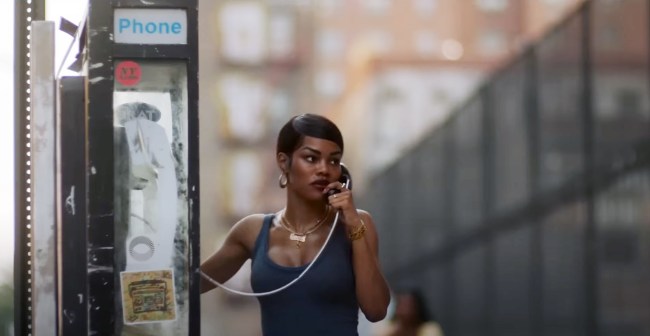
IndieWire: When we last spoke about “A Thousand and One,” you spoke about dealing with personal issues like postpartum depression and experiencing loss during the filming. In playing Perfidia, were you out of this period of depression and/or heartbreak, with a new perspective, or did it feel like you were still in the thick of those challenging emotions?
Teyana Taylor: Yeah, I think I was still in the thick of it. Perfidia was the perfect next character for me because I poured all my emotion into it. And Inez [in ‘A Thousand and One’] was a little bit different from Perfidia, but they both were complex. They both were raw, and they both were very, very human. So hearing about Perfidia and seeing that she would be even more complex than Inez was, I was just excited to take the complexity to the next level, and that’s what we did. Even with Perfidia, I love talking about Perfidia because she’s so complex, but also she’s so misunderstood. And with Perfidia, it’s understanding how she became a revolutionary because of the things she believes in. They became a part of her identity; it’s who she is. And when she becomes a mother, I feel like it’s an overnight situation. “Hold on, wait, wait, huh? It’s time to play house? It’s time to sit down? Hold on, what’s going on? I’m still outside.”
She doesn’t really know how to deal with all of that, just like a lot of women. Some people plan for it and some people don’t, and people handle that differently. And for some people, it could be really, really difficult when they’re in the thick of something else. When you’re in the thick of standing up for what you believe in, and nothing can slow you down, and you wind up pregnant, and you’re bringing a whole new life into this world, I can see why it can get difficult for some people. Playing her was important because it taps into the misunderstanding of why people do what they do, why people feel the need to run, why some people feel the need to stay. And that’s why the letter was so important. We got to hear Perfidia a lot more calm and in a place of accountability. And it was important to me because it was from such a raw place. And if you listen to a lot of the voiceover she did 16 years later, very little has changed. Look at what’s happening. Motherfuckers end up fighting themselves, and it’s like y’all not letting Perfidia cook. She’s cooking.
But I love that Perfidia stands 10 toes down on who she is, and she’s able to speak on it and talk about it. But I’m so happy that in “A Thousand and One,” you see Inez navigate motherhood, but in “One Battle,” you see a mother navigate how she dealt with postpartum. We see this woman show the result of when people think that postpartum is a non-factor. Why would I want to stay and play house with a person that I’m being ignored by, when I can be doing this revolution thing?
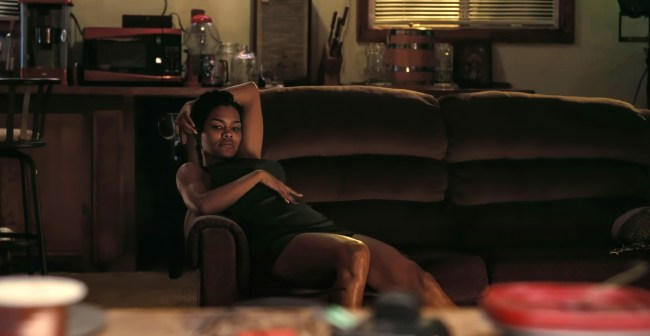
As you said, this is a very complex character, and I definitely see the identity crisis part of it. But in recent interviews, you’ve described Perfidia as selfish. Isn’t that lacking the nuance of the situation?
When I say Perfidia is selfish, that’s what I admire about her. We may not agree with some of the things she literally does, but mentally and emotionally, to be able to be selfish and show up for you, and put you first, which as women — especially as a Black woman — we don’t get to do. We have to be superheroes all day, every day. Perfidia said, “Listen, cape on or cape off, I’m going to be myself. I’m going to show up for me.” She didn’t care at what expense, but mentally, in a whole other term, it’s like, “Wow, it’s OK to be selfish sometimes. It’s OK to put me first.” That’s what keeps us alive. How can we help you? How can we be of service if we’re not even taking care of ourselves?
She’s entitled to handle the postpartum the way she handled it because who are we to judge how a mother handles postpartum depression? The most we can do is try and see how we can show up. And that’s where Bob lacked. She cried out, and he put his ear to that door. And instead of just walking in, he walked away. And oh my God, Paul is a genius. I love that. It forces you to have to think. And that’s why I love when people have seen the movie [multiple] times because you pick up something new every single time, and you gain more and more compassion and empathy for Perfidia’s situation.
Again, this is not negating her actions because I definitely think in the letter she speaks to that. But when I say she’s selfish, it can be good and bad because she did also make some decisions that were selfish to the whole squad. Because you’re repping this revolutionary [group], and then you’re weaponizing certain things, and that’s your power. I have a gun pointing to a man’s head and he’s calling me “Sweet Thing.” People don’t understand the complexities of Perfidia and what she goes through. And that’s why I’m just so happy that Paul really took it there with the postpartum depression because it just showed people to step in now, step in early, don’t wait until it’s too late. Would she have walked out that door? Would she have walked out on Bob and Willa, had Bob walked through that door and just given her a hug, just spoken to her, and calmed her down?
So I love when a character sparks dialogue, whether people are uncomfortable, comfortable. That’s why I love this. It makes me feel like you’re invested in Perfidia’s character. We all know she’s a badass, but we never have an in-depth conversation about Perfidia and her nuance.
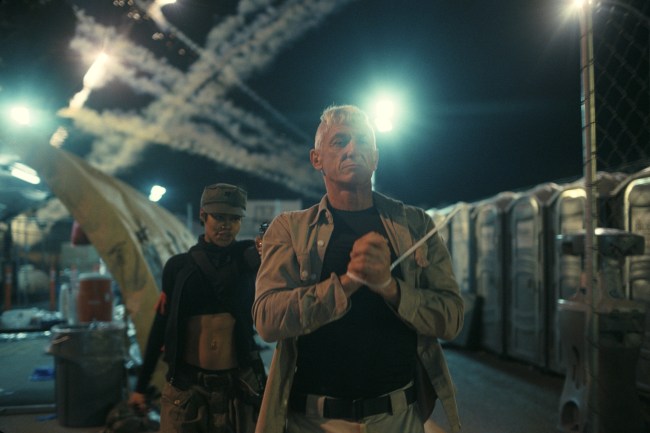
Clearly, part of that is the racial dynamics, but on a simpler level, we see this fixation with power. And as the power slips away, you see her spiral—
Trying to get that power back. And that’s what I’m saying. So when people are in that space, even people that are power-hungry, you’re feeling like anything can slow you down, you become a runner, you become a track star. That’s just what it is. And like I said, even with the whole, “OK, I have a gun to your head, and you’re saying ‘Sweet Thing’? OK, cool. So since we playing, get it up.” So then she sees this man in power get it up just by gunpoint. Oh, she’s going to milk that. That’s what she is going to do.
I’m so passionate about Perfidia. And even with the sexuality thing, because I see that gets brought up a lot to where they’re so fixated on the sexuality. They don’t even highlight the postpartum depression, nor do they highlight that very important moment at the end with that letter. I think she uses her sexuality as a weapon. It’s her armor. It is her power. It’s her survival. That’s her survival mode. And in many ways, she’s a parallel to Lockjaw. And she’s giving him what he wants to get what she wants. And she has the power in that dynamic. And the difference between him and her is that he is afraid to be who he truly is, and she isn’t. She is who she is, unapologetically.
I’ve struggled with some of the criticism of Perfidia downplaying Willa’s role in the film, and how it all comes full circle.
Exactly, I have to anchor at some point. People are so tied into just everything that they’re not understanding that, you guys, this is still a story that is being told. And in this supporting space, my job as Perfidia is to support Willa. I will drive the boat to the middle of the sea, and then I will anchor. And if y’all are going to jump off the boat, get on the jet skis, etc., that’s for y’all to tell the rest of that. But I must stay here, and let Willa thrive, and see what comes from my actions, and see her pay for that, and see my actions haunt both Willa and Bob. That’s what’s important for the movie.
So I’m really proud of the movie. I’m really proud of the story, and I’m really more proud of the fact that it’s shaking the table. It’s creating this kind of healthy dialogue. And I love when movies can do that. I feel like “A Thousand and One” did that as well. It wasn’t the happy ending of, “Oh, why did she do it?” It was like, “Well, why is she smiling?” Y’all still don’t get it. Her job is done. She raised the right kid. He is going to do amazing things. And now guess what? Inez can be free. Inez gets to go on knowing that “I did what I had to do.” So it just goes to show how people don’t understand how much women are superwomen. And when they see a woman show up for themselves, it’s uncomfortable. So I love when directors go the route of “We’re not in the business to make people comfortable.”
Do you find the ending hopeful? I see this message of “you can find your way back.” Even if it’s through Willa, Perfidia still has a route toward forgiveness, especially forgiving herself.
Yes. And that’s why I’m saying that note is so important because you hear the accountability, you hear the calmness, you hear the growth, you even hear the years, you hear 16 years of pain and growth. You hear a little bit of everything in her voice. And most importantly, one thing you didn’t get to hear the whole movie, until we got to that note, was the vulnerability. It was so sweet, and it just hit me every single time. “Do you have love? Are you happy? Will you try and change the world like we did? We failed, but maybe you will not.” Which, to your point, still leaves hope. She is the next generation. She is the next thing. And it was also a way of saying that without the pressure. Like you said, Perfidia comes from a long line of revolutionaries. So maybe she is walking with that pressure of feeling like, “I have to keep it going.” And she makes her mistakes through that. But in this letter, you hear compassion and empathy. “Will you try and change the world? You need to try and change the world like we did.” You hear the support. “Is there still time for us?” Oh my God.
I’m always happy to hear when people say they receive that letter. I love to even hear people sniffling in the movie theaters when that part comes on. It warms my heart because the letter came from a real place. That’s what really hit. That hit for Inez. It hit for Perfidia. It hit for even me as a mother. It hit for all the women that came before me because we’re always going to want to know if our kids are happy. We’re going to always want them to have love. We’re going to always want them to try and change the world. We’re going to always want them to be even greater versions of who we were. We want them to be greater than us. So I loved that moment from Perfidia.
In spite of a lot of what we talked about, how did it ultimately feel to see so many initial reactions to the film be that your performance left viewers dying for more? And would you say there’s been an even deeper understanding of Perfidia in the months since?
This whole journey in this space has been a marathon, not a sprint. So I’m taking my time because I’m still trying to process everything, all while still having these important conversations, wanting people to fully understand who Perfidia is, and giving better insight on who she is and the overall goal of the whole movie. So I haven’t taken up the time to pat myself on the back yet because there’s much more left to this marathon, and much more to do, because you still have people that may not understand who Perfidia is. You have some people that have seen it several times, and it only makes you understand her even more.
And it’s a fun journey to have a little bit of both. I’m enjoying it, and I’m pacing myself, just taking my time with it. The biggest pat is once we get to the touchdown, and once we get to that finish line, that’s when I’ll be like, “Wow, this was a journey.” Because it’s already a journey in real time, but I’m so focused on being present that I haven’t really taken a seat to really process and be like, “Oh, yeah, they want more of me.” Here and there, I make little jokes with Paul. I’m like, “We need to see what Perfidia did in those 16 years.” But Perfidia and Willa need some scenes together. When Willa walked out the door in that last scene, I said, “Where’s she really going? Is she going to free Deandra? Is she going to find her mommy?” I love that it’s still hopeful, and it’s room for a little part two in there somewhere.
How real are those conversations? We just saw the Super Bowl run a trailer for a “Once Upon a Time in Hollywood” follow-up starring Best Supporting Actor Oscar winner Brad Pitt. Can we expect a similar project centered on your Best Supporting Actress Oscar-nominated role of Perfidia?
The conversations are very, very real. I want to give everybody confirmation that I am currently begging PTA to give us that. I’m begging him to give us that.
First Appeared on
Source link


Leave feedback about this