

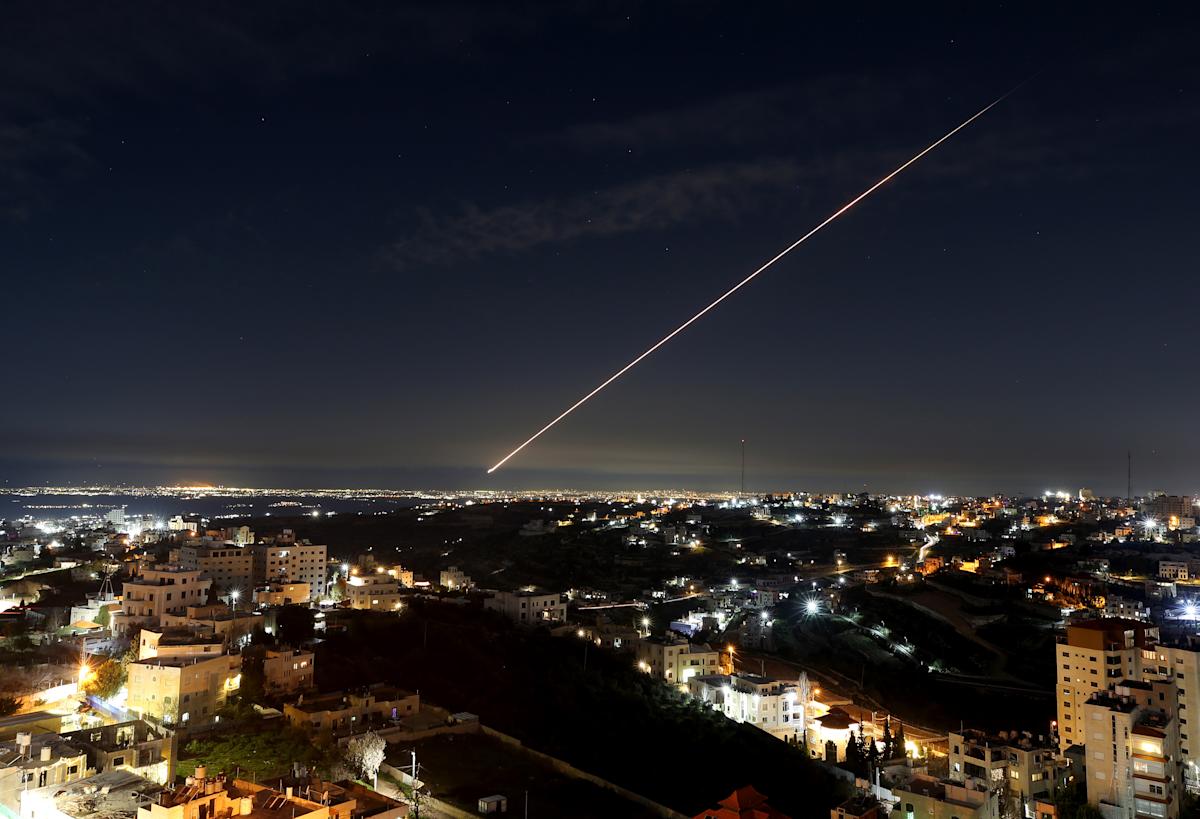
Oil futures surged upward on Sunday evening as traders price in the first open market session after the start of an escalating conflict in the Middle East that is increasingly threatening energy infrastructure.
Futures on Brent crude (BZ=F), the international pricing benchmark, jumped by 13% to trade above $82 per barrel in the first minutes of open trading before paring back to $79, while those on US benchmark West Texas Intermediate (CL=F) crude, rose by more than 8% to cross $72 per barrel.
The opening price on Brent marks a level not seen since January 2025 as the conflict in Iran has engulfed the entire region, while WTI reached levels not seen since 2025’s “12-day war.”
Gold (GC=F) also picked up more than 3% to cross $5,400 per ounce as investors ran to the precious metal for its flight-to-safety status, while the US dollar (DX-Y.NYB) appreciated by roughly 0.7%. Shares in Saudi Aramco (2223.SR) rose by more than 3% in the Middle Eastern trading session on the prospect for higher oil prices.
Beginning early Saturday morning, the US and Israel have launched a massive barrage of air strikes into Iran in what President Trump has called a bid to destroy the country’s nuclear program and potentially remove the current regime from power. Iranian Supreme Leader Ali Khamenei, who had led Iran for more than 30 years, was killed on Saturday, President Trump said in a Truth Social post.
Iran immediately retaliated against the strikes, launching missiles against US military assets and, increasingly, civilian and energy infrastructure throughout other Gulf states such as Bahrain and the United Arab Emirates, according to news reports from the region.
Crucially for the energy markets, strikes have also hit oil tankers traversing the Strait of Hormuz, a critical global shipping chokepoint that sees roughly a fifth of the world’s oil supply cross through its waters daily. Roughly 15 million barrels per day of crude and condensate cross the Strait every day, according to data from Kpler.
If oil must be diverted, analysts told Yahoo Finance, pipelines in the area — some of them designed in part for scenarios like this — could likely absorb 5 million to 7 million bpd of oil, leaving roughly 8 million or so bpd stranded and cut off from the market.
While Iran, which has significant strategic influence over the chokepoint, has never before fully closed the waterway — a move several analysts told Yahoo Finance would be effectively impossible — any disruption would add significant risk and shipping premiums to oil and gas prices as barrels are diverted.
First Appeared on
Source link




Leave feedback about this