

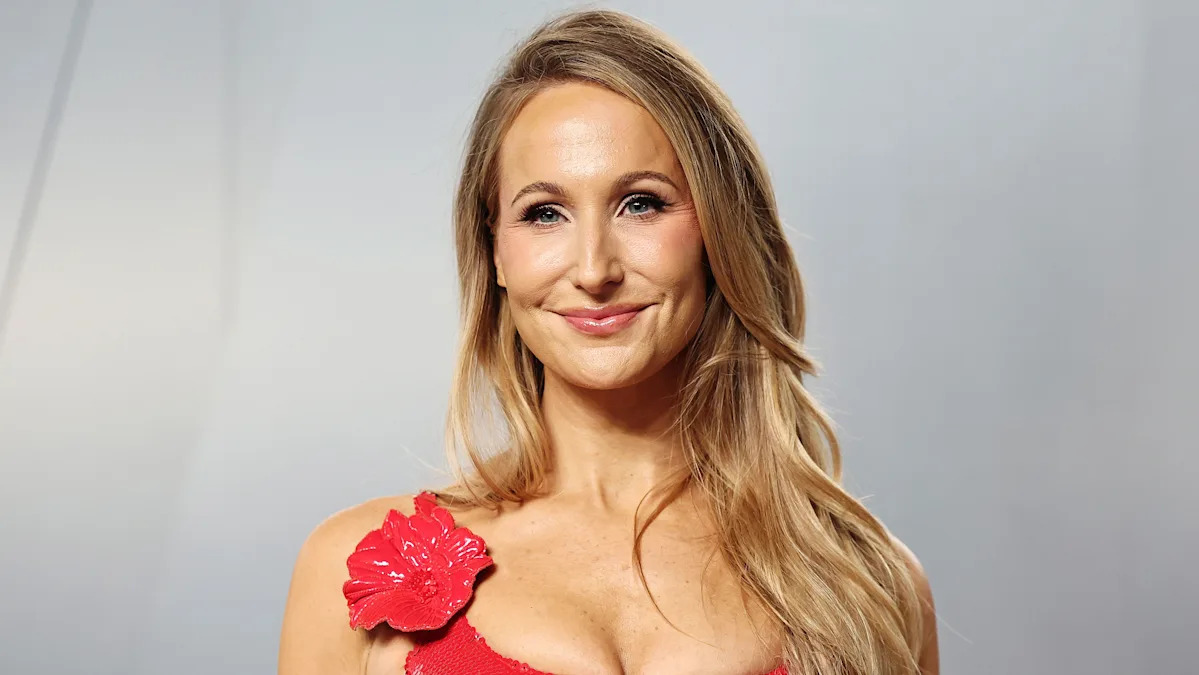
Nikki Glaser would be totally OK with her boyfriend, TV producer Chris Convy, hooking up with other women.
“In a relationship, I don’t really care if my boyfriend were to hook up [with others],” Glaser said on the April 8 episode of Alex Cooper’s Call Her Daddy podcast. And while Glaser said she’s not the type to hook up outside of a relationship, she “kind of” likes the idea of her partner doing so.
“I don’t care if a guy has a sexual connection with a girl and he was to use protection and just have sex with her for a night. I don’t,” she insisted. “I literally wouldn’t care if my husband did that.”
On Call Her Daddy’s TikTok, comments on a video of the interview range widely. While one person called Glaser’s thoughts the “saddest thing” they ever heard — and more echoed similar sentiments — others applauded Glaser for her honesty.
“The amount of people on this earth that haven’t cheated or been cheated on is sooo minuscule that im shocked anyone is still surprised when it happens,” one wrote. “Shes just speaking facts and people arent ready to hear it.”
Non-monogamy has become more prevalent in pop culture
Glaser’s comments come at a time when polyamorous relationships are being discussed more openly in pop culture. But not everyone is praised for sharing. Shrill author Lindy West has faced criticism after writing about being in a throuple with husband Ahamefule Oluo and girlfriend Roya Amirsoleimani in her new memoir Adult Braces.
West, a feminist writer who has written about struggling to find love as a person living in a larger body, was accused of being coerced into an open relationship by her husband (which she strongly denies) as well as betraying her own feminist ideals in service of a man’s desires for multiple partners.
And then there’s Lily Allen, whose 2025 album West End Girl painted a portrait of her unhappy open marriage, alleging that her husband, Stranger Things star David Harbour, broke the established rules of their arrangement. On the track “Nonmonogamummy,” she sings, “I don’t want to f*** with anyone else / I know that’s all you want to do / I’m so committed that I’d lose myself / Because I don’t want to lose you.”
Nikki Glaser with her boyfriend Chris Convy.
(Michael Tran/AFP via Getty Images)
As Allen tells it, an open marriage wasn’t something that the pop star wanted, but something she was pressured into — the exact thing that West denies is happening to her.
All of this discourse comes on the heels of more curiosity around nontraditional relationships. The dating app Feeld, for example, brands itself as “the dating app for the curious,” offering a space for people interested in open relationships, among other types of connections. From 2021 to 2025, membership grew 368%, according to Wired.
Meanwhile, the Showtime documentary series Couples Therapy features patients in polyamorous relationships. “The Poly Couple,” a series about the day-to-day life of a polyamorous couple that’s inspired by real events, has millions of views on TikTok and YouTube, as well as a new streaming deal with Electric Entertainment. And TikToker @OpenlyCommitted regularly shares her experience in a loving open marriage with her more than 225,000 followers.
What experts say about polyamory
Yet even as non-monogamous partnerships become increasingly mainstream, they’re often misunderstood — and even mistrusted — by many. (Danielle, for example, previously told Yahoo that she’s often accused of only wanting to be nonexclusive with her husband for his benefit — ignoring the fact that she has her own reasons for dating other people.) And narratives like Allen’s can make people particularly suspicious of celebrities who say they’re open to relationships that aren’t sexually or romantically exclusive.
However, experts say that this often comes from a lack of awareness of what ethical non-monogamy can look like. The general culture around people who choose to be ethically non-monogamous — meaning the practice of being in a consenting sexual or romantic relationship with more than one person — is one of extreme communication, boundary setting and honesty, they say.
Los Angeles-based clinical psychologist Cadyn Cathers told Yahoo that there’s “huge diversity” in how people approach ethical non-monogamy, and that while sex can be a major reason people open up their dating lives, it’s not the only one. Some people, for example, may not want their partners to be emotionally intimate with someone else, while others may be fine with it. In her interview, Glaser said that while she’s OK with her boyfriend having physical connections with other women, she’d be hurt if he sent another woman memes or watched The Wire with her.
Cathers said that polyamorous people set up their relationships in a way that isn’t rooted in the assumptions of society. Instead, people are asked to define for themselves what they consider cheating and what is permissible. “That actually gets discussed, therefore there is a lot less coercion that I see in polyamorous relationships,” he said.
Sheena Simpson, a couples therapist and founder of Kodo Couples Therapy, told Yahoo that problems with these types of relationships typically stem from one person not being completely onboard in the first place. They are “afraid of losing the relationship, she said, adding that this creates a “power dynamic” where they are “coerced into this open relationship that they aren’t really ready for.”
“The other piece that’s really important is people go into open relationships thinking that it’s going to relieve pressure, but it actually adds a lot,” she explained. “They’re adding complexity, and people may get scared or jealous and reactive, and they start to make rules instead of having honest conversations. So there needs to be a really healthy foundation where there is transparency and honesty before bringing in other people.”
Karen Stewart, a clinical psychologist who specializes in sex and couples therapy, said pushback to non-monogamous situations usually stems from the fact that “we don’t like things we don’t understand.”
“I’m thinking about a couple [that I worked with] where the woman is much younger, and she wanted to be in an open relationship,” Stewart explained. “Her partner was completely onboard with it, because he wanted her to have this life experience that he had. It was coming from a more generous and loving place for him — while he doesn’t necessarily need it. It didn’t come from coercion as much as love and generosity.”
Stewart said that these dynamics are not simple, even if people believe them to be rewarding.
“You’re managing more emotions, more expectations and then impact on other people. Because, of course, there are other people involved, and they have emotions,” she said. “So the best case is a couple who is able to really hold that really large container of complexity and grow within that.”
First Appeared on
Source link




Leave feedback about this